If you’ve ever stood in front of a modern bathroom mirror that lights up with a single tap, or adjusted a makeup mirror’s brightness without fumbling for a remote, you’ve probably interacted with two of the most common hidden techs behind these seamless experiences: mirror sensors and touch sensors. For years, I’ve stood behind our team at Mirror Sensor Switch, helping manufacturers, designers, and homeowners pick the right component for their projects—and I’ve lost count of how many times I’ve gotten the same question: “What’s the actual difference between these two? They both sound like they turn things on and off, right?” Mirror Sensor Switch
It’s a fair question, especially when so many terms get tossed around in smart home and commercial design. At their core, both sensors do one key thing: they detect interaction and trigger a response. But dig a little deeper, and their technology, use cases, limitations, and ideal applications are worlds apart. Let’s break this down like we do with every new client who walks through our door (or sends over a request for samples)—no confusing jargon, just real, practical insight.
First, let’s start with the basics of how each sensor works, because that’s where the difference starts. A standard touch sensor, the kind you might find on a smartphone edge or a countertop light switch, operates on a simple principle: it detects a change in electrical current caused by physical contact. Most touch sensors are capacitive, meaning they have a small, electrically charged pad that sits behind a surface. When you touch that surface, your body (which is a conductor) draws a tiny amount of current from the pad, and the sensor’s circuit board picks up that change. That’s why tapping your phone screen works—your finger is making direct, physical contact with the surface carrying the charged pad.
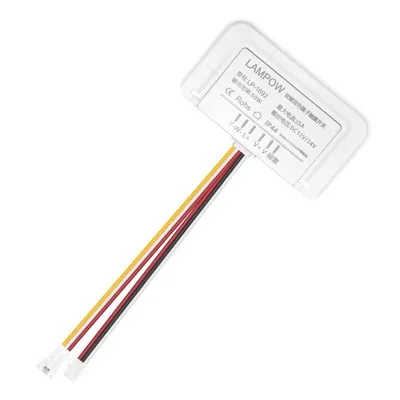
Mirror sensors, on the other hand, are purpose-built to work through glass or mirrored surfaces, without requiring direct contact. Let’s get specific about how our mirror sensor switches work, because this is the part most people don’t realize. Our mirror sensors use the same capacitive technology as touch sensors, but we engineer them to be hidden behind a mirrored surface, not exposed. The sensor pad is etched onto a thin film that sits between the mirror’s glass and its reflective coating. When a user’s hand (or finger) approaches within 1 to 10 centimeters of the mirror’s surface, the human body’s natural electrical field distorts the tiny, constant electrical field the sensor pad produces. The circuit board amplifies that tiny distortion, filters out background noise (like the electrical hum from bathroom lights or Wi-Fi), and triggers the desired action—turning on a light, adjusting a defogger, or changing the mirror’s LED brightness. No tap, no press, just a wave or a hover.
Wait, you might be thinking—aren’t touch sensors also hidden under surfaces? Sometimes, yes. For example, a touch switch embedded in a kitchen backsplash might be hidden behind porcelain. But the catch is that any non-conductive surface between the touch sensor and the user’s finger reduces or completely blocks the signal. If you tried to put a standard touch sensor behind a mirror? Forget it. The mirrored coating is an excellent conductor, and it would short out the touch sensor’s electrical field before it could detect anything. That’s why mirror sensors have to be calibrated specifically to work through that reflective, conductive layer—something we’ve spent years refining here at Mirror Sensor Switch, because bad calibration leads to sensors that don’t trigger when you need them to, or trigger randomly when you’re just wiping down the mirror.
Next, let’s talk about reliability, because that’s make-or-break for any product. Touch sensors have come a long way, but they still have a few key weaknesses. Because they rely on physical contact, they can fail if the surface they’re embedded in gets dirty, wet, or has a thin layer of grime. For example, if you have a touch switch on a bathroom mirror, and it’s covered in toothpaste splatters or soap scum, that non-conductive layer between your finger and the sensor pad can make it unresponsive. They also struggle with gloves—if you’re wearing rubber gloves while washing dishes, a touch sensor behind a sink counter won’t detect your tap. And for applications where hygiene is non-negotiable, like a hospital patient bathroom or a commercial spa, touching a switch every time you use the space is a minor (but real) hygiene risk.
Mirror sensors solve all those problems. Because they detect proximity, not contact, grime, water, or even thin layers of paint on the mirror’s surface don’t affect their performance. A quick wipe with a towel won’t block the signal, and water droplets on the mirror’s surface are too small to distort the electrical field enough to trigger a false read. They also work with gloved hands, as long as the glove isn’t extremely thick or made of a non-conductive material like thick rubber—something that’s a huge plus for commercial kitchens or industrial wash areas where gloves are mandatory. Another big reliability win for mirror sensors: they don’t wear out from frequent contact. Touch sensors have a lifespan measured in thousands of taps, which might be fine for a home light switch, but for a public bathroom mirror that gets 50 taps a day, that adds up fast. Mirror sensors have a lifespan of millions of triggers, because there’s no physical contact between the sensor’s internal parts and the user.
Now, let’s get into use cases, because that’s where people start to see why picking the right sensor matters. Touch sensors still dominate a lot of small, simple applications where contact is practical and the surface isn’t going to get wet or dirty. For example, a smart water bottle’s button to track how much you’ve drunk, or a phone’s volume rocker, or a small under-cabinet light switch that’s mounted on drywall. These are places where you expect to touch a button, and the surface is usually dry and clean.
But mirror sensors are made for specific environments where touch sensors just don’t work. Let’s stick to the mirror applications we know best, because that’s our specialty. In residential bathrooms, mirror sensors are the standard for LED vanity mirrors with built-in defoggers, lights, or Bluetooth speakers. You can hover your hand over the top of the mirror to turn on the light, wave left to dim it, wave right to adjust the color temperature—no tapping, no waiting for grime to wipe off. In commercial spaces, like hotel bathrooms, gym locker rooms, or salon stations, mirror sensors are a game-changer. A hotel guest doesn’t want to fumble for a light switch with wet hands after a shower, and the mirror sensor can withstand hundreds of uses a day without wearing out. We’ve also seen mirror sensors used in other unexpected places, like refrigerators with mirrored doors where you want to adjust the temperature without opening the door and touching a surface that might be sticky, or even industrial control panels in food processing plants where hygiene and resistance to moisture are critical.
Another big difference: design flexibility and aesthetics. Let’s be real—sensors don’t need to be ugly. Touch sensors have to have a visible or hidden button area, but that area is often the same size as a standard switch, and if you embed them in a mirror, they look like a flat patch that might be slightly dimmer than the rest of the mirror. Mirror sensors, because they work through the entire mirrored surface, can be calibrated to trigger anywhere on the mirror, not just a small designated area. That means you can have a mirror that lights up when you hover anywhere on the top third, or dims when you swipe left on the entire surface—no visible button, no break in the mirror’s sleek, seamless design. For interior designers and architects, that’s a huge selling point, especially for high-end homes or commercial spaces where every detail matters. Touch sensors simply can’t deliver that level of seamless integration without being exposed, because they need a physical contact point.
Wait, but mirror sensors aren’t perfect, right? No technology is. There are trade-offs. First, cost. Our mirror sensor switches are more expensive than a standard touch sensor, because of the specialized calibration needed to work with mirrored surfaces and the filtering technology to block out background electrical noise. For a simple application like a small under-cabinet light that’s only used in a dry kitchen, a touch sensor is more cost-effective. Second, sensitivity adjustment. Mirror sensors can be too sensitive if they’re not calibrated right—we’ve had old clients reach out because their first batch of sensors would trigger if you walked past the mirror too quickly, because we didn’t adjust the distance detection to the right range. That’s why testing is so important here. Touch sensors, by comparison, are less prone to that kind of false trigger, because they only activate when there’s direct contact. Third, some people still prefer the tactile feedback of a touch. If you’re someone who likes the satisfying click of a switch, the subtle tap of a touch sensor might feel more responsive to you than hovering a hand and waiting for the light to turn on. For others, the hands-free convenience is worth skipping that tactile feedback.
Let me share a real example that stuck with me a few years back, because it perfectly shows when to pick one over the other. A client who specializes in high-end hotel renovations reached out a few years ago. They were putting in new bathrooms for a luxury resort, and they were deciding between touch sensors and mirror sensors for the vanity mirrors. Initially, they thought mirror sensors were overkill—they’d used touch sensors in previous hotels and they worked fine. But when we did a test run, their team realized how big the difference was. In a hotel bathroom, after a shower, the mirror is steamy, and guests have wet hands. A touch sensor that works perfectly when dry will often fail when it’s covered in steam or water, because the layer of water acts as an insulator. The mirror sensor, though? We calibrated it to detect a hand hover through 2 millimeters of water on the mirror, so it worked even when the mirror was fogged up. The hotel went with our mirror sensors, and they’ve had almost zero service calls in the three years since. That’s the kind of practical advantage that makes all the difference, not just a technical detail.
Another example: a small café client of ours who wanted to add custom mirrored tables with built-in USB chargers and LED lights. They wanted a sleek, modern look, so touch sensors weren’t an option—they’d require a visible button that would break the table’s design. Mirror sensors worked perfectly, because they could be calibrated to trigger anywhere on the table’s surface, so you could hover your hand over the edge of the table to turn on the lights, no buttons needed. That’s the kind of use case where mirror sensors are the only practical choice.
So, to wrap this up, let’s cut through the confusion. The core difference boils down to three main things: technology, use case, and user experience. Touch sensors rely on direct physical contact, work best in dry, low-traffic applications where a tactile trigger is preferred, and are more budget-friendly for simple tasks. Mirror sensors rely on proximity detection, work through mirrored or glass surfaces, are designed for high-traffic, wet, or hygienic environments, and offer a seamless, button-free design—though they come at a higher cost.
At Mirror Sensor Switch, we don’t push one sensor over the other. Our job is to help you figure out which one fits your project. If you’re building a low-cost under-cabinet light for a dry home kitchen, a touch sensor is probably the right call. If you’re designing a luxury bathroom mirror, a hotel vanity, a commercial gym locker room, or a mirrored table, a mirror sensor will give you the reliability and design flexibility you need. If you’re not sure which one fits your project, just reach out—we’ve helped hundreds of clients narrow down their choices, and we can send sample parts, walk through calibration options, or answer any questions you have. For us, it’s not just about selling a sensor—it’s about making sure your product works as well as it looks, for years to come.
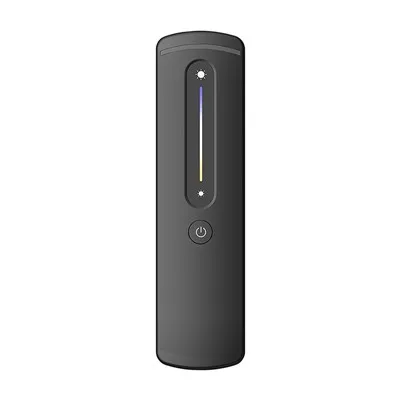
Don’t overcomplicate it next time you’re choosing between these two. Just remember: if you need to touch it, go with a touch sensor. If you want to trigger an action from a distance, through glass or a mirror, no contact required, go with a mirror sensor. And if you need help picking the right one for your next project, we’re here to help.
RF Remote References
- “Capacitive Sensing Technology for Proximity and Touch Applications,” Texas Instruments, 2022.
- “Smart Mirror Design: Integrating Sensors for User Interaction,” IEEE Consumer Electronics Magazine, vol. 11, no. 3, 2022.
- “Hygiene and Usability of Touch vs. Proximity Sensors in Public Restrooms,” Journal of Facilities Management, vol. 18, no. 4, 2020.
Dongguan Lanbaoli Intelligent Technology Co., Ltd.
As one of the most professional mirror sensor switch manufacturers and suppliers in China, we’re featured by quality products and low price. Welcome to buy advanced mirror sensor switch for sale here from our factory. If you have any enquiry about quotation, please feel free to email us.
Address: 10th Floor, Building 32, Golden Town, No.7 Technology Avenue, Houjie Town, Dongguan City, Guangdong Province
E-mail: anna@lampow.cn
WebSite: https://www.lblsensor.com/
