If you’ve ever held a custom metal bracket on a drone, smoothed the edge of a medical implant, or turned a plastic gear for a factory assembly line, there’s a good chance it passed through a CNC mill. As someone who runs a CNC milling supply business, I get asked all the time: “What even are the operations that make these parts?” It’s a question that makes sense—CNC milling feels like some sort of high-tech black box to a lot of folks, but every operation boils down to a simple premise: a rotating cutting tool removes material from a workpiece, guided by pre-programmed code, to get the exact shape you need. Today, I’m breaking down the most common CNC milling operations, how they work, and why they matter for anyone sourcing precision parts. CNC Milling
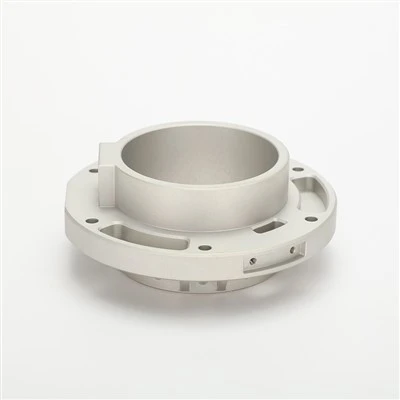
First, let’s start with the basics: CNC mills aren’t one-size-fits-all, and neither are their operations. Some jobs require a 3-axis mill, which moves the workpiece along X, Y, and Z axes to carve flat, 2.5D shapes. Others need 5-axis mills, which tilt and rotate the workpiece to access hard-to-reach angles or complex 3D geometries—think the turbine blades in a jet engine, where a single wrong cut could mean catastrophic failure. But regardless of the mill’s setup, every operation follows the same core rule: the tool is the moving part (for most mills, anyway), so the key is matching the tool type, speed, and feed rate to the material and desired finish.
The first operation most people learn, and the workhorse of every CNC mill, is face milling. Face milling is what you use when you need a smooth, flat surface on a workpiece—think the top of an aluminum plate that needs to sit flush with another component. Here’s how it works: a large, flat-end mill (sometimes 6 inches or more in diameter) spins at a high RPM, and the mill’s Z-axis moves the tool down to cut across the entire surface of the part. The cutting edges on the tool’s face slice off thin layers of material, leaving a finish that’s often within a few thousandths of an inch of perfect flatness. For our business, face milling is usually the first step in any job: we start with a raw block of aluminum, steel, or titanium, face both top and bottom to get a consistent thickness before moving on to more detailed cuts. It’s fast, efficient, and sets the foundation for every other operation that comes later.
Next up, slot milling—another staple operation, and one that’s super useful for cutting keyways, slots for fasteners, or even small channels in plastic or metal. Slot milling uses an end mill (a tool with cutting edges on both the sides and the tip) to cut a narrow, deep groove into a workpiece. Unlike face milling, which cuts across a surface, slot milling plunges straight down into the material along the Z-axis, then moves along X or Y to extend the slot’s length. A lot of people confuse slot milling with grooving, but grooving is usually a single, wider cut for things like retaining rings, while slot milling is for long, narrow features. For example, if a customer needs a slot to run a wire harness through a metal chassis, that’s slot milling. One thing to watch with slot milling: deep slots can cause the end mill to flex or chatter, which leaves a rough finish. That’s why we adjust our feed rate and tool diameter based on slot depth—for slots deeper than twice the tool’s diameter, we use a smaller tool or step down the cut in layers, instead of trying to take a full plunge in one pass. That small adjustment makes all the difference in a smooth, precise slot.
Then there’s profile milling, the operation that shapes the outer edge of a part into the exact geometry you need—say, a circular gear, a custom bracket, or a 3D contour for a aerospace component. Profile milling follows the outline of the part, cutting along its perimeter, whether that’s a simple square or a intricate, curved shape. Here’s where the line between 3-axis and 5-axis mills starts to matter: 3-axis profile milling works for 2D profiles, like a flat disk with three notches cut into its edge, but if you need a profile that wraps around a curved surface (like the edge of a car’s dashboard mount), you need a 5-axis mill to tilt the workpiece so the tool can access the undercut without colliding with the machine. One of our most common profile milling jobs is for custom medical device parts—small titanium brackets that fit around a patient’s bone, with profiles that match the exact shape of the bone’s surface. Profile milling lets us cut those contours with tolerances as tight as 0.001 inches, which is critical for parts that have to fit perfectly during surgery.
Another operation that’s often overlooked but essential is drilling. Wait, I know—most people think drilling is a separate process, but it’s one of the most common CNC milling operations, and it’s integrated right into the mill’s workflow. Unlike manual drilling, where you use a hand drill or drill press, CNC drilling uses the mill’s end mill (a specialty drill bit, usually with a pointed tip) to plunge into the workpiece at a precise location, controlled by the program. The big advantage of CNC drilling over manual is accuracy: we can drill hundreds of holes in a single part, within 0.0005 inches of their target position, no matter how small or spaced out they are. For example, a circuit board with thousands of tiny holes for components—those holes are drilled by CNC mills, not manual tools. We also use CNC drilling for things like mounting holes in steel plates, where consistency is key; we can run the same program on a hundred plates, and every hole will line up perfectly for assembly.
Then there’s tapping, which goes hand in hand with drilling. Tapping is the process of cutting internal threads into a hole, so you can screw a bolt into the part. You can’t just drill a hole and thread it by hand for high-volume or high-precision jobs—CNC tapping uses a tap tool, which has a spiral flute to pull material out of the hole as it spins, cutting threads that match standard bolt sizes (like M3, 1/4-20, or 10-32). What makes CNC tapping different from manual is the “peck” cycle, where the tap retracts slightly every few revolutions to break up chips and prevent it from breaking inside the hole. That’s a huge time-saver for us—we used to have parts with dozens of tapped holes that would take hours to tap by hand, now we can run a single tapping cycle that’s fast, consistent, and has a 99% success rate on first tries. We’ve had customers come to us in a pinch with a part that needed 50 tapped holes, and we can get that done in half the time of a manual shop, no defects.
Now, let’s talk about some of the more advanced operations, because CNC milling isn’t just flat cuts and holes. One that’s growing in popularity is contouring, often confused with profile milling, but contouring is for 3D shapes, not just 2D perimeters. Contouring uses a ball-nose end mill (a tool with a rounded tip, not a flat one) to cut smooth, curved surfaces—think the dash of a car, a prosthetic hand’s curved fingers, or the impeller of a small water pump. Ball-nose mills roll across the surface of the part, creating a seamless curve instead of the stepped edges you’d get with a flat-end mill. The downside of contouring is that it’s slower than other operations, because the tool has to make many small passes to build up the curve. But for parts where aesthetics or aerodynamics matter, it’s worth it. We recently did a job for a customer making custom drone propellers—contouring let us cut the exact aerodynamic shape of the propeller blades, which makes the drone more efficient and flies longer. Without contouring, the propellers would have rough, uneven edges that cause vibration and reduce performance.
Another advanced operation is boring, which is for enlarging a hole that’s already been drilled, to create a precise, smooth inner diameter (ID). Unlike drilling, which removes a lot of material quickly, boring cuts thin layers to get an ID with a tolerance of 0.0001 inches or better—critical for parts like engine cylinders, where a misaligned or uneven bore would cause the engine to seize. Boring uses a single-point cutting tool mounted in the mill, which moves along the Z-axis while spinning to cut the inside of the hole. We use boring a lot for custom hydraulic components, where the ID of a cylinder has to be smooth enough to hold pressure without leaking. It’s a more delicate process than drilling—one wrong move with the tool and you can ruin a hundred-dollar part—but the precision is unmatched.
If you’re wondering why so many operations matter, it’s because most custom parts don’t use just one. A single custom bracket might start with face milling to get a flat surface, then slot milling for mounting slots, drilling for holes, tapping for threads, and contouring for curved edges. The order matters, too—you don’t tap a hole before you drill it, and you don’t contour a part before you rough out the bulk of the material. That’s where our experience as a CNC milling supplier comes in: we help customers map out the sequence of operations, choose the right tools and machines, and avoid mistakes that waste material and time.
I’ve been in this industry for 12 years, and one thing I’ve learned is that a lot of people underappreciate how much goes into a simple part. When a customer comes to us saying they need a part “made of aluminum, shaped like a rectangle with two holes,” it’s not as simple as cutting a block and drilling holes. There’s a reason the medical implant they’re making needs a specific surface finish, or the aerospace component needs tight tolerances, and that’s why choosing the right CNC milling operations is everything.

If you’re sourcing precision parts for your business—whether you’re a small shop making custom drones, a medical device company, or a factory needing replacement parts—you don’t have to navigate these operations alone. We specialize in working with customers of all sizes, from prototype runs of 1 part to high-volume orders of 10,000 parts, and we can walk you through every step, from design to final inspection. Don’t let the technical jargon of CNC milling hold you back; just tell us what you need, and we’ll handle the rest. To learn more about how our team can support your next project and schedule a chat to discuss your requirements, reach out to our sales team today.
CNC Turning References
- Campbell, J. (2015). Computer Numerical Control Milling: Operations and Applications. Industrial Press.
- Smith, G. (2020). Precision Machining: A Guide to CNC Operations and Tooling. Society of Manufacturing Engineers.
- DeVries, W. (2018). Analysis of Material Removal Processes in CNC Milling. CIRP Annals – Manufacturing Technology.
Zhejiang Hayi Technology Co., Ltd.
With abundant experience, we are one of the most professional CNC milling manufacturers in China. We warmly welcome you to wholesale bulk CNC milling in stock here and get quotation from our factory. All customized products are with high quality and competitive price.
Address: Room 112, 1st Floor, No. 103, Siwangdai, Pingzhai Village, Renhe Subdistrict, Yuhang District, Hangzhou City, Zhejiang Province
E-mail: 18368133797@163.com
WebSite: https://www.zhejianghayi.com/
