If you’re working on a construction, industrial, or commercial wiring project, you’ve probably realized that picking the right cable tray isn’t just about holding wires— it’s about keeping them safe, organized, and compliant with whatever local codes you’re following. As a metallic cable tray supplier who’s been in this game for over a decade, I get it: with so many options out there, it’s easy to get overwhelmed when you’re staring at spec sheets or talking to electricians who just need something that works for their space. Let’s break down the main types of metallic cable trays we carry, what each is best for, and how to figure out which one fits your project. Metallic Cable Trays
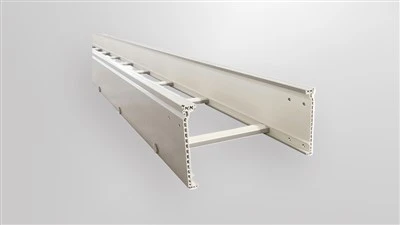
First, let’s start with the big one: galvanized steel cable trays. This is the workhorse of the industry, no question. We roll galvanized steel (that’s steel coated in a zinc layer to fight rust) into solid bottoms, ladder styles, and ventilated trays, and it’s the most popular pick for industrial settings— think factories, warehouses, or outdoor parking garages where moisture and dust are constant. A lot of folks ask me if galvanized is enough for coastal projects, and the answer is: mostly, for moderate salt exposure. If you’re on the coast where salt spray is super heavy, you might want something thicker or coated differently, but for standard outdoor use or indoor areas with decent ventilation, galvanized steel is tough, affordable, and easy to install. We also carry pre-cut sections with pre-punched holes so you don’t have to drill on-site, which saves a ton of time for crews.
Next up, aluminum cable trays. This one’s a game-changer when weight is a big concern. Galvanized steel is strong, but it’s heavy— really heavy. If you’re running cables on upper floors of a skyscraper or through tight ceiling spaces where structural load is limited, aluminum is way lighter, around 60% lighter than steel of the same size, but still strong enough for most low-to-medium load applications. It’s also naturally corrosion-resistant, so you don’t have to rely on a coating to fight rust, which makes it great for outdoor use in mild climates, food processing plants (where frequent cleaning with water or mild chemicals is common), and even some marine settings if it’s not exposed to heavy salt. The only catch? Aluminum isn’t as strong as steel, so you can’t load it up with extra-heavy power cables or run long spans without supports spaced closer together. We always remind customers of that when they’re comparing aluminum vs. steel for big projects.
Then there’s stainless steel cable trays. This is the high-end, no-compromise option. We offer 304 and 316 grades, which are the most common for corrosive or sterile environments. 304 stainless is good for general industrial use, chemical processing plants, or areas with regular exposure to mild acids or moisture. 316 is the heavy-duty stuff— it has molybdenum added to the alloy, so it fights salt corrosion way better than 304. That makes it perfect for offshore oil rigs, coastal power plants, pharmaceutical labs (where you need strict hygiene to avoid contamination), and places where cleaning chemicals are harsh. Stainless steel is more expensive than galvanized or aluminum, but it lasts way longer— sometimes 20+ years with minimal maintenance, which saves money in the long run on replacements and repairs. We’ve had customers tell us their 316 trays are still going strong after 15 years in a chemical plant, and that’s not something you get with cheaper options.
Now, let’s talk about specialty metallic trays that solve specific problems. First, wire mesh cable trays (sometimes called basket trays). These are made from steel or aluminum wires woven into a grid, so they’re super ventilated— that’s a huge plus for data centers, server rooms, or places where heat from power cables is a big issue. The open design lets air circulate around the cables, preventing overheating, and it’s easy to add or move cables later because the grid is flexible. A lot of IT teams love mesh trays because they don’t have to cut big holes to pull new wires, which saves a ton of time during upgrades. We also make fire-rated mesh trays, which have a special coating that slows down flame spread if there’s a fire, so that’s another option for buildings where fire safety is a top priority.
Another specialty type is perforated cable trays. These have small holes punched all over the bottom and sides, and they’re mostly galvanized steel or aluminum. The holes do two main things: drain water (perfect for outdoor applications where rain or condensation might collect on the tray) and cut down on weight without sacrificing strength. They’re also cheaper than solid-bottom trays because they use less material, which is a big sell for customers on a budget. We use perforated trays for lots of outdoor parking garages and covered walkways, where water runoff is a given, and electricians love that the holes make it easy to attach cable clamps or run ground wires without drilling extra holes.
Wait, I should also mention louvered cable trays, which are similar to perforated but with larger, slanted holes instead of tiny round ones. Those are designed for extra ventilation, so they’re great for high-power applications like power plants or substations where cables generate a lot of heat. The slanted holes also keep out debris like leaves or small animals, which is a nice bonus for outdoor use. We don’t carry them as much as ladder or solid-bottom, but they’re a go-to for a lot of our industrial clients who deal with extreme heat.
Now, how do you pick the right one for your project? It’s not just about the type of metal— you have to think about three main things: environment, load, and code. First, environment: if it’s outdoor coastal space, go with 316 stainless or a heavy-gauge aluminum. If it’s a food processing plant, avoid any trays that can trap moisture or food particles, so mesh or smooth stainless is better. Second, load: how many cables are you running, and how heavy are they? Power cables are way heavier than data cables, so you need a tray that can support that weight. For heavy loads, go with galvanized steel ladder trays or solid-bottom stainless. For light loads, like data cables, aluminum or mesh is fine. Third, local codes: different cities and countries have rules about cable tray materials for specific building types, especially in places like high-rise buildings or hospitals. We always tell customers to check their local electrical code first, and if they’re not sure, shoot us an email or call— we’ve worked on enough projects to know what’s required in most regions, and we can point you in the right direction.
A lot of new customers also ask us if we customize trays for weird projects, like tight spaces or non-standard cable runs. Yep, we do that! We can cut trays to any length, bend them at angles, add custom supports, or even coat them with a special finish if you have unique corrosion needs. One of our recent projects was a small medical clinic that needed trays to fit through a narrow basement crawl space— we cut 2-foot sections of galvanized solid-bottom trays and added pre-punched brackets so the crew could install them without having to modify anything on-site. That’s the kind of service we pride ourselves on, not just selling standard trays but solving problems.
One thing I always warn people about: don’t just go for the cheapest option. I’ve seen customers buy cheap, thin galvanized trays for an outdoor warehouse, and within two years they were rusting through because the zinc coating was too thin. It cost them more in replacements than if they’d bought a thicker, better quality tray upfront. At the end of the day, cable trays are a long-term investment— they hold your wiring, which is the backbone of any building’s electrical system, so skimping on quality can lead to big issues later, like wiring failures or safety hazards.

If you’re in the middle of planning a project, or you’re not sure which tray is right for your space, feel free to reach out. We can send you samples, help you calculate the load you need, and even give you a quote tailored to your project size. Whether it’s a small office build or a large industrial complex, we’ve got the metallic cable trays that fit your needs, no matter how specific.
Fiberglass Reinforced Plastic Products References
- National Electrical Manufacturers Association (NEMA). “Standard for Cable Tray,” NEMA VE 1-2019.
- Underwriters Laboratories (UL). “Standard for Cable Tray Systems,” UL 2009.
- Stainless Steel Industry Association (SSA). “Corrosion Resistance of Stainless Steel Cable Trays for Industrial Applications,” 2021.
- Galvanizers Association. “Hot-Dip Galvanizing for Cable Tray Protection,” 2020.
Hebei Fluent Electrical Equipment Group Co., Ltd.
Hebei Fluent Electrical Equipment Group Co., Ltd. is one of the most professional metallic cable trays manufacturers and suppliers in China. As we have world-leading production equipment and strong manufacturing capabilities, we warmly welcome you to buy bulk durable metallic cable trays for sale here from our factory. Customized orders are welcome.
Address: No.9 Yongdinghe Road, Qinhuangdao Economic & Technological Development Zone, Qinhuangdao City, Hebei Province, P.R.China
E-mail: contact@cnfluent.com
WebSite: https://www.cnfluent.com/
