If you’re working on a project that requires pressure monitoring—think medical devices, industrial automation, aerospace components, or even consumer electronics like smart water heaters or automotive tire pressure systems—choosing the right pressure sensor core can make the difference between a product that performs reliably for years and one that fails prematurely, costs you customers, or misses compliance standards. As a supplier who’s spent the last 12 years exclusively developing and refining pressure sensor cores for original equipment manufacturers (OEMs), I’ve seen every mistake someone can make when narrowing down options, from prioritizing cost over performance to overlooking environmental constraints that break a sensor in weeks. This isn’t just a “buy a part” decision; it’s a choice that ties directly to your project’s goals, timeline, and long-term success. Pressure Sensor Core
The first step I always walk customers through is defining their core requirements before even looking at product specs. Too often, someone reaches out asking for a “10 bar pressure sensor core” without explaining what they’ll use it for, and that’s a red flag. A 10 bar core for a blood pressure monitor needs completely different accuracy than a 10 bar core for a pneumatic valve in a factory. Let’s break down the non-negotiables you need to nail down first.
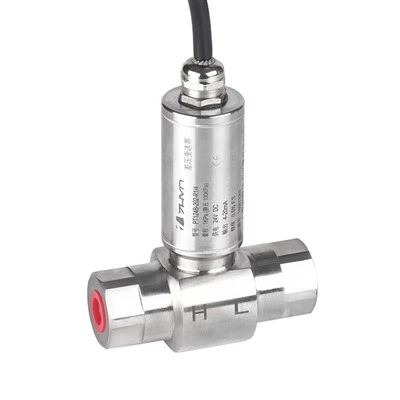
Start with pressure range and type—wait, pressure type? Yes, that’s a detail most first-time buyers miss. Pressure sensors are designed for four primary types: gauge pressure, absolute pressure, differential pressure, and sealed pressure. Gauge pressure measures pressure relative to ambient air, which is ideal for things like tire pressure or tank level monitoring where you only care about pressure above or below atmospheric. Absolute pressure measures against a perfect vacuum, which is critical for applications like barometers or high-altitude aircraft instruments where atmospheric pressure changes can skew readings if referenced to ambient. Differential pressure measures the difference between two separate pressures, used in flow meters or filters where you need to track pressure drops across a component. Sealed pressure is a middle ground, referencing pressure against a fixed sealed vacuum inside the sensor, used in applications where ambient air humidity or contamination would mess with gauge readings. For example, a customer of mine last year tried to use a gauge pressure core for a submersible water level sensor—their readings were 15% off because water pressure at depth is absolute, not gauge. That’s a $12,000 mistake from misclassifying pressure type, so don’t skip that step.
Next, accuracy and precision. These are often used interchangeably, but they’re not the same. Accuracy is how close a reading is to the true value; precision is how consistent readings are across multiple tests. For a medical infusion pump, a 1% accuracy error could mean delivering too much or too little medication, which is unsafe. For an industrial air compressor, a 2% error might be acceptable if cost is a top priority. We break our pressure sensor cores into three accuracy tiers: ±0.05% full scale (FS) for high-precision applications like aerospace instrumentation, ±0.1% FS for medical devices and test equipment, and ±0.5% FS for general industrial or consumer electronics. Don’t overbuy accuracy, though—it adds cost you don’t need, but don’t underbuy either. If your prototype relies on stable pressure readings to function, a 1% precision error that causes readings to jump 5 psi at random intervals will derail your testing.
Then, environmental operating conditions. Pressure sensors don’t exist in a vacuum (pun intended)—they have to work in the heat of a factory, the cold of a commercial freezer, the humidity of a kitchen appliance, or the vibration of a moving vehicle. Temperature range is a big one. A sensor made for room temperature (20°C) will fail if installed in an engine bay that swings between -40°C and 125°C. We test all our cores across a full -40°C to 125°C range, but some of our lower-cost lines only work from 0°C to 85°C, so double-check the operating vs. storage temperature specs. Also, consider exposure to contaminants: if your sensor is going to be installed near dust, chemicals, or liquids, you’ll need a core with a sealed housing (we offer IP67-rated options) or a sensing element coated with a protective layer like parylene. I once had a customer in the food and beverage industry who tried using an uncoated core for a brewer’s line; after two weeks, beer residue had corroded the sensing diaphragm, and they had to scrap 500 units. The parylene coating adds $0.30 per unit, but it saved them from a $50,000 recall. That’s a small cost for peace of mind.
Once you have those basics sorted, it’s time to look at form factor and electrical compatibility—details that might seem small but can derail your entire design. Form factor: do you need a through-hole core for easy soldering to a PCB, or a surface-mount device (SMD) for compact, space-sensitive designs like smart watches or implantable medical devices? Our smallest SMD core is 3mm x 3mm, which fits into projects where space is at a premium, but it has a smaller sensing diaphragm, so it’s not ideal for high-pressure applications over 20 bar. Conversely, our larger through-hole cores are better for high pressures but take up more board space, so you’ll need to adjust your PCB layout accordingly.
Electrical specs are equally critical. Most pressure sensor cores run on 3.3V, which is standard for modern microcontrollers, but some older systems still use 5V. Make sure your core’s supply voltage matches your microcontroller’s output to avoid damaging either component. Output signal is another big one: analog outputs (0-5V, 4-20mA) are simple for basic designs, but they’re prone to noise in industrial environments. Digital outputs (I2C, SPI, UART) send discrete, noise-resistant data, which is better for long-distance connections or high-noise settings. We offer both analog and digital output cores, and for customers working with IoT devices, our I2C core lets you integrate pressure data directly into wireless modules without extra signal conditioning.
One factor that’s often overlooked is long-term stability, especially for products that are designed to last 5, 10, or more years. Pressure sensors drift over time due to mechanical stress on the diaphragm, material fatigue, or exposure to harsh substances. Our high-stability cores undergo a 1,000-hour burn-in test to reduce initial drift, so they maintain ±0.1% accuracy for up to 10 years of use. Lower-cost cores often skip this test, so you might see a 2-3% drift within a year, which would require calibration updates or product replacements. If your project is a consumer device that will be discarded after 2 years, that’s a non-issue, but for industrial equipment that’s expected to run a decade, stability is non-negotiable.
Let’s talk about customization—many projects have unique requirements that off-the-shelf cores can’t meet, and that’s where a good supplier adds value. For example, a customer building a portable blood glucose monitor needed a pressure sensor core calibrated specifically for low pressures (0-300 mbar) with a 1.8V output to work with their low-power microcontroller. Our standard core had a 3.3V output, but we were able to adjust the calibration and signal conditioning to match their needs without a custom mold, which cut their lead time from 12 weeks to 4. We also offer calibrated cores pre-programmed with your units (psi, bar, kPa) so you don’t have to do on-board calibration, which saves engineering hours and reduces error. If you need a custom pressure range, output, or housing, a supplier with in-house design capabilities will be able to work with you, whereas a supplier that only stocks off-the-shelf parts will turn you away.
Now, how to vet a supplier? This is where my perspective as a core supplier matters most. I see customers every week who pick a supplier based solely on price, only to find out the core has inconsistent quality, no technical support, or long lead times. Ask for samples before you commit to a large order—test those samples in your actual environment, not just a lab. Check for ISO certification (we’re ISO 9001 and ISO 13485 certified for medical cores) because that ensures consistent manufacturing processes. Ask about lead times: if a supplier can only deliver in 16 weeks when you need it in 4, that’s a problem. We keep 50,000 units of standard cores in stock for fast delivery, and we can fulfill custom orders in as little as 6 weeks. Also, make sure the supplier offers technical support—you will have questions when integrating the core, and a supplier that only communicates via email during business hours isn’t helpful for urgent prototype issues.
Let’s wrap this up with a real example to tie it all together. Last quarter, a customer working on compact residential HVAC systems reached out. They needed a differential pressure sensor core for airflow monitoring in air handlers, with a ±2% accuracy, working in temperatures from -20°C to 80°C, 0-10 mbar range, and surface-mount compatible. They initially looked at a low-cost core from a supplier overseas, which was 20% cheaper, but that core had a precision of ±5% FS, didn’t have a temperature range covering -20°C, and required external signal conditioning. We recommended our standard differential pressure SMD core, which met all their specs, cost only 5% more than the overseas option, and required no extra components. They tested samples, approved them, and ordered 10,000 units, avoiding a design flaw that would have caused inconsistent airflow readings and costly warranty claims down the line.
Choosing the right pressure sensor core isn’t just about checking boxes on a spec sheet—it’s about aligning a part’s capabilities with your project’s unique needs, from the pressure type you’re measuring to the temperature it will face. Skip the one-size-fits-all approach, don’t prioritize cost over performance (unless cost truly is your only constraint), and work with a supplier that understands your industry’s requirements. If you’re in the design phase and need help narrowing down options, want to test samples, or have custom requirements, reach out to discuss your project needs.
General Pressue Transmitter References
- sensorsmag.com. (2022). Pressure Sensor Selection Guide: Key Parameters for Industrial and Medical Applications.
- IEEE Transactions on Instrumentation and Measurement. (2021). Long-Term Stability of MEMS Pressure Sensors for Extreme Environment Applications.
- International Organization for Standardization (ISO). (2020). ISO 13485:2016 – Medical Devices Quality Management Systems.
- MEMS Industry Group. (2021). Design Guidelines for Integrating Pressure Sensors into Consumer and Industrial Products.
Shanghai Zhaohui Pressure Apparatus Co., Ltd.
Shanghai Zhaohui Pressure Apparatus Co., Ltd. is one of the most professional pressure sensor core manufacturers and suppliers in China, featured by quality products and good service. Please rest assured to wholesale advanced pressure sensor core in stock here from our factory. Also, customized service and 1 year warranty are available.
Address: 2-6/F, Building 8, No.115, Lane 1276, Nanle Road, Shanghai, China
E-mail: sensorsales@zhyqsensor.com
WebSite: https://www.sinosensor.net/
