Hey there,
If you’ve ever dealt with deadstock management—whether you’re a livestock farmer, a compost operator, or someone just trying to wrap their head around sustainable waste solutions—you know how messy and tricky animal carcass handling can get. For years, I’ve been on the ground as a supplier of animal carcass crushing equipment, and one question pops up more than any other: Can this gear actually pair with composting, or is it just a fancy way to move stuff around? Spoiler: It absolutely can—if you do it right. Animal Carcass Crushing Equipment
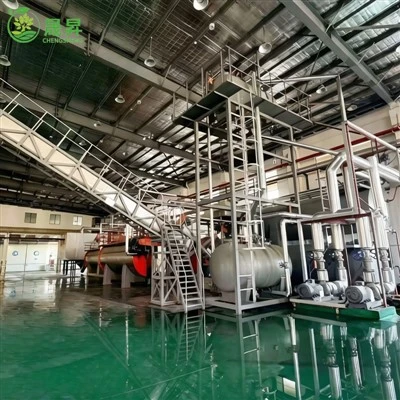
Let me break this down straight, no stuffy industry jargon. First, let’s get the basics out: Composting relies on two big things—carbon (that’s your browns: straw, wood chips, dry leaves) and nitrogen (your greens: food scraps, manure, fresh plant matter). The sweet spot is a carbon-to-nitrogen (C:N) ratio around 25:1 to 30:1. If it’s too heavy on greens (too much nitrogen), you get stinky, slimy compost that doesn’t break down. Too much carbon, and it’ll take forever to decompose. Now, animal carcasses are solid nitrogen gold—way too much, actually. A whole cow has a C:N ratio around 5:1, which is way below that sweet spot. Tossing a whole 1,000-pound cow into a compost pile would turn it into a stinky, ammonia-rich mess in a matter of weeks, and it might not even reach the high temperatures you need to kill pathogens like E. coli or salmonella.
That’s where crushing equipment comes in. Let’s talk about why size matters here. Think of composting like baking a cake: you don’t toss a whole, raw egg in and expect it to mix evenly. Same with carcasses. If you leave a whole carcass, the outer layers might start to rot, but the inside stays intact for months. It’s a breeding ground for pests, predators, and disease. Crushing the carcass into smaller chunks (we’re talking 2 to 4 inches, usually) changes everything. Those small pieces break down way faster—no more waiting a year for a cow carcass to disappear. And because they’re mixed in with carbon materials right away, you can balance that nitrogen load without ending up with a pile that reeks.
Wait, but hold up—this isn’t just “crush and toss.” There are specific steps to make this work, and I’ve seen way too many people mess it up by skipping the details. First, you can’t just crush any carcass into any compost pile. You need to prep the compost pile first—layer it with 12 to 18 inches of dry, carbon-rich material at the base. That acts as a barrier so the crushed carcass doesn’t leach nutrients down into the soil where it could contaminate groundwater. Then, when you add the crushed carcass, mix it in with extra carbon to hit that ideal 25:1 ratio. A quick rule of thumb: For every pound of crushed carcass, add 3 to 4 pounds of browns (wood chips, straw, even dry yard waste). That simple step keeps the smell down and the compost balanced.
Another big win with crushing: temperature management. Compost needs to hit 130°F to 170°F for at least three consecutive days to kill harmful pathogens. If you have a whole carcass, the thick hide and muscle act as an insulator— the center might never get hot enough. Crush it, and you’ve got smaller particles that heat up faster, and the heat spreads evenly through the pile. I’ve seen farms that used our equipment cut their compost cure time in half—from 6 months to 3 months—because the crushing step eliminated those cold spots. That’s a huge deal for farmers who need to get compost back out for planting season, or compost operators turning waste into a sellable product quickly.
But let’s be real, there are myths out there. Some people say crushing carcasses spreads disease. No, that’s only if you don’t handle it right. If you’re crushing infected animals, you need to make sure the crushed material is fully composted (so those pathogens are dead) before it leaves the pile. Our equipment is built with closed-chamber systems that contain the material so there’s no cross-contamination during crushing—you’re not spraying tiny bits of bacteria all over your farm. Another myth: compost with carcasses is unsafe for food crops. When done properly, compost from animal carcasses is just as safe as any other compost—those pathogens are killed off during the high-heat phase, and the final product is a nutrient-rich soil amendment that feeds crops. The key is following EPA guidelines for mortality composting, which is exactly what this combination of crushing and composting is designed for.
Wait, let’s talk numbers to make this concrete. A dairy farm might have 50 head of deadstock a year, averaging 1,000 pounds each. Without a crusher, they’re stuck renting a incinerator or paying to haul carcasses to a landfill—both cost hundreds of dollars per animal, plus they’re bad for the environment. With our equipment, they can crush those carcasses into 2-inch chunks, mix in wood chips from their own farm, and turn it into compost that they can use for their pastures, saving them thousands a year in waste disposal costs. One of my regular clients, a 2,000-head cattle farmer in Iowa, told me that in the first year they used our crusher for composting, they cut their waste costs by $12,000 and their pasture yields went up 18% because the compost was so nutrient-dense. That’s not a fluke—this combo works.
Now, what about challenges? It’s not all perfect. For one, size limits. If you’re dealing with very large animals, like horses or mature bulls, you might need a heavy-duty crusher that can handle dense bone and thick hide. Some smaller crushers can only do smaller livestock (pigs, sheep, chickens), so you’ve got to pick the right equipment for your needs. Another challenge: moisture. Crushed carcasses can have a lot of moisture, which is why balancing with carbon is so important. If your compost pile is too wet, it turns anaerobic (stinky, no heat), so you might need to add extra dry straw or turn the pile more often. We always tell clients to test their C:N ratio with a simple test kit—you can grab one at any farm supply store—to make sure you’re not overdoing the nitrogen.
Also, regulatory stuff. Every area has rules about mortality composting, so check with your local agriculture department before you start. Some places require specific pile size (usually 10 feet wide, 5 feet tall, minimum) to make sure it heats up enough, and they might require you to keep records of what you’re composting. Our team works with clients to make sure they understand those rules—we don’t just sell a crusher and walk away. We give tips on setup, ratio calculations, and even how to troubleshoot if the pile isn’t heating up.
Wait, one more thing that a lot of people don’t think about: pest control. Whole carcasses attract coyotes, raccoons, even rats. Crushed carcasses, when mixed properly with carbon, don’t smell as strong, so they’re way less likely to draw pests. One client who used to have to trap 20+ raccoons a month around their deadstock pile told me that after they started crushing and composting, they only saw 2 or 3 a month. That’s a massive win for both convenience and keeping wildlife away from your farm.
So, to circle back: Can animal carcass crushing equipment combine with composting? Absolutely. It’s not just a workable combo—it’s one of the most sustainable, cost-effective ways to handle animal mortality waste out there. The crushing step solves the biggest problems with whole-carcass composting: slow breakdown, uneven heating, pest attraction, and stinky, unbalanced compost. When paired with the right carbon materials and proper setup, it turns a waste problem into a valuable resource. You’re diverting waste from landfills, cutting down on disposal costs, and producing a nutrient-rich compost that feeds your soil.

If you’re a farmer, compost operator, or anyone dealing with animal carcass waste, don’t write this off as a weird industry trick. It’s a proven method that’s been used on small family farms and large commercial operations alike for years. Now, if you’re ready to explore this for your own operation, we’re here to walk you through the right equipment, setup tips, and even how to make sure you’re following all the local rules. Don’t hesitate to reach out to connect about your specific needs—whether you’re dealing with small livestock or large cattle, we’ve got the gear and know-how to make this work for you.
Animal Waste Conveying Equipment References
- USDA Natural Resources Conservation Service. (2020). Mortality Composting: A Guide for Livestock Producers. U.S. Department of Agriculture.
- Epley, M. K., et al. (2017). "Effects of carcass size and crushing method on mortality composting efficiency." Journal of Environmental Management, 198, 212-218.
- Canadian Food Inspection Agency. (2021). Sustainable Mortality Management Practices for Agricultural Operations. Government of Canada.
Zhejiang Shengsheng Environmental Protection Technology Co., Ltd.
With abundant experience, we are one of the leading manufacturers and suppliers of animal carcass crushing equipment in China. We warmly welcome you to wholesale animal carcass crushing equipment in stock here and get quotation from our factory. All customized products are with high quality and competitive price.
Address: No.899 Huifeng South Road, Jiangnan Subdistrict, Linhai City, Taizhou City, Zhejiang Province, China
E-mail: 564958410@qq.com
WebSite: https://www.ssincinerator.com/
