Let’s cut to the chase—if you’ve ever shopped for fire-rated products, you’ve probably stared at a steel fire window price tag and thought, “Wait, that’s way more than a regular vinyl or aluminum window.” And yeah, I get it—when I’m chatting with contractors, architects, or even small business owners just starting out, that’s the first question they ask: “Are steel fire windows actually expensive, or am I getting gouged here?” As a steel fire window supplier, I’ve fielded this question a hundred times, and it’s never a one-word answer. Let’s break this down like I would with someone who’s standing in my warehouse, pointing at a stack of finished windows and asking for the real tea. Steel Fire Window
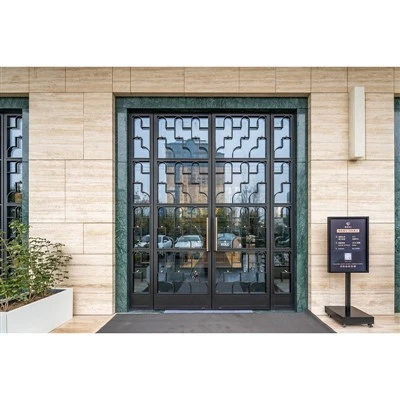
First off, let’s stop lumping all steel fire windows into the same bucket. I see this all the time—folts browsing Amazon or a generic home goods site, seeing a “fire-rated steel window” for $200 and thinking, “Why’s yours $800?” But here’s the thing: that $200 window? It’s probably rated for 20 minutes, maybe tested in a lab that cuts corners, and made with thin steel that would warp if there’s a real fire. The windows we supply are rated for 90, 120, even 180 minutes—meaning they hold back flames, smoke, and heat for three whole hours. That’s not the same product. So when someone asks if they’re expensive, my first follow-up is always, “What do you actually need this window to do?”
Let’s talk about why the quality tier makes such a big difference, because that’s where the cost math gets real. A steel fire window isn’t just a steel frame with glass stuck in it. For a product to get a legitimate fire rating, it has to go through third-party testing—like NFPA 252, or UL 10B, or CAN/ULC S104. Those aren’t cheap. Each test costs thousands of dollars, and you can’t cut corners here—if your window fails a 90-minute test, you have to redesign it, rework the manufacturing, and test it all over again. We spent six months and over $120k on testing for our 120-minute model alone. That cost doesn’t disappear; it gets baked into the price of every window we sell.
Then there’s the material itself. The steel we use isn’t the thin, flimsy stuff you’d use for a backyard fence. It’s heavy-gauge, 14-gauge minimum for frames, sometimes even 10-gauge for larger openings. That extra thickness is non-negotiable for fire resistance—thin steel softens and bends at high temperatures, which means flames get through. We test every batch of steel we get from our supplier because even a tiny difference in metal composition can throw off the entire rating. And the glass? Regular clear glass shatters in 5 minutes of a fire. We use ceramic-fused glass, or tempered glass with intumescent coatings that expand and block heat when exposed to flames. That glass is 10 to 15 times more expensive than standard window glass, and it’s not something you can buy at your local hardware store in a random size. Add in the intumescent seals around the frame—rubber-like strips that melt and swell to fill gaps when heated—and suddenly you’re looking at parts that cost way more than a regular window’s components.
Wait, but let’s be honest—cost isn’t just about parts and testing. There’s labor and compliance, too. Fire-rated products aren’t something you can slap together on a weekend. Every weld has to be inspected, every seal has to be applied in a precise way that doesn’t leave gaps, and we have to keep full documentation for every window we ship. For contractors and building owners, that documentation is gold—if you get audited by the fire marshal, or if there’s an incident, you need to prove your windows are actually rated. If you buy a cheap window that doesn’t have that paperwork, you’re leaving yourself open to huge fines, or even worse, if a fire happens and insurance denies your claim. That’s a risk most people don’t factor in when they’re only looking at the upfront cost.
Let me give you a real example that I’ve had this year. A small restaurant owner came to us back in March, complaining that a “fire-rated” window he bought online was going to cost him more in the long run. He’d paid $250 for a 36×60 inch steel fire window, but when his local building inspector showed up for his permit, they tore it out because the rating certificate was fake. The site he bought from just copied and pasted UL numbers from other products, so there was no actual test data. He ended up having to order a real 90-minute rated window from us, same size, for around $750. At first, he was mad—until I showed him the test reports for our window, and told him if he’d tried to use that fake one, his insurance would have bailed on him if a grease fire spread to the adjacent space. That $250 was a total loss; the $750 is something he can actually use and rely on.
Another angle: lifecycle cost. Yeah, steel fire windows are more expensive upfront, but how long do they last? We offer a 20-year warranty on our frames, because steel doesn’t rot, warp, or fade like vinyl, and the intumescent parts are rated to last 50 years in normal conditions. A regular vinyl window might cost half as much, but in 10 years it’s going to need replacing, and if it’s in a commercial space (like a retail store, office, or apartment building), that means downtime, labor fees, and maybe even code violations if it’s not fire-rated. I’ve had clients tell us that our windows paid for themselves in 3 years because they didn’t have to deal with multiple replacements and compliance issues.
Now, is there a time when you can get a steel fire window that’s “affordable” without sacrificing quality? Absolutely—if you know what you need, and you’re not overbuying. For example, if you just need a 20-minute rated window for a small utility closet or a basement stairwell, you don’t need the 120-minute model that’s made for a commercial building’s exterior wall. Our 20-minute windows are priced much lower, and they still go through third-party testing. I see people waste money all the time by buying a higher rating than their actual building code requires. The code only asks for a specific time limit based on the space, so matching your rating to your need is the easiest way to keep costs down.
Also, custom sizing vs. standard sizes. We keep a stock of common sizes (like 24×36, 36×48, 48×60) that we can ship same-day, and those are cheaper than custom-sized windows because we don’t have to cut or fabricate from scratch. If your opening is a weird size, we can make a custom window, but that’ll add a little to the cost—but it’s still cheaper than buying a cheap, wrong-sized window that you have to modify or return.
Wait, let’s address the elephant in the room: why do some suppliers charge way more than us, and some charge way less? The ones charging way more are often the ones that work with high-end architects or luxury commercial projects, where the budget is flexible and they’re adding markup for their brand or design. The ones charging way less? Well, chances are they’re cutting corners on testing, material thickness, or documentation. I’m not saying all cheap windows are bad, but if a price is 50% lower than the industry average for the same rating, you need to ask questions. Are they using untested steel? Do they have third-party test reports? Can they provide the compliance paperwork you need for your project? If the answer is no, that’s a red flag.
I’ve been in this industry for 12 years, and I’ve seen so many people make the mistake of choosing the cheapest option without doing their homework. Last year, a apartment building developer bought 40 fake fire windows for $300 each, total $12k, and when the fire marshal inspected, he made them replace all of them at a cost of $700 each—so $28k total, plus $5k in fines. That’s a $21k loss, all because they tried to save a little upfront. That’s the thing about fire safety: it’s not a place to cut costs. A steel fire window isn’t just a window—it’s a barrier that can save lives, protect property, and keep you from getting sued.
So to circle back to the original question: Are steel fire windows expensive? Yeah, sometimes. But they’re not expensive for no reason. They’re expensive because they’re tested, made with high-quality materials, and backed by compliance that actually holds up. If you’re buying the right rating for your space, working with a supplier that’s transparent about their testing and pricing, you’ll get a product that’s worth every penny.
Here’s the thing that I want every person reading this to know: I’m not here to sell you the most expensive window on the market. I’m here to help you figure out exactly what you need, so you don’t overspend, and you don’t end up with a window that doesn’t actually do what it’s supposed to. If you’re a contractor working on a small retail project, we have affordable 90-minute windows. If you’re a facility manager for a hospital, we have custom 180-minute windows that meet your exact fire code requirements. No hidden fees, no fake test reports, just real products at fair prices.
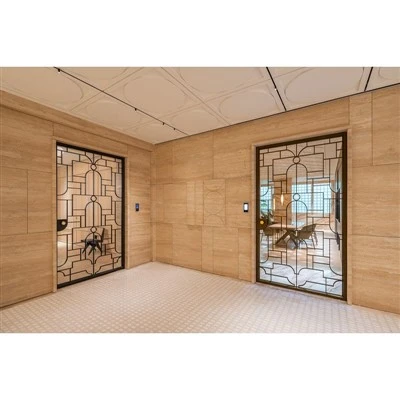
If you’re ready to talk about your project, whether you need a single window for a home remodel or a hundred for a commercial build, reach out. I can send you our latest test reports, break down pricing for your specific needs, and make sure you’re getting exactly what you need without paying for stuff you don’t. Fire safety shouldn’t be a guessing game, and pricing shouldn’t be a rip-off. Let’s chat.
Thermally Broken Steel Window and Door References:
- National Fire Protection Association (NFPA). (2021). Standard for Fire Tests of Window Assemblies (NFPA 252). Quincy, MA: NFPA.
- Underwriters Laboratories (UL). (2022). Standard for Fire Tests of Door Assemblies (UL 10B). Northbrook, IL: UL LLC.
- American Iron and Steel Institute (AISI). (2020). Steel Construction Manual (15th ed.). Washington, DC: AISI.
- International Code Council (ICC). (2021). International Building Code (IBC). Country Club Hills, IL: ICC.
- Fire Protection Research Foundation (FPRF). (2019). Cost-Benefit Analysis of Fire-Rated Window Systems for Commercial Buildings. Quincy, MA: FPRF.
PDA Steel Door and Window
We are one of the most experienced steel fire window manufacturers and suppliers in China, also support customized service. Please feel free to buy high-grade steel fire window in stock here from our factory. Quality products and reasonable price are available.
Address: No.8, Central Avenue, Jinghai Economic Development District, Tianjin
E-mail: Nancy@eng-pda.com
WebSite: https://www.pda-steelwindows.com/
