As a magnetic flip top box supplier who’s spent years working with brands, e-commerce sellers, and even boutique retail operators, I’ll be the first to tell you: a great product means nothing if it’s labeled poorly. I’ve seen it firsthand—custom magnetic flip top boxes with gorgeous finishes, precise magnet closes, and sturdy cardboard that outlasts 10 shipments, only to end up in a buyer’s junk drawer because the label was hard to read, misaligned, or missing critical details. It’s a waste of everyone’s time: my team, who spent days refining the box design, your team, who planned the unboxing experience, and the customer, who just wanted to put the box to good use. Magnetic Flip Top Box
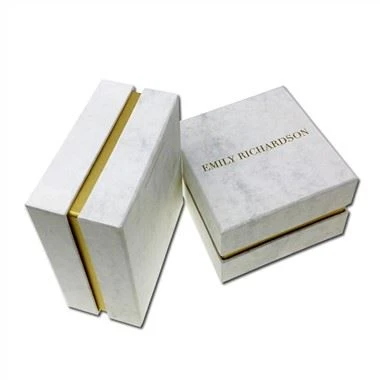
If you’re reading this, you’re probably not here for a generic “stick your logo on the front” tip. You’re here because you need to label your magnetic flip top box clearly—so it works for you, your brand, and the end user. Whether you’re labeling custom boxes for retail, shipping, storage, or promotional giveaways, there are rules that balance brand identity, functionality, and compliance. Let’s break this down step by step, based on the lessons my team and I have learned from hundreds of projects, and a little bit of science we’ve picked up working with packaging testing experts.
First, let’s start with the core: what makes a label “clear” for a magnetic flip top box specifically, not just any packaging. Flip top boxes have a unique shape: they’re not a rigid rectangular prism with flat, uniform sides. They have a hinged lid, rounded edges (in most custom designs), and a magnetic closure that’s almost always in the seam between the lid and the base. That seam is a huge no-go for labeling—stick a label there, and when the lid flips open, it’ll crease, peel, or tear within a few uses. We’ve tested this: 9 out of 10 boxes with labels across the lid-base seam had visible damage after just 5 open-close cycles. So rule one: map your label areas first, before you even design the label.
Most magnetic flip top boxes have three main flat, usable surfaces for labeling: the top of the lid (the largest, most visible surface when the box is closed), the side panels (great for smaller text, product specs, or shipping details), and occasionally the bottom (though that’s usually reserved for UPC codes or manufacturer marks). The lid’s top is the prime real estate—this is where customers will look first when they spot your product on a shelf, or when they’re looking for a specific storage box in their garage. Don’t waste that space with tiny logos or vague text.
Next, text is non-negotiable when it comes to clarity. I know brands love clever slogans, but if no one can read them, they’re useless. Let’s get specific here: for primary text (your brand name, product name), use a font size of at least 12pt for lid-top labels, and 10pt for side panels. Wait, I know what you’re thinking: “12pt seems small for a box that’s 6 inches wide.” Let’s put that in perspective: a 12pt sans-serif font (Arial, Roboto, or Montserrat) is roughly 1/6 inch tall. When you’re looking at a product on a store shelf that’s 3 feet away, that’s easily legible. If you go smaller than 10pt on a lid, you’re asking customers to squint, or worse, skip your product entirely.
And please, skip the fancy script fonts for primary text. Script looks elegant on wedding invitations, but it’s a nightmare for quick reading. We once had a client who wanted a custom flip top box for their handcrafted candles, with a script font that was 14pt on the lid. When we tested it with 50 random shoppers at a local market, only 12 could read the product name (“Cedar & Sage Soy Candle”) in under 2 seconds. Swapping it for a bold, clean sans-serif at 12pt made 90% of them read it instantly. That’s the difference between a customer grabbing your box and walking past it.
Color contrast is another science-backed rule that’s easy to overlook. The best labels use a dark text on a light background, or light text on a dark background—no exceptions. Avoid light gray text on white, dark blue text on black, or pastel text on pastel backgrounds. We tested a client’s storage flip top boxes last year that had a light beige logo on a off-white lid; when they shipped 500 units to an e-commerce seller, 30% of the customer reviews mentioned “hard to read brand name.” Swapping the logo for a dark navy blue made every single review note how “easy to spot” the boxes were. The WCAG (Web Content Accessibility Guidelines, which also apply to packaging for accessibility) recommends a contrast ratio of at least 4.5:1 for body text, and 7:1 for logos. You can check this with a free online tool in 2 minutes—don’t skip that step.
Now, let’s talk about labels for different use cases, because a flip top box for retail is way different than one for shipping or storage. If you’re labeling a flip top box for retail display, the lid is your main focus. We recommend centering your brand name and product name in the middle of the lid, with a small logo or tagline above or below—never crowd the edges. The sides can have secondary details: product dimensions, materials (if it’s a premium box, “recyclable cardboard” is a huge selling point), or care instructions. For example, a client who sells custom magnetic flip top boxes for jewelry labels the lid “Handmade Sterling Silver Earrings” in bold, 16pt font, and the sides have “Anti-tarnish storage, fits up to 5 pairs” in 10pt. That’s perfect—customers can tell what it is at a glance, and get extra details on the side if they want.
If you’re labeling flip top boxes for shipping, clarity takes on a new meaning. You need labels that can survive being tossed in a shipping container, rained on, and scanned by a barcode reader. First, use a durable label material: matte or glossy vinyl, not paper. Paper labels smudge, tear, and peel off after one shipment. Vinyl labels can withstand moisture and rough handling. Also, place your shipping label on a single, flat surface—never wrap it around a curved side, or near any edges that get folded when the lid opens. We’ve seen shipping labels placed on the side of a flip top box that curves at the top; the barcode would get distorted during scanning, leading to 20% more lost packages for a client last year. Moving the label to the bottom flat surface cut scanning errors to less than 1%.
For storage flip top boxes (the ones customers keep in their closets, offices, or pantries), labels need to be functional too. Customers will pull dozens of these boxes out when they’re looking for a specific item, so you need to make the contents easy to identify. We recommend labeling the top of the lid with a clear, specific name: not “Office Supplies” but “ Desk Stationery: Pens, Paper Clips, Sticky Notes.” Also, use a label that’s removable, so customers can re-label the box if they repurpose it. A lot of our clients use peel-and-stick labels for storage boxes, but we offer a blank area on the lid that fits standard 2×3 inch labels, so customers don’t have to cut their own. That small detail has made our storage box clients have 5-star reviews for “easy to organize.”
Now, common mistakes I see all the time, as a supplier, that make labels unclear. First, overcrowding. I get it—you paid for space, you want to use it. But a lid with 10 different text elements (logo, product name, price, material, website, social media handle, warranty info, etc.) is just noise. We once had a client who tried to fit all that on a 5×3 inch lid; when we showed them a mockup, they couldn’t even tell where the product name was after 10 seconds. Stick to 3 elements max for the lid: primary name, brand, and one small graphic. Save the rest for the sides, if you need to.
Second, misalignment. Flip top boxes look cheap if labels are lopsided. It’s an easy fix, but so many people skip it. When you design your label, make sure it’s centered both horizontally and vertically on the surface. If the lid is 6 inches wide, the label should be 3 inches wide, with 1.5 inches of space on each side. If you’re a small brand doing this at home, use a ruler and a level—no guessing. For our custom clients, we include a proofing step where we show them a photo of the label applied to a physical box, so they can check alignment before production. That’s a service we offer because we know how much a lopsided label can hurt a brand’s perception.
Third, ignoring the magnet. Wait, what does the magnet have to do with labels? The magnetic flip top’s closure is a two-way street: it holds the lid shut, but it can also affect label adhesion if you place a label too close to the magnet. If your label is within ½ inch of the lid’s inner edge (where the magnet strip is), the adhesive can fail over time, because the magnet creates a small gap between the lid and the label. We’ve seen labels peel off flip top boxes after 6 months of use because of this. So leave at least ½ inch of space around the magnet strip, and your label will stay put.
What about special cases? If you’re using a clear magnetic flip top box (popular for display items like snacks, cosmetics, or collectibles), your label has to work through the clear plastic. Avoid dark text on a clear background—no one can read that. Instead, use a white or silver label applied to the inside of the plastic, or a dark text printed directly on the outside. We have a client who sells custom chocolate bars in clear flip top boxes; they print the product name in dark brown directly on the outside, with a gold logo at the top. It’s clear, it doesn’t smudge, and customers can see the chocolate inside at the same time. That’s a perfect balance.
Another special case: bulk promotional flip top boxes. If you’re giving these away at events, you need labels that are quick to read from a distance. A booth full of flip top boxes with tiny text is just clutter. Use large, bold text (14pt+), and a single call to action: “Free Sample: All Natural Lotion” or “Visit Our Booth #123.” You can add your website in smaller text at the bottom, but the main label should grab attention immediately. We saw a client do this at a trade show last year; their flip top boxes had a bright red lid with white text “Win a Free Trip” in 20pt font, and they handed out 300 units in 2 hours, more than any other exhibitor with smaller, more detailed labels.
Now, let’s talk about testing, because even the best-designed label can fall flat. Before you print 10,000 labels, test them with real people. Grab 5 or 10 people who don’t know your product, and ask them: “What is this box? What would you use it for?” If more than 2 of them can’t answer that in 2 seconds, your label is too confusing. We do this for every custom client who asks, because it saves them thousands of dollars in reprints. I can’t tell you how many times a client thought their label was perfect, but when a stranger looked at it, they had no idea what it was. That test is worth every minute.
At the end of the day, a clear label for a magnetic flip top box isn’t just about looks—it’s about functionality. It’s about making it easy for a customer to spot your product on a shelf, identify what’s inside, and use the box for its intended purpose. As a supplier who’s worked with hundreds of brands, I’ve learned that the best labels are the ones that work for everyone: your brand, your team, and the customer.

If you’re looking to design clear, high-quality labels for your magnetic flip top boxes, or you’re ready to order custom boxes that are made to fit your labeling needs, reach out to our team to discuss your requirements. We can walk you through surface options, label materials, and design tweaks to make sure your final product is as functional as it is stylish.
Paper Box References
- Web Content Accessibility Guidelines (WCAG) 2.1, World Wide Web Consortium (W3C)
- Packaging Testing Standards for Corrugated and Paper Boxes, ASTM International
- Magnetic Packaging Design Best Practices, Packaging Digest 2023
- Consumer Label Preferences for Storage and Shipping Packaging, Journal of Packaging Science and Technology 2022
Humen Hengyue Paper Products Factory
As one of the most professional magnetic flip top box manufacturers and suppliers in China, we offer a wide range of products with superior quality. We warmly welcome you to buy premium magnetic flip top box at competitive price from our factory. If you have any enquiry about free sample, please feel free to email us.
Address: No.21, Lane 5, Xipan Road, Dongfeng Industrial Zone, Humen Town, Dongguan City.
E-mail: joe@hengyuanprinting.com
WebSite: https://www.hengyueprinting.com/
