Hey guys, welcome back to the blog! If you’re here, chances are you’ve been searching for a portable generator and stuck on one big question: “What size do I even need?” Let me tell you, I’ve been working with portable generators for years now, and this is the question I get every single day from customers—whether they’re prepping for a weekend camping trip, bracing for a storm, or just need backup power for a job site. I’m not gonna hit you with a bunch of jargon or make this super complicated; we’re gonna break it down like we’re chatting over a coffee. No fluff, just real, usable info. Portable Generator
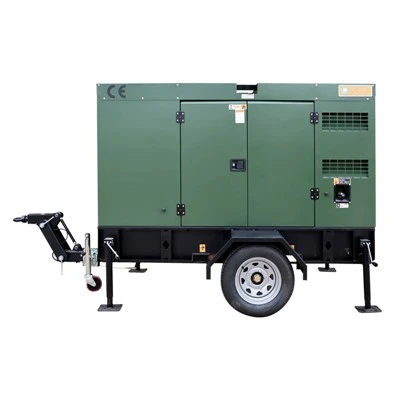
First off, let’s get one thing straight: buying a generator that’s too small is useless, and one that’s way too big is a total waste of money. I’ve seen so many folks drop hundreds on a massive generator that only runs a fridge and a couple lights when they could’ve gotten a smaller, cheaper one that fits exactly what they need. The key here is calculating your total power demand, and that means writing down every single thing you want to run at the same time.
Wait, right—watts, amps, volts. I know those terms sound confusing, but let’s keep it simple. All you need to remember is watts. That’s the unit of power, and every appliance, tool, or device will have its wattage listed somewhere. Sometimes it’s on the nameplate, sometimes in the manual. If you can’t find it, a quick Google search for “[your appliance] wattage” will usually pull it up. No need for a physics degree here.
Let’s start with the basics for the most common uses: home backup during a storm. Last winter, a bunch of my customers in the Midwest had power outages for 3+ days, so that’s a super relevant example. Let’s say you want to run your essential stuff: fridge, sump pump, space heater, a few LED lights, and a phone charger. Let’s add those up. A standard fridge uses about 700 watts when it’s running, the sump pump is around 1,000 watts, a space heater is 1,500 watts, 5 LED bulbs are 50 watts total, and chargers are negligible. Add all that together: 700 + 1,000 + 1,500 + 50 = 3,250 watts. But hold on—here’s the mistake a lot of people make: starting watts vs. running watts.
Oh right! That’s the big one I almost forgot. Some appliances, especially motors (fridges, sump pumps, power tools), need a burst of extra power to start up. That’s called starting watts (or surge watts), and it’s usually 2-3 times the running watts. A fridge’s running watts are 700, but its starting watts are around 2,100. A sump pump’s running is 1,000, starting is 3,000. So if I add those starting watts instead of just running, let’s recalculate. The total starting watts for that combo would be: fridge start (2,100) + sump start (3,000) + space heater (1,500, which doesn’t need extra for start) + lights/chargers (50) = 6,650 watts. Wait, so that means a 7,000-watt generator would work here? Yeah, that makes sense. A 5,000-watt might be tight because the sump pump’s 3,000 starting watts alone would leave only 2,000 for everything else, which isn’t enough for the fridge to start too. I’ve had a customer last year try that, and he was pissed when the sump kicked on and killed the fridge mid-storm. Don’t be that guy.
Now, what if you’re going camping or tailgating? That’s a totally different scenario. You don’t need a sump pump or space heater, but you might want a TV, a mini-fridge for drinks, a portable grill’s electric starter, speakers, and maybe a microwave for popcorn. Let’s tally that: mini-fridge (700 running, 2,100 starting), TV (150), speakers (100), microwave (1,000), grill starter (200). Total starting watts here would be around 2,100 + 150 + 100 + 1,000 + 200 = 3,550. So a 3,500-watt generator would work, or even a 4,000-watt to give you a little extra breathing room in case you want to add a few more things later. Camping generators don’t need to be huge—most people go for 2,000 to 4,000 watts for that use case. I sell a ton of those for campers; they’re lightweight, easy to move, and use less gas than the big home backup ones.
What about job sites? That’s another common one. If you’re a contractor, you might need to run power tools: a circular saw (1,800 starting, 1,200 running), a drill (500), a nail gun (300), a benchtop saw (2,000 starting, 1,500 running). Let’s add the starting watts here: saw start (2,000) + circular saw start (1,800) + drill (500) + nail gun (300) = 4,600. So a 5,000-watt generator would handle that easily. If you have bigger tools, like a table saw or air compressor, you’ll want to bump up to 7,000 or 8,000 watts just to be safe. Job sites can have lots of tools running at once, so you don’t want to overload the generator—overloading can damage it, and that’s a quick way to end your workday early.
Wait, how do you know if you’re overloading? Most generators have a label that says their max watts (which is the starting watts) and continuous watts (running watts). That’s another key point: continuous vs. max. Continuous watts are what the generator can keep running all day, non-stop, while max is the surge it can handle for a few seconds to start motors. So when you’re adding up your appliances, you can’t exceed the continuous watts for all the running things, and the total starting watts can’t exceed the max. That’s a good rule to follow. For example, if a generator is 6,000 continuous / 7,500 max, your total running watts can’t be more than 6,000, and your total starting watts can’t hit 7,500. I always tell customers to leave a little buffer—like 10% extra—because sometimes you’ll think of something you forgot, or a tool’s wattage is a little higher than you found online. That buffer will save you from panicking when you plug in that extra space heater or LED string lights.
Now, let’s talk about some factors that might change your decision. First, fuel type. Generators run on gas, propane, or diesel. Gas is cheaper for smaller models, but it can go bad if you store it for more than a month, which is a bummer for backup generators you only use once a year. Propane is better for storage because it lasts longer, and diesel is more efficient for big generators, so they run longer on a tank. But that doesn’t really change the size—you still calculate watts the same, just pick the fuel type that fits your needs.
Another thing: portability. If you’re moving your generator a lot (for camping, job sites), you want something lightweight, with wheels maybe. Smaller generators (under 5,000 watts) are usually easier to move, while bigger ones are heavier and meant to stay in one place (like a garage for home backup). So you don’t want to get an 8,000-watt behemoth if you’re gonna haul it to a campground every weekend. That’s overkill and a pain to move.
Oh, and inverter vs. conventional generators. Inverter generators are quieter, more fuel-efficient, and produce clean power that’s safe for sensitive electronics like phones, laptops, and TVs. Conventional are louder, cheaper for the same wattage, but not as good for electronics. So if you’re powering a laptop on a camping trip, an inverter generator (usually 2,000 to 4,000 watts) is the way to go. If you’re powering power tools on a job site, a conventional generator might be fine. The size still matters, but this is a side note to keep in mind when you’re shopping.
Let me give you a real example of a customer I had last month. A guy came in asking for a generator for his off-grid cabin. He wanted to run a fridge, a microwave, a space heater, and some lights. He added up the running watts: 700 (fridge) + 1,000 (microwave) + 1,500 (heater) + 100 (lights) = 3,300. I told him to add starting watts: fridge start (2,100) + microwave start (3,000) = 5,100. So he needed at least a 5,500-watt generator. He initially tried to get a 3,500-watt, but I explained that the microwave’s starting watts alone would blow the 3,500. He ended up getting a 6,000-watt inverter generator, and he texted me last week saying it’s perfect—runs all his stuff, and the quietness is great because his cabin is near neighbors. That’s exactly the kind of call I love to take, helping someone avoid a mistake.
Wait, what if you’re still unsure? The best thing to do is list every single item you want to run, write down their running and starting watts, add it up, and then add 10% to that total. That extra 10% is your buffer, and it’s way better than being too tight. If your total is 5,000 running / 7,000 starting, then a 7,000-watt generator (which is usually 5,500 continuous, 7,000 max) will work. If you’re somewhere in between, go up a size. It’s easier to have a generator that’s a little too big than too small. A lot of customers ask if they can get a smaller one, and I always say it’s worth the extra $50-$100 to have a little breathing room.
Now, let’s talk about common mistakes people make. Number one: forgetting starting watts. That’s the big one. I can’t tell you how many times someone comes in saying “I need a 5,000-watt generator” because they added up running watts, but their starting watts are 6,500, so 5,000 is useless. Number two: not considering what they might add later. They buy a 3,000-watt for camping, then want to add a portable AC the next year, and it’s not enough. So if you think there’s a chance you’ll expand, bump up a size. Number three: buying too big. I once had a customer buy a 10,000-watt generator just because he thought “bigger is better,” but he only uses it to run his fridge and TV. That cost him twice as much as he needed to spend on a 4,000-watt. Don’t do that.
So, to wrap this up, the steps to find your size are: 1. List all appliances/tools/electronics you’ll run at the same time. 2. Look up their running watts and starting watts (surge watts). 3. Add all running watts to get your continuous load. 4. Add all starting watts to get your surge load. 5. Pick a generator that has a continuous rating equal to or higher than your running watts, and a max (surge) rating equal to or higher than your starting watts. 6. Add 10% buffer just in case. Easy, right?
If you’re still confused, or you want to talk through your specific needs—whether it’s home backup, camping, job sites, off-grid, whatever—I’m here to help. I’ve been in this game long enough to know what works for different situations, and I can point you to the right generator without you wasting money on something you don’t need. Just reach out, and we can chat through all the details. No pressure, just real advice from someone who sells generators and sees every use case imaginable.
Wait, one last tip: always check the generator’s manual or product specs to confirm the actual watts, because sometimes the label on the appliance is a little off. A microwave might say 1,000 watts, but actually uses 1,100. It’s better to overestimate a tiny bit than underestimate. And don’t forget to factor in extension cords—if you’re running long cords, they can cause a voltage drop, which means your generator has to work a little harder, so that’s another small reason to have that buffer.
Okay, that’s all I’ve got for today. I hope this takes the stress out of picking the right generator size. It’s not as scary as it sounds once you break it down. If you have any questions, or you’re ready to start looking for the right one for you, don’t hesitate to connect for a procurement chat. I’m always happy to help.
Medium Diesel Generator Sets References
- U.S. Department of Energy. (2022). Portable Generator Safety and Use Guidelines.
- Consumer Reports. (2023). How to Choose the Right Portable Generator for Your Needs.
- Portable Generator Manufacturers Association. (2021). Generator Wattage Calculation Guide.
- National Fire Protection Association. (2022). Standard for Portable Generators and Power Equipment.
Taizhou Jinte Electromechanical Technology Co., Ltd.
We are one of the most professional portable generator manufacturers and suppliers in China. With abundant experience, we offer a wide range of generators with superior quality. Please rest assured to buy advanced portable generator for sale here from our factory. Customized orders are welcome.
Address: Room 207-214, Eurasia International Garden Commercial Center, Hailing District, Taizhou City
E-mail: Sales@generatorschina.com
WebSite: https://www.jintepower.com/
