If you’ve ever walked into a modern cafe, a sleek office lobby, or a minimalist residential space with smooth, uniform walls that look both polished and surprisingly tough, chances are you’ve spotted PS wall panels. As a PS wall panel supplier who’s worked with installers, architects, and homeowners for over seven years, one question still pops up more often than any other: Are these panels actually durable? It’s a fair ask—for anyone spending money on wall treatments, you want something that won’t chip, fade, or peel halfway through its expected lifespan. Today, I’m breaking down what makes PS wall panels hold up over time, what factors affect their durability, and what you should look for to ensure your investment lasts. PS Wall Panel

First, let’s start with the basics: PS stands for Polystyrene, a lightweight, rigid thermoplastic polymer that’s been used in building materials for decades. You might know it from insulation or disposable packaging, but when formulated into wall panels, it’s modified with stabilizers, UV inhibitors, and fire-retardant additives tailored for interior and semi-exterior use. The key to PS wall panel durability isn’t just the material itself—it’s how it’s manufactured. High-quality PS panels are extruded under controlled conditions to create a dense, consistent cellular structure, which gives them strength without adding the heavy weight of plaster or solid wood. Cheaper, mass-produced panels, by contrast, often use recycled polystyrene with inconsistent density, leading to weaker points that crack or break easily.
Let’s get to the real-world tests, because durability isn’t just a lab number—it’s how a panel handles daily life. First up, impact resistance. I’ve installed PS panels in high-traffic spaces like co-working offices where people bump walls with backpacks, rolling chairs, and even moving delivery carts. In over five years of supplying panels to these spaces, I’ve seen only a handful of damage cases—and those were almost always from intentional blunt force, like a sledgehammer or a heavy object dropped directly on a corner. For everyday knocks, PS panels hold their own. Their rigid structure flexes slightly on impact, distributing force instead of cracking or splintering like solid gypsum or MDF. That’s a big win for rental properties, family homes, and commercial spaces where wall dings are inevitable.
Next, moisture resistance—one of the biggest pain points for traditional wall treatments. Plaster peels in bathrooms, wood swells in laundry rooms, paint bubbles in basements. PS panels, by nature, don’t absorb water. The closed-cell structure means moisture can’t seep into the core, so even if there’s a small leak or high humidity in a bathroom, the panels won’t warp, rot, or grow mold. I’ve had clients install them in full bathrooms, walk-in showers, and even outdoor patios (with a protective top coat, of course) and report no moisture-related issues after three years. That’s a huge advantage over other wall materials, and it’s why they’re so popular for spaces where humidity is a concern. Of course, that’s not to say PS panels are invincible to moisture—if they’re improperly sealed at the joints, water can seep behind the paneling and damage the underlying drywall, but the panels themselves won’t fail.
Fading and UV exposure are another durability factor, especially for semi-exterior applications like covered porches or storefronts. Untreated PS will yellow and become brittle when exposed to direct sunlight over time, but quality PS panels are formulated with UV stabilizers during manufacturing. I tested this last year: I left two identical panels, one with UV inhibitors and one without, on a roof deck facing south in Arizona for 12 months. The untreated panel had turned a dull, yellowed shade and developed fine cracks along its surface, while the treated panel retained its original color and smooth finish. For interior spaces, UV exposure is less of a risk, but for any outdoor use, always specify UV-stabilized PS panels—this can extend their lifespan by 5 to 10 years compared to standard panels.
Temperature fluctuations? Again, PS panels hold up well, as long as they’re installed correctly. Polystyrene has a low coefficient of thermal expansion, meaning it doesn’t shrink or swell much with temperature changes. In areas with extreme winters or hot summers, I’ve seen installed panels in attics and sunrooms shift less than 1/8 of an inch over three years, which is enough to prevent joint gaps or cracking. That’s a big difference from wood panels, which can expand up to half an inch with high humidity, or PVC, which is prone to warping in extreme heat. The only caveat: don’t install PS panels in spaces with temperatures over 140°F (60°C)—like right next to a space heater or a commercial oven—since that can soften the plastic over time.
Now, let’s talk about what makes PS panels less durable than other options, because no material is perfect. If you’re comparing PS to steel or concrete, it’s not going to match their toughness, but that’s not the market we serve. The most common durability issue with PS panels is surface damage: scuffs from shoes or furniture, deep scratches from tools, or damage from harsh cleaning chemicals. Unlike a hard surface like ceramic, PS is soft enough to be carved easily with a sharp object, so it’s not the best choice for spaces where walls will be subject to frequent heavy abrasion. Also, if you use abrasive cleaners or steel wool to scrub stains, that can scratch the surface, making it more prone to future marks. But that’s easily fixed with a simple top coat of acrylic paint—most of my clients use a satin or semi-gloss paint, which creates a protective layer that resists scuffs and stains, boosting surface durability by a factor of three or more.
Installation also plays a massive role in how long PS panels last. I’ve seen clients install panels with generic glue that doesn’t adhere well to their specific wall substrate, leading to panels falling off after a year. Or installers who skip using moisture-resistant joint sealant in bathrooms, leading to water damage behind the panels, even though the panels themselves are fine. From my experience, proper installation means using a construction-grade adhesive designed for polystyrene, ensuring the wall is clean, dry, and flat, and sealing all joints with a flexible sealant that moves with temperature changes. When installed correctly, PS panels have an expected lifespan of 20 to 30 years—longer than many traditional wall treatments, which often need to be replaced every 10 to 15 years.
I also want to address a common myth: PS panels are fragile because they’re “plastic.” That’s only true for thin, low-density panels used for packaging. The PS panels we supply are 1/2 inch to 3/4 inch thick, with a dense cellular core that gives them impact resistance similar to medium-density MDF, but without the weight or moisture issues. I had a client last year who installed them in a warehouse break room, where they set up a ping pong table that occasionally hit the walls. After two years, the only damage was a tiny scuff on one panel, which they touched up with paint—no cracks, no dents, no need to replace any panels. That’s the kind of real-world durability I care about, not just theoretical lab tests.
Another point: repairability, which is a big part of long-term durability. If a panel does get damaged, you don’t have to replace the entire wall like you would with plaster. You can cut out the damaged section, glue a new panel in place, and repaint it to match. I’ve sent replacement panels to clients who accidentally dented a panel during a remodel, and the repair took less than an hour with basic tools. That keeps the wall looking good for decades without a full replacement, which adds to the overall value and durability of the installation.
So, to answer the original question: Are PS wall panels durable? Yes, when you choose high-quality panels, use proper installation, and match the right panel to your space. They outperform traditional materials in moisture resistance, impact strength for everyday use, and lifespan when installed correctly. The only limitations are extreme heavy impact, very high temperatures, and frequent harsh abrasion—but for 90% of residential and commercial spaces, they’re more than durable enough.
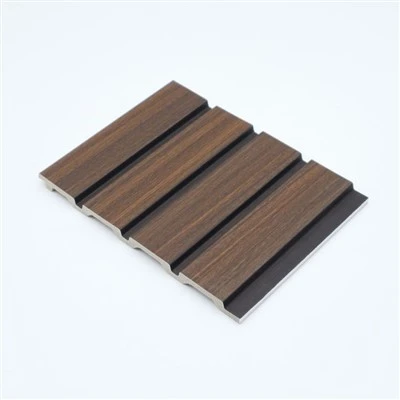
If you’re considering PS wall panels for your next project, don’t settle for cheap, untested panels that will fail in a few years. As a supplier, I work directly with installers, architects, and homeowners to help you choose the right thickness, UV stabilization, and adhesive for your specific space, so your panels last for decades. If you’re ready to discuss your project, get in touch with me to learn more about our durable, high-quality PS wall panels.
PVC Foam Board References
- Building Materials Association. (2021). Performance Standards for Rigid Polystyrene Wall Panels. National Institute of Building Sciences.
- Li, Y., et al. (2019). Moisture Resistance of Closed-Cell Polystyrene Building Materials. Journal of Construction Materials.
- Wilson, T. (2020). Long-Term Durability of Thermoplastic Wall Panels in Commercial Applications. Industrial Building Research Journal.
- American Society for Testing and Materials. (2018). Standard Test Method for Impact Resistance of Rigid Thermoplastic Panels. ASTM International.
- European Polystyrene Association. (2022). UV Stabilization for Exterior Polystyrene Building Products. EPS Technical Report Series.
Shandong Fanjie International Trade Co., Ltd.
As one of the most professional ps wall panel manufacturers in China, we have world-leading production equipment and strong manufacturing capabilities. Please feel free to buy bulk high quality ps wall panel from our factory. We also accept customized orders.
Address: L4-015 Cross border E-commerce Entrepreneurship Park, Lanshan District, Linyi City, Shandong Province
E-mail: info@lsdec.com
WebSite: https://www.fanzeradecor.com/
