If you’ve ever knelt at a workbench, soldering small parts onto a printed circuit board (PCB) and stared at a pile of tiny, similar-looking components, you know how easy it is to mix up connectors. Over the 12 years I’ve run my THR connector supply business, I’ve heard every frustration: a production line shut down because the wrong connector wouldn’t seat, a prototype delayed because a pin count was off, a client stuck reworking a batch because they picked through-hole when their soldering process needed something else. THR connectors are the unsung workhorses of countless electronic designs, but they get lumped in with every other through-hole or interconnection component so often that most teams don’t realize how specifically they solve their pain points. Today, I want to break down exactly what makes THR connectors different from the other common connector types engineers and buyers reach for, and why that distinction matters for your next build. THR Connector

First, let’s get the basics straight: THR stands for Through-Hole Reflow, a hybrid manufacturing method that bridges two worlds that used to be worlds apart. Traditional through-hole (THT) connectors require each pin to be inserted through a plated hole in the PCB, then hand or wave soldered from the bottom side—think of the big, bulky headers you might have seen on an old Atari or a vintage radio. Surface-mount technology (SMT) connectors, by contrast, sit flat on the top of the PCB, their pads fused to the surface with solder paste in a reflow oven, making them perfect for compact, high-volume modern electronics like smartphones or fitness trackers. For decades, these two types lived in separate lanes: THT for heavy-duty, high-stress applications where vibration or physical pull might yank a surface-mount component loose, SMT for small, dense boards where every millimeter counts, and never the twain shall meet—until reflow ovens got precise enough to handle both.
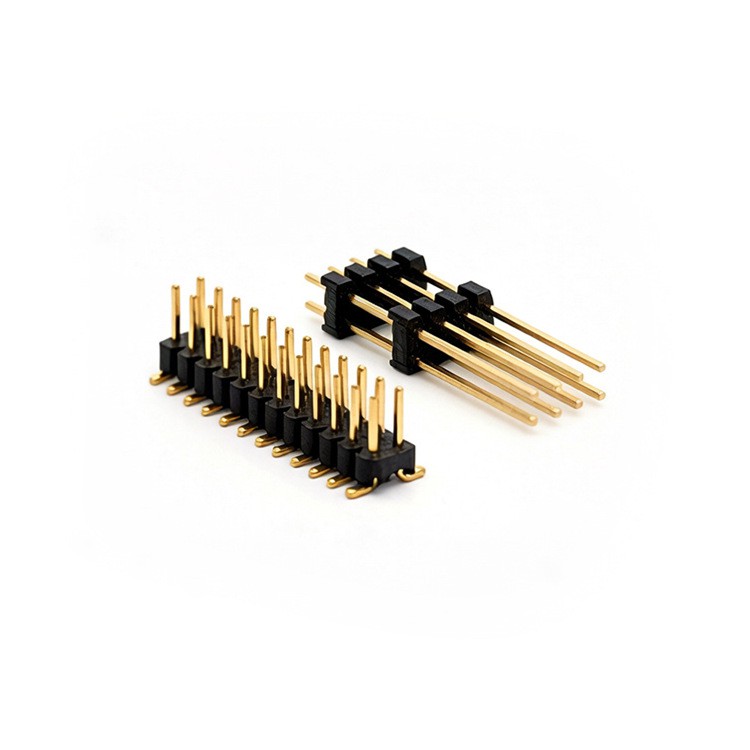
THR connectors cut that divide clean in half. They have small, flat SMT pads on the top of the PCB, just like an SMT connector, that are fused to the board in a standard reflow oven run at typical SMT temperatures. But instead of stopping there, their bottom ends extend straight through the PCB’s holes (just like THT) and are permanently soldered from the bottom side, locking the connector in place with a physical bond that no amount of tugging or vibration can shake. That hybrid design isn’t a gimmick—it’s a solution to specific problems that neither THT nor SMT connectors can solve on their own, and that’s the first big difference. Let’s compare that to other common connector types, one by one, so you can see exactly where THR fits in.
Let’s start with THT connectors, the old standard, to highlight THR’s edge. A lot of people ask me why THR exists when THT is already a known quantity. The answer boils down to speed and consistency. Back when THT was the only option, every connector needed to be hand-inserted, then wave soldered, a process that works great for low-volume, high-weight projects but is a nightmare for mid to high-volume runs. I had a client in the industrial control space a few years back who was making small PLCs, each with 12 THT connectors. Their team was working 12-hour shifts just to insert pins, and even with two soldering stations, they were wasting 15% of their rework time on cold solder joints from hand soldering. When they switched to THR, they could load all their PCBs into a reflow oven in one batch, no individual insertion, no hand soldering. The yield jumped to less than 2% rework, and their line output went up 40%—that’s the kind of difference that turns a project from profitable to over budget. But that’s not to say THT is useless; it’s great for very large, heavy connectors, like the ones used in power grids or construction equipment, where THR’s smaller footprint wouldn’t work. But for 90% of the consumer electronics, automotive sensors, and medical devices my clients build, THR beats THT on speed and consistency without sacrificing durability.
Next, let’s look at SMT connectors, the other big competitor, because this is where THR’s unique value proposition is most obvious. If you design thin, modern devices—like wireless earbuds, smart watches, or even the circuit boards inside a smart thermostat—you’re almost certainly using SMT connectors. They’re tiny, they don’t require holes punched through the board, and they sit flush, so you can cram more components into less space. But SMT connectors have a major flaw: they rely on solder joints that only attach to the surface of the PCB, with no physical pin going through. That means if you have a device that’s going to be moved, shaken, or dropped, those joints can break. I once had a client who designed a line of portable heart monitors; they first used SMT connectors and saw a 12% failure rate in field testing, because when patients dropped the monitor during a workout, the connector would pop loose from the board. Switching to THR connectors cut that failure rate to less than 0.5%, because the pins go all the way through, creating a mechanical lock no impact can break. Another downside of SMT: they require very precise alignment during placement. A robotic pick-and-place machine has to get them exactly right, or you waste an entire batch of PCBs. THR, on the other hand, has a little extra tolerance in pin placement, so even if your pick-and-place is off by a hair, the pins will still slide through the holes and seat properly during reflow. That tolerance is a huge win for smaller manufacturers or teams with older equipment that can’t handle the sub-millimeter precision required for SMT.
Then there’s the third big category through-hole reflow components that aren’t technically connectors—wait, you might be thinking, aren’t all through-hole parts the same? No, not by a long shot. A lot of manufacturers will slap “through-hole” on a part that’s actually a pin-through-hole component meant for wave soldering, which is not THR. The key difference here is temperature profile. Wave soldering uses high heat on the bottom side of the board, with the top side at a much lower temperature, so THT components have to be able to handle that uneven heat. THR is designed for the exact reflow profile used for SMT parts—so it can handle the uniform, high heat of a reflow oven, which means you can run all your components in the same batch, no separate soldering processes. I’ve seen engineers waste weeks trying to switch a production line from THT to SMT or vice versa, because their reflow ovens are set for one or the other. THR eliminates that problem entirely, letting you mix connectors, resistors, capacitors, and even ICs in the same production run with zero extra steps. That’s the kind of flexibility that’s impossible with either pure THT or pure SMT parts.
Let’s also talk about niche connector types that people often confuse with THR, like press-fit connectors. Press-fit is another hybrid, right? Wait, no—press-fit connectors don’t use solder at all. They have tiny, precision-machined pins that are pressed into the plated holes of the PCB, creating a mechanical and electrical bond without any solder. That works great for some high-voltage applications, but it’s not as reliable for low-signal or high-frequency circuits, because there’s no conductive solder filling the gap between the pin and the hole, which can lead to signal loss or corrosion over time. I had a client in the audio industry a few years back who used press-fit connectors for a portable speaker, and within six months, customers were complaining about static in the audio. When we switched them to THR, the solder created a hermetic seal that blocked moisture and eliminated the static entirely. Press-fit is also not ideal for boards that might be reworked or modified later; if you have to pull a press-fit connector, you risk damaging the plated hole, which means the board is unusable. THR, on the other hand, can be desoldered and replaced just like a regular THT connector, so it’s perfect for prototypes, or for products that might need field repairs. That’s a huge advantage for medical devices, where boards often need to be serviced, or for custom industrial equipment that might be modified on-site.
Another point that’s rarely discussed but has huge practical implications: inventory management. Most manufacturers keep separate stock for THT and SMT connectors, because they can’t be used interchangeably. But THR connectors are cross-compatible with both processes, at least in terms of reflow. If your main production line uses reflow for SMT parts, THR works seamlessly. If you need to make a low-volume prototype using hand soldering, you can just solder the bottom pins by hand, same as a THT connector. That means you don’t have to hold two separate inventories, which saves warehouse space and reduces the risk of holding obsolete parts. I’ve had clients tell me that before switching to THR, they had $120,000 worth of unused THT connectors sitting in stock because their product line shifted to SMT. Now, they only keep THR connectors on hand, and they save about $30,000 a year in inventory costs alone. That’s not a trivial number for small to mid-sized manufacturers, who often operate on thin margins.
But here’s the thing: THR connectors aren’t better than every other type for every application. That’s a common mistake I see engineers make, assuming that a hybrid is always the right choice. Let’s be clear about when to pick THR, and when to reach for another connector type. THR is ideal for mid-volume to high-volume runs where you need both durability and speed, for boards that need to withstand vibration or impact, for applications that mix signal and power connections, and for designs that might require rework or modification later. If you’re making a very large, heavy power connector for a industrial motor, THT is still the better call. If you’re building a tiny, ultra-thin wearable that needs to be as small as possible, SMT might work if your field testing shows vibration isn’t a problem. Press-fit is still the way to go for high-voltage, high-current applications where soldering might cause heat damage to nearby components. The key is matching the connector type to your specific use case, not just picking the most popular or the cheapest option.
Over the years, I’ve seen too many teams cut corners on connectors, only to pay for it later in rework, product recalls, or field failures. Last year, a client came to me with a batch of 5,000 medical sensors that had failed because they used low-cost SMT connectors that didn’t have enough retention. The connector pins had lifted from the PCB during shipping, and by the time the sensors reached customers, half of them wouldn’t power on. We helped them rework the failed units with THR connectors, and they didn’t have a single failure in the next production run. That’s the value of picking the right connector type: it’s not just a component, it’s the difference between a product that works as intended and one that costs you your reputation.
At the end of the day, the best connector is the one that solves your specific problem. If you’re tired of choosing between slow, bulky THT connectors and fragile SMT connectors, THR is a middle ground that doesn’t compromise on either speed or durability. If you’re looking for a connector that fits seamlessly into your existing SMT reflow process, without the headaches of custom tools or alignment. If you need a connector that can handle the vibration of a portable device or the rigors of industrial use without falling apart. That’s what makes THR connectors different from every other type: they don’t force you to choose between speed and strength, between size and reliability.
If you’re working on a new design, or struggling with connector-related issues on your current line, I’m here to help. Whether you need to test a prototype, source a custom pin count, or work out the best connector for your specific application, we can walk through your project and find the right solution that fits your budget and production needs.
Header Connector References
- Electronic Design. (2021). Through-Hole Reflow (THR) Connectors: Balancing Speed and Durability in Modern PCB Assembly.
- IPC Association Connecting Electronics Industries. (2019). IPC-A-610: Acceptability of Electronic Assemblies.
- International Journal of Microelectronics and Electronic Packaging. (2020). Hybrid Through-Hole Surface-Mount Technology for High-Vibration Consumer and Industrial Applications.
- Surface Mount Technology Association. (2022). Comparing SMT, THT, and THR Connector Reliability for Mid-Volume Production.
- Medical Device & Diagnostic Industry. (2021). Connector Selection for Medical Devices: Balancing Size, Sterilization, and Field Repairability.
Wenzhou JKUN Connector Co., Ltd.
As one of the most professional thr connector manufacturers and suppliers in China, we’re featured by quality products and low price. Please rest assured to wholesale bulk customized thr connector from our factory. For quotation and free sample, contact us now.
Address: No.2667, Ningkang East Road, Yueqing City, Zhejiang Province, China
E-mail: sales@cnjkun.com
WebSite: https://www.jkunjcj.com/
