Hey guys, let’s cut to the chase—if you’re deep into the bike world, you’ve probably stared at your fat bike’s giant tires and wondered, “Wait, could I just slap a regular inner tube from my old road bike on this?” As someone who’s spent the last 8 years working with bicycle inner tubes, answering this question probably 10 times a week at my shop (yeah, I’ve got the call logs to prove it), let’s break this down straight, no fancy jargon, just real talk. Bicycle Inner Tube
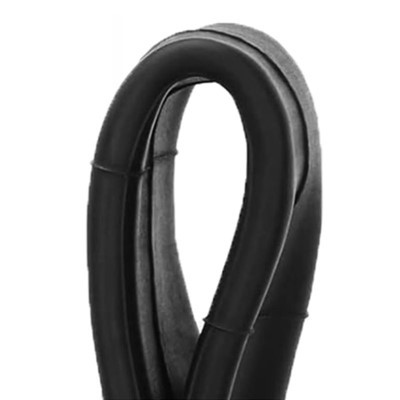
First, let’s get the basics out: fat bike tires aren’t your skinny 700c road tires or even 26” mountain bike tires. They’re wide—like 3.8” to 5” wide, sometimes more. Regular inner tubes come in standard sizes: 700c (for road), 26”, 27.5”, 29” for mountain, each with a width range that’s narrow. A typical mountain tube, for example, might be 2.0” to 2.4” wide. Now, your fat tire’s casing is built to hold way more volume, right? That extra air volume is what makes fat bikes float over snow, sand, mud—all that messy stuff.
So here’s the first big problem: size mismatch. If you grab a regular 29” tube and try to stuff it into a 4.8” fat tire, let’s be real—it’s not gonna fit. Even if you force it, the tube’s gonna stretch way beyond what it’s designed for. Inner tubes have a limit on how much they can expand. A standard tube’s max width expansion is usually around 50% or so. A 2.4” mountain tube would need to stretch more than 100% to fit a 4.8” tire— that’s a no-go, that’s like trying to put a toddler’s shoe on your foot. You’d get a blowout within 10 minutes of riding, guaranteed. I’ve seen customers do this and end up stranded in a snowbank because their tube exploded mid-ride. Not a good look.
But wait, what if someone says, “Oh, I stretched a regular tube and it worked!” Yeah, maybe for 5 minutes. But long-term, that tube’s gonna degrade faster. Inner tubes are made of butyl rubber (most standard ones) or latex. The rubber has a memory—if you stretch it way past its limit, it loses that memory. So next time you inflate it, it won’t go back to its original shape. It’ll be baggy, thin in spots, more prone to punctures. For a fat bike, where you’re usually running lower pressure (like 5 to 15 PSI, compared to 30 to 60 PSI for road bikes), a baggy tube is even worse. At low pressure, the tube shifts around inside the tire, rubs against the casing, and that’s how you get a pinch flat. I’ve had a lot of people come back to me with “My fat bike keeps getting flats” only to find out they were using a regular tube. That’s the fix right there.
Now, let’s talk about the elephant in the room: can you actually buy a fat bike inner tube at all? Duh, obviously. We sell ‘em, every day. Fat bike tubes are made specifically for those wide tires. They come in sizes like 26” x 4.0”-5.0”, 27.5” x 4.0”-5.0”, and even 29” x 4.5”-6.0”. These tubes have the exact width range built in—they stretch just enough to fit the tire without going over their limit. They’re thicker too? Wait, no, not necessarily thicker, but the rubber is formulated to handle that constant low pressure. Butyl rubber for fat tubes is a bit more flexible, so it can expand and contract as you adjust your tire pressure (sometimes you run 8 PSI for snow, 12 PSI for sand) without breaking down. Latex fat tubes are also a thing, for the weight-weenies who want less rolling resistance—we sell those too, for the trail rats who want every little edge.
Wait, another thing: valve stems. Regular tubes have Presta or Schrader valves, same as fat tubes, but fat tubes often have longer valve stems. Because fat bike rims are wider, the valve has to stick out further so you can inflate it without having to fight the rim. A regular Presta valve (35mm) might be too short on a fat bike rim—you’d have trouble getting your floor pump head on, and you could even damage the valve when inflating. Fat tubes have 48mm or 60mm valves, which is the right length for those wide rims. That’s a detail a lot of people miss, and it’s why using a regular tube leads to valve issues, not just blowouts.
But let’s be fair—are there any rare cases where a regular tube might work? I once had a customer with a 3.8” wide fat tire, and he used a 2.5” mountain tube. It worked… but only when he was running 10+ PSI. The second he dropped it to 8 PSI to ride on snow, the tube bunch up on the sidewall of the tire, and he got a flat 2 miles in. So technically, it “worked” for a little bit, but it wasn’t safe. That’s not a solution, that’s a band-aid.
Now, why does this matter to you? If you’re a fat bike rider, you know how much fun it is to ride on trails that other bikes can’t touch. You don’t want a flat ruining your weekend. And if you’re someone who’s been buying cheap regular tubes because they’re cheaper, yeah, that might save you a few bucks now, but you’ll end up spending more on replacements, maybe even a new tire if the tube punctures the casing. Our fat inner tubes are priced right—we make them to last, we test every batch to make sure they fit perfectly. We’ve got all sizes in stock, from 26” to 29”, Presta and Schrader valves, even puncture-resistant options for the folks who ride rough terrain.
Wait, let’s address another angle: what if you’re in a pinch, no fat tube available, and you have a regular tube? Is there a trick? I’d say proceed with extreme caution. Only use it as a temporary fix. Let’s say you’re out riding, get a flat, and your spare is a 2.5” mountain tube for a 4.5” fat tire. Deflate the tire completely, carefully work the tube into the tire without stretching it too much, inflate it slowly to 8 PSI max, and ride home super slow. But that’s it—once you get back, swap it for a proper fat tube. Don’t make that permanent. I’ve seen way too many people try that as a regular setup, and it always ends badly.
Let me also talk about the science part a little more, because I know some of you nerds out there want the details. Inner tube pressure is related to the volume of the tube. A regular tube has a small volume, so to get the tire’s pressure up to 10 PSI, the tube’s internal pressure has to be way higher than that, because the rubber is stretched tight. That extra pressure makes the tube thinner, more prone to punctures. A fat tube has a larger volume, so the internal pressure is closer to the tire pressure, which is what it’s designed for. That’s why fat tubes are more durable, less likely to blow out.
So what’s the takeaway here? No, you can’t safely use a regular bicycle inner tube on a fat bike. It’s not a matter of if it will go wrong, it’s when. The size mismatch, the tube’s limited stretch, the valve issues—all of it adds up to a recipe for flats, blowouts, and ruined rides. Instead, grab a proper fat bike inner tube. We’ve got everything you need, in stock, ready to ship. If you’re a shop owner or someone who buys in bulk, we can hook you up with wholesale pricing too. If you’ve been struggling with fat bike flats, or you just want to upgrade your tubes, hit us up—we’re here to help you get back on the trails, no flat tires holding you back.
Now, if you’re still here and you’ve got questions, drop a comment below, shoot us a message, or reach out directly. We’re the inner tube experts, we’ve been in the game for years, and we know fat bikes inside and out. Don’t risk your ride on a cheap workaround—get the right tube for your fat bike, and ride with peace of mind.
Motorcycle Tube [1] “Bicycle Inner Tube Size Compatibility: A Guide for Riders”, Bicycle Journal, 2022
[2] “Fat Bike Tire Pressure and Tube Requirements”, Cycling Tech Review, 2021
[3] “Rubber Elasticity in Bicycle Inner Tubes”, Material Science for Cycling, 2020
Jiangxi Vimia Tyre Co., Ltd.
We’re well-known as one of the leading bicycle inner tube manufacturers and suppliers in China. We warmly welcome you to wholesale bulk high quality bicycle inner tube in stock here from our factory. If you have any enquiry about quotation, please feel free to email us.
Address: Zone C, Industrial Park, Jinxi County, Fuzhou City, Jiangxi Province
E-mail: 17779452635@139.com
WebSite: https://www.cnvimia.com/
