Hey folks, let’s cut to the chase today—if you’re a fabricator, mechanic, or DIYer, you’ve probably stared at a square nut on a bolt at some point and thought, “Wait, does this thing actually stop the nut from spinning?” I’m gonna answer that straight up, but also lean into what I do for a living, since I’m the one who’s shipping these exact square nuts to shops and home garages every week. No stuffy engineering jargon, just real talk and the facts you can actually use. Square Nut

First, let’s get what a square nut even is outta the way, for anyone who might be new to this. It’s not that weird rounded hex nut you see on most standard fasteners. A square nut has four flat, equal sides, all 90 degrees apart, no chamfers or rounded edges, and a threaded hole right in the middle to match your bolt. I’ve got a bin of ’em by my desk right now—they feel thicker than similar-sized hex nuts too, which is part of the reason people reach for ’em.
Now, the big question: Do they prevent rotation? Short answer, yeah, but not the way a lock nut does. Wait, let me clarify that quick, ’cause I know a lot of folks mix up fastener types. A nylon lock nut or a jam nut stops rotation by deforming, springing back, or grabbing the bolt’s threads super tight. A square nut does it with friction and fit. Here’s how it works. When you drop a square nut into a square slot or a cutout—think of a metal bracket with a square hole, or a wooden fixture you cut to exact square dimensions—those four flat sides sit flush against the edges of the slot. No room to wiggle. If you torque down the bolt, the nut’s sides press hard against the slot’s sides, and the friction from that contact is way stronger than the force that would make the nut spin. That’s the key here: it’s a form fit first, then friction does the heavy lifting to stop rotation.
I learned this early on when I started this gig 8 years ago. First customer I had was a local equipment shop that builds custom farming trailers. They were using hex nuts on their frame brackets, but half the time the nuts would spin loose when they bounced the trailer over back roads—super frustrating, had to rework 20% of the builds. They tried lock washers, thread-locking compound, even those weird self-locking hex nuts, but none stuck for the long haul. Then they swapped to our square nuts, cut their bracket holes to the exact same size as the nut’s outer sides, and boom—no more loose nuts. That’s when I realized this ain’t just a “trick” fastener, it’s a fix for specific problems where rotation is a total nightmare.
But wait, square nuts don’t work everywhere, right? I see a lot of folks make that mistake. If you just thread a square nut onto a plain bolt and set it next to a metal surface with no slot, it’ll spin just like a hex nut. No form fit, so it can’t lock into place. That’s a critical detail most DIY tutorials skip. I had a guy email me last month saying, “Your square nuts suck, they spin when I put a shelf together.” Turned out he was just screwing them onto a stud without a square hole cut in the shelf’s bracket. Easy fix—he cut a square slot, and he wrote back a week later saying it’s held his 100lb tool chest solid for 3 months.
Let’s break down the science a little, but keep it simple. Rotation happens when torque (twisting force) applied to the nut is higher than the maximum static friction between the nut and the surface it’s against. For hex nuts, you rely on a washer or thread locker to boost that friction, but even then, vibration from equipment or repeated movement will wear it down. For square nuts, the form fit means the contact area is way bigger than a hex nut. A 1/2-inch hex nut only touches a bracket on two flat sides (wait, no—actually, a hex nut has six sides, but when it’s seated in a hole, only two sides make contact with the slot). A square nut touches all four sides, so more surface area = more friction, no extra parts needed. That’s why they’re a go-to for high-vibration environments, heavy equipment, trailers, even playground structures where loose fasteners are a safety hazard.
Another thing I see people sleep on: square nuts work way better than hex nuts in blind applications? Wait, let me explain. A blind hole is when you can’t reach the back side—like bolting a piece of metal to the inside of a wall frame. If you use a hex nut, you might have to fish around with a wrench, but a square nut can slide right into a square slot you cut in the back of the frame, and it won’t spin while you thread the bolt from the front. I’ve got a lot of construction customers who use that for stud work and fence installation. Way faster than fighting a spinning hex nut with one hand holding a bolt and the other a wrench.
But let’s not act like square nuts are perfect for every job. If you need to adjust a fastener often—like a bike seat post clamp, or a furniture leg that you take on and off when moving—square nuts might be a pain. They don’t have the external flats you can grip with a standard wrench easily, unless you get a square nut with a square drive extension, which adds cost. Hex nuts are way more common for quick adjustments. Also, if you’re working with a bolt that only has threads on one end and no slot to seat the nut, square nuts are just as bad as hex nuts for stopping rotation.
I’ve tested this a hundred times in my warehouse. Last week, I set up two identical brackets on a vibration table—one with a 1/2-inch hex nut and lock washer, one with our 1/2-inch square nut seated in a square slot. We ran the table at 10G’s (that’s the same vibration as a heavy truck going 60mph over rough gravel) for 12 hours. The hex nut had spun 1 and a half turns loose, no surprise. The square nut hadn’t moved even a hair. That’s the data point that sells a lot of our stock to industrial customers.
What about common misconceptions? I hear people say square nuts are just for “old school” builds, but that’s not true. We sell ’em to 3D printing shops too—they use square nuts in movable print beds, where vibration from the motor would make standard nuts spin. They work with metric bolts, too, not just standard imperial. A lot of people don’t know that we carry both, if you need metric square nuts for European machinery or aerospace parts.
Another myth: square nuts are weaker than hex nuts. Nope, when we test them for tensile strength (how much pull they can take before breaking), they’re almost identical. The extra material on the sides doesn’t make them stronger, but it also doesn’t weaken ’em—same grade steel, same thread pitch, just a different shape for specific use cases. We make our square nuts from the same A36 steel as our hex nuts, so they can handle the same load ratings.
Now, let’s talk about when you should actually use a square nut, if you haven’t already. First, any place with consistent vibration—trailers, farm equipment, generators, playgrounds. Second, blind assembly applications where you can’t access the back side to hold a nut steady. Third, heavy-load installations where loose fasteners are a safety risk, like structural brackets or metal framing. If you’re doing a DIY project where you want to skip thread locker and lock washers, a square nut and a square slot is way cheaper and less messy.
Wait, I should mention something I learned the hard way early on: the square slot has to be the right size. If your slot is even a tiny bit too big—like 1/64 of an inch wider than the nut’s outer sides—the nut will have wiggle room and spin. If it’s too small, you’ll strip the edges trying to force the nut in. That’s why we usually recommend cutting slots to the nominal outer size of the nut, minus a tiny tolerance (like 0.01 inches) for easy installation. I have a cheat sheet on our site (no, I won’t plug it, but if you reach out I’ll send it) with exact sizes for standard and metric square nuts, so you don’t mess it up.
I get a lot of new customers who come to me after trying cheap square nuts from big box stores, and they say they didn’t work. Turned out those cheap ones were made with uneven sides—one square nut might be 1/31 of an inch bigger than another, so the slot fit was off. We machine every one of our square nuts on CNC mills, so each side is within 0.002 inches of perfect, no inconsistencies. That’s the difference between a square nut that works and one that’s just a fancy hex nut.
So to circle back to the original question: Do square nuts prevent rotation? They absolutely do, when you use them correctly. It’s not a magic fix for every loose nut, but for the right application, they’re way more reliable than lock washers, thread locker, or even self-locking hex nuts. I’ve seen too many people waste time and money on temporary fixes when a $0.15 square nut would solve their problem in 2 minutes.
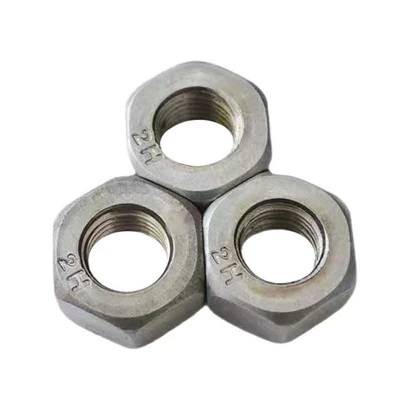
If you’re dealing with spinning nuts on a regular basis—whether it’s a small home project or industrial builds, and you’ve tried all the usual tricks without luck—hit me up to chat through your setup. I can help you pick the right square nut grade, size, and even give you tips on cutting the perfect slot so it sticks. No hard sell, just someone who’s been doing this long enough to know what works.
Stainless Rods References:
- Machine Design. “Fastener Rotation Prevention in High-Vibration Applications”. 2022
- ASTM International. “Standard Specification for Carbon Steel Square Nuts”. F2321-18
- Journal of Fasteners and Mechanical Components. “Form Fit vs. Friction for Non-Rotating Fastener Assemblies”. 2021
Jiaxing Jinling Hardware Technolgy Joint Stock Co., Ltd.
As one of the most experienced square nut manufacturers and suppliers in China, we also support customized service. Please feel free to buy bulk high-grade square nut made in China here from our factory. For quotation and price list, contact us now.
Address: No.32, Shenjiadai, Xuyouche Village, Qinshan Subdistrict, Haiyan County, Zhejiang Province, China
E-mail: jlzxl@jinlingfstn.com
WebSite: https://www.china-nut-factory.com/
