Hey lab folks, let’s cut through the jargon for a second—if you work with bioreactors, you know that tight CO₂ control isn’t just a “nice-to-have.” It’s the difference between your mammalian cell culture hitting that 100% viability target and a week of work going down the drain (speaking from experience, I’ve been there). As someone who’s spent the last 8 years selling and troubleshooting lab bioreactors (no stuffy corporate title, just a guy who’s fixed his fair share of spiking CO₂ probes at 2 a.m. for a pharma startup), I get how confusing measuring CO₂ in these tiny, precise setups can be. No generic textbook stuff here—this is what actually works in the lab, from the people who use these systems every day. Laboratory Bioreactor
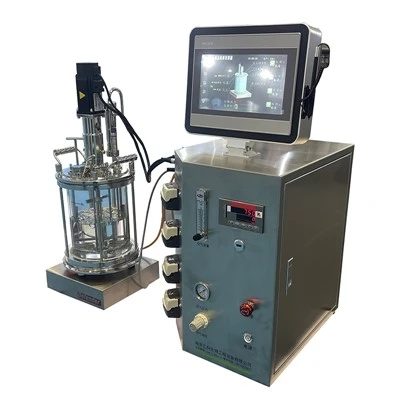
First, let’s get one thing straight: lab bioreactors aren’t industrial tanks pumping out biofuel on a factory floor. These are usually benchtop, working with milliliters to liters of sample volume, running mammalian cells, bacteria, yeast, maybe even algae for biotech or synthetic biology. So the measurement tools and methods can’t be big, clunky, or slow—you need real-time, accurate data that doesn’t mess with your tiny culture. The two main ways people measure CO₂ here are off-gas analysis and dissolved CO₂ (dCO₂) measurement, and I’m gonna break each down like I’m explaining it to a new lab tech who just broke a pipette (no shade, we’ve all been there).
Starting with dissolved CO₂, because that’s the one that actually affects your cells. If your dCO₂ is off, your cells get stressed—think slow growth, low antibody yields, even death. The old-school way a lot of folks still use is potentiometric probes, right? These are those little needle-like things you insert into the media, with a gas-permeable membrane that lets CO₂ pass through to a bicarbonate buffer inside. The CO₂ reacts with the buffer to change pH, and the probe measures that pH shift to calculate dCO₂ levels. Sounds simple, but here’s the thing that trips people up: you can’t just stick it in and forget it. Those membranes get clogged with cell debris, proteins, or media salts way faster than you think. I had a customer last month, a grad student at a state university, who didn’t calibrate his probe for 3 weeks and his cell viability dropped 40%—turns out the membrane was so caked with debris, it was reading half the actual dCO₂. The fix? Calibrate at least once every 24 hours for mammalian cultures, and change the membrane every 2-4 weeks if you’re running high-cell-density cultures. Also, use a two-point calibration: zero with sterile water (no CO₂) and a 5% CO₂ gas mix, not just one point. That’s a mistake almost everyone makes at least once.
But wait, potentiometric probes have a downside for really small bioreactors, like the 10 mL ones used for high-throughput screening. If you’ve got a tiny working volume, inserting a big probe can take up too much space, or even introduce contamination. That’s where optical dCO₂ sensors come in—these are the new kid on the block, and they’ve been a game-changer for the last 5 years. Instead of a chemical buffer, they use a fluorescent dye that changes intensity when CO₂ hits it (thanks to the Stern-Volmer effect, for the nerds). The best part? No membrane changes, no calibration every day, and they’re tiny—we’ve got 5 mm versions that fit in our smallest benchtop bioreactors without wasting a drop of media. One of my top customers is a CRISPR lab that runs 24 parallel 50 mL cultures, and they switched to optical sensors 2 years ago because they cut their sensor maintenance time by 70%. The only catch here is that optical sensors are more expensive upfront, but if you’re tired of replacing probes and troubleshooting calibration, it’s worth every penny. Oh, and make sure you get a sensor that’s gamma-sterilizable if you’re working with GMP-grade processes—some cheap optical sensors can’t handle autoclaving, which is a non-negotiable for many labs.
Now, off-gas analysis—this is measuring CO₂ in the gas that’s coming out of the bioreactor headspace or the sparged gas. A lot of people skip this because they think it’s extra work, but it’s actually super useful for checking if your CO₂ transfer is working, or if your cells are actually consuming CO₂ the way they should (or if you’ve got a leak somewhere). The two main ways to do off-gas here are infrared (IR) sensors and paramagnetic sensors. IR is the standard for lab bioreactors, and for good reason—CO₂ absorbs specific wavelengths of IR light, so the sensor just measures how much light is absorbed, and that gives you the concentration. They’re accurate, fast, and don’t touch the media at all, so no contamination risk. Paramagnetic is for oxygen mostly, but some setups combine both for gas analysis, but for just CO₂, IR is fine. The key with off-gas is that you’ve got to pull a consistent, small sample—don’t suck too much gas, because that can mess with the bioreactor’s pressure and sparging rates. Most good lab bioreactor systems (I’m talking about the ones we build) come with a built-in IR off-gas sensor package now, so you don’t have to rig external stuff with tubing and filters that leak. Pro tip: if you’re running anaerobic cultures? Off-gas CO₂ is gonna be low, but it’s still a good way to confirm that your culture isn’t contaminated with aerobic bugs, which is a hidden win.
Wait, let’s talk about common mistakes everyone makes here, because I’ve seen them all. First, ignoring temperature and pressure corrections. CO₂ measurements are dependent on both—if your bioreactor’s temp is off by 1°C, your dCO₂ reading can be off by 5-10%, and if the headspace pressure isn’t controlled, that skews off-gas data too. A lot of cheap sensors don’t do automatic corrections, so make sure whatever system you’re using has real-time temp and pressure inputs built in. Second, not accounting for sparging gas flow. If you’re blowing too much CO₂ into the bioreactor to control pH, your dCO₂ will be higher than if you’re sparging slowly, but that’s not necessarily a bad thing—you just need to make sure your measurement is matching what’s actually in the media, not just the gas line setting. Third, forgetting to check for leaks. Even a tiny leak in the headspace or gas lines can make your off-gas CO₂ reading way lower than actual, which makes you think your cells are doing worse than they are. I always tell customers to do a leak test every time they set up a new bioreactor: close all gas lines, pressurize the headspace to 10 psi, and see if the pressure drops over 10 minutes. If it does, track it down—we’ve even found leaks from loose sensor wires before, it’s that random.
Let’s also talk about when to use which method, because it’s not one-size-fits-all. If you’re running a small-scale, high-throughput screen with 10-100 mL cultures? Go with optical dCO₂ sensors and built-in off-gas IR—no maintenance, tiny footprint, perfect for parallel runs. If you’re working with GMP-compliant mammalian cell cultures for biopharma? Potentiometric probes with regular membrane changes, paired with off-gas analysis to double-check, because you need traceable, calibrated data for regulatory stuff. If you’re just starting out, testing a new bacterial strain, and on a tight budget? Potentiometric probes are cheaper upfront, just make sure you stay on top of calibration and membrane changes—don’t skip those steps.
Here’s something I always emphasize: your CO₂ measurement is only as good as the rest of your bioreactor setup. If your agitation rate is too high, you’re stripping CO₂ from the media, so your dCO₂ reading will be low even if the sensor is perfect. If your pH controller is acting up, you might be adding too much bicarbonate, which affects dCO₂ levels too. That’s why at our lab bioreactor company, we don’t just sell sensors—we include free troubleshooting calls for the first 6 months, because half the time a “bad CO₂ reading” isn’t the sensor, it’s a weird quirk in the culture parameters. I’ve had a customer panic because his dCO₂ was spiking, and it turned out his air filter on the sparge line was clogged, so the CO₂ wasn’t mixing properly.
Another thing to keep in mind: cross-contamination between samples. If you’re running multiple parallel bioreactors and using the same gas line or off-gas analyzer, you can suck CO₂ from one culture into another, which messes up your readings. The solution is separate, dedicated gas lines for each bioreactor, or a multi-channel off-gas analyzer with individual filters. We build our systems with separate gas ports for each unit to avoid that, because it’s such a common headache.
Wait, let’s get real—this isn’t rocket science, but it is easy to cut corners when you’re swamped with experiments. I’ve been in lab where a grad student has 12 cultures running, and they forget to calibrate their probe for a week, and boom—bad data, wasted time, frustrated team. The good news is that with the right tools (and not overpaying for fancy stuff you don’t need), measuring CO₂ in a lab bioreactor doesn’t have to be a pain. Whether you’re a small academic lab just getting started or a biotech team scaling up cell lines, there’s a CO₂ measurement setup that fits your needs.
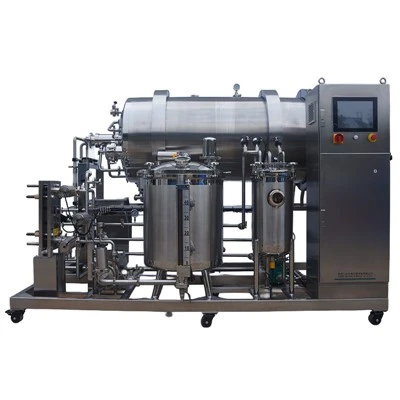
If you’re currently dealing with wonky CO₂ readings, sensor maintenance that’s eating up all your time, or just want to upgrade your bioreactor setup to get more reliable data, I’m here to help. We build lab bioreactors tailored to different scales and applications, with both potentiometric and optical CO₂ sensors, built-in off-gas analysis, and all the support you need to get your setup running smoothly. No pushy sales calls, just straight answers about what will work for your specific experiments, and help troubleshooting any CO₂ or bioreactor issues that come up. Just reach out, and we can chat about your needs, walk through options, and make sure your CO₂ measurements are accurate so your cultures thrive.
Laboratory Bioreactor References
- Zhang, Y., et al. (2021). "Advances in dissolved CO2 measurement technologies for lab-scale bioreactors." Biotechnology and Bioengineering, 118(5), 1892-1907.
- Lyman, B., et al. (2019). "Pitfalls in CO2 measurement for mammalian cell culture bioreactors." Cytotechnology, 71(3), 789-798.
- Eibl, R., et al. (2020). "Off-gas analysis for lab bioreactors: Best practices and common errors." Bioprocess International, 18(7), 24-31.
- FDA. (2018). "Guideline for Validation of Cell Culture Processes for Biologics." U.S. Food and Drug Administration, Silver Spring, MD.
Nanjing Tianhong Bioengineering Equipment Co., Ltd.
As one of the most professional laboratory bioreactor manufacturers and suppliers in China, we’re featured by quality products and good price. We warmly welcome you to buy customized laboratory bioreactor made in China here from our factory. If you have any enquiry about pricelist, please feel free to email us.
Address: No.8 Xingshi South Road, Shiqiu Sub-district, Lishui District, Nanjing City, Jiangsu Province, P.R. China
E-mail: 13951637999@163.com
WebSite: https://www.njth-bio.com/
