When I first started working in vertical lifts back in 2012, I didn’t realize how many of our customers would come in asking the same basic question: “Single-stage or multi-stage—what’s the real difference, and which one do I need?” At the time, I’d just finished training on our product lines and thought it was straightforward, but over the years, I’ve learned that this decision isn’t just about specs. It’s about matching the lift to the job, the space, and what a business actually needs to move, day in and day out. I’ve sat in on hundreds of these conversations, heard the frustration of someone who bought the wrong lift and is now dealing with wasted space or lost productivity, so today I want to break this down like I do with every new customer—no jargon, just real talk from someone who’s installed, repaired, and sold vertical lifts for over a decade. Vertical Lifts

First, let’s start with the basics: what even is a single-stage vertical lift? If you’ve ever walked into a warehouse that only has a 10-foot gap between the ground floor and the next level, or a small loading dock that needs to move pallets up just 8 feet, that’s where a single-stage lift shines. A single-stage vertical lift is a unit that has one fixed telescopic mast or platform assembly. When it’s in its lowest position, it extends straight up to its maximum height in one smooth, continuous motion. There’s no folding or collapsing of parts along the way—just a single, rigid structure that moves the platform up and down along a single vertical path. It’s simple, right? But don’t let that simplicity fool you; single-stage lifts are workhorses, and they’ve been the backbone of small businesses, local shops, and tight-space operations for decades.
Let me give you an example. A customer of mine in Indianapolis runs a family-owned hardware store. They had a loading dock that was only 7 feet higher than the back storage area, and they were moving 50-pound bags of gravel and cement by hand up a wooden ramp. It was taking two people 20 minutes to move a single pallet. We installed a single-stage lift there back in 2015, and now one person can move that same pallet in under two minutes. They didn’t need more height, they just needed a reliable, low-cost solution that fit exactly the gap they had. That’s the sweet spot for single-stage: when your lift height is 15 feet or less, you don’t need anything fancier.
Now, multi-stage vertical lifts—this is where things get a bit more complex, and where most of the confusion happens. A multi-stage vertical lift has a mast or platform assembly that’s made up of multiple sections that telescope into one another. Think of it like a collapsible telescope: when it’s retracted, it’s short enough to fit into a small space, and when it extends, each section slides out to add more height. So if you need to move items up 30, 40, or even 60 feet, a multi-stage lift can do that without needing a ton of vertical clearance when it’s stowed. That’s the big selling point for multi-stage: they maximize height without taking up extra floor space when not in use.
I had a customer in Chicago a few years back who ran a auto body shop in a old downtown building. The building only had 12 feet of ceiling clearance above their ground floor garage, but they needed to move car parts and engines up to a second-level storage loft that was 45 feet high. A single-stage lift would have been too tall to fit under the ceiling when it was stowed, and if we tried to install it anyway, they would have had to cut down the ceiling, which would have been a massive, expensive renovation. We installed a multi-stage lift there, and when it’s not in use, it folds down to just 11 feet tall, so it fits under the garage ceiling perfectly. When they need to move an engine up, the sections extend one after another, and it reaches that 45-foot height smoothly. That’s the difference right there: multi-stage is for when you need maximum lift height with minimal stowed height.
But let’s get into the real nitty-gritty, because it’s not just about height—there are practical, operational differences that matter a lot. First, weight capacity. Single-stage lifts tend to have higher weight capacities for their footprint. Because they have a single rigid structure, they can support heavier loads more evenly. That hardware store in Indiana uses their single-stage lift to move full pallets of brick and lumber, which can weigh up to 2,000 pounds, no problem. Multi-stage lifts, because their sections slide and overlap, usually have lower weight capacities. That Chicago auto body shop’s multi-stage lift is rated for 1,500 pounds, which is enough for car parts and small engines, but it’s not built for the super heavy pallets that the hardware store moves. I always tell customers: if you need to move 3,000-pound pallets, single-stage is the way to go. If you’re moving lighter, bulkier items, multi-stage works.
Next, speed and smoothness. Single-stage lifts move faster than multi-stage, almost every time. Since there are no telescoping sections to coordinate, the platform goes from bottom to top in a straight, consistent motion. The multi-stage, because each section has to extend in sequence, is a bit slower. I’ve seen multi-stage lifts take twice as long to reach maximum height compared to similarly sized single-stage units. Is that a dealbreaker? Not always, but if you’re moving items back and forth all day, that extra time adds up. For example, a bakery that needs to move dough trays from the ground to an upper production area three times an hour would probably prefer a single-stage for speed. A storage facility that only moves a few large items a day might not mind the extra time with a multi-stage.
Space is another big one, and it’s where most customers get tripped up. Let’s say you have a 10-foot gap between floors. A single-stage lift will need a footprint that’s roughly the size of your pallet—say 4 feet by 4 feet. When it’s stowed, it takes up 4 feet of vertical space, so that 10-foot gap is perfect. A multi-stage lift, in that same scenario, would be overkill, because when it’s retracted, it might only take 3 feet of vertical space, but it’s more expensive, heavier, and slower. On the flip side, if you have a 50-foot gap between floors and only 10 feet of vertical clearance at ground level, a single-stage lift would be 50 feet tall when stowed, which would either stick out of your building or hit the ceiling. That’s when multi-stage is non-negotiable.
I also need to talk about maintenance, because that’s something a lot of first-time buyers don’t consider. Single-stage lifts are simpler—fewer moving parts, no telescoping sections to lubricate, fewer hydraulic seals. They’re easier to repair, parts are cheaper, and if something goes wrong, most local lift technicians can fix it in a day. Multi-stage lifts have more moving parts: each section has its own rollers, bearings, and sometimes separate hydraulic lines. That means more things can go wrong, and repairs are often more expensive. I had a customer in Detroit who bought a cheap multi-stage lift from a online vendor a few years back, and six months later, one of the telescoping rollers broke. The part was $200, but the technician had to take the whole lift apart to get to it, and it took three days of work. If he’d bought a single-stage, it would have been a $500 part and a one-hour repair. That’s a real cost that people miss when they’re just looking at the upfront price.
Wait, but let’s not make it sound like one is always better than the other. There are scenarios where both make sense. For example, a manufacturing plant that has a 20-foot gap between the ground and a mezzanine, and they need to move both heavy machinery parts (2,000 pounds) and light, bulky supplies (500 pounds). A single-stage can handle the heavy parts fast, and a multi-stage can be used for the supplies when they need to go higher than 20 feet? No, wait, no—let’s clarify that. You don’t mix them like that. A better example: a distribution center that has two different gaps: one 12-foot gap for small pallets, and a 40-foot gap for large shipping containers. They might have two separate lifts: a single-stage for the 12-foot gap, and a multi-stage for the 40-foot gap. That way, they get the best of both worlds: speed and capacity where they need it, height where they need it.
I’ve also had customers come in saying, “I think I need multi-stage because my building has high ceilings,” only to realize that their actual lift height is only 15 feet, so a single-stage would work. That’s why I always ask customers three basic questions before I recommend anything: How high do you actually need to move loads? How much do your heaviest loads weigh? How much space do you have for the lift when it’s not in use? Those three questions answer 90% of the time whether single or multi-stage is right.
Let me circle back to that hardware store in Indianapolis. After we installed their single-stage lift, they told me that their monthly labor costs for moving stock dropped by $800, because they didn’t need two people on the dock anymore. That’s a real, tangible benefit. The auto body shop in Chicago said that without the multi-stage lift, they would have had to rent a forklift for $150 a day to move engines up to the loft, so the lift paid for itself in less than two years. Those are the stories that matter—this isn’t just about specs; it’s about saving time, saving money, and making your job easier.
Now, I want to be honest about the tradeoffs. Single-stage lifts are cheaper upfront, faster, more durable, and easier to maintain. But they’re limited in maximum height, and they take up more stowed vertical space. Multi-stage lifts can go higher, take up less space when not in use, but they’re more expensive, slower, have lower weight capacities, and require more maintenance. There’s no “best” lift overall—there’s only the best lift for your specific needs.
I’ve seen too many businesses make the mistake of buying a single-stage lift when they need multi-stage, because they think it’s cheaper, only to have to replace it in three years when they expand or their needs change. I’ve also seen businesses buy an oversize multi-stage when a single-stage would have fit perfectly, wasting thousands of dollars they could have spent on other parts of their operation. That’s why I take the time to walk through each customer’s space, look at their layout, ask about their typical loads, and even watch them work for a little if I can. I don’t just sell lifts; I help people solve a problem.
If you’re reading this and you’re not sure which one you need, here’s my advice. First, measure your exact lift height—don’t just guess. Write down how high the top of your load needs to go, not just the floor-to-floor height. Second, know your maximum load weight—weigh your heaviest pallet or item before you buy. Third, check the space above the area where you’ll stow the lift—don’t forget any pipes, ducts, or ceiling beams that might get in the way. If you do all three, you’ll be way ahead of most people who just pick a lift based on price alone.
At the end of the day, vertical lifts are a big investment, whether you’re a small business with one store or a large warehouse with multiple locations. Getting the difference between single-stage and multi-stage right isn’t just about specs—it’s about making sure that investment works for you for years to come. I’ve been doing this long enough to see the difference between a lift that becomes a workhorse that saves you money, and a lift that becomes a headache you have to replace too soon. That’s why I always tell my customers: take the time to figure out what you actually need, and don’t be afraid to ask questions.
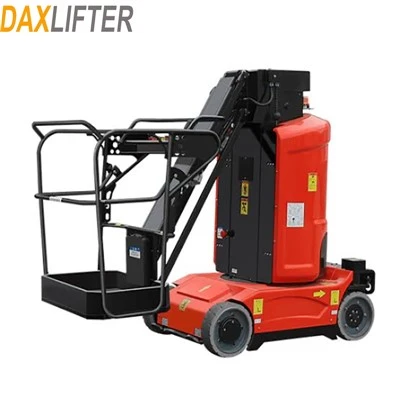
If you’re in the market for a vertical lift and you’re not sure which stage is right for your operation, I’m here to help. I’ve installed lifts in small garages, big warehouses, retail stores, auto body shops, and more. I can walk you through your options, help you measure your space, and find a solution that fits your needs and your budget. Don’t let the confusion between single-stage and multi-stage hold you back—let’s talk about what you’re trying to move, where you’re trying to move it, and we’ll find the right lift for you.
Others References:
- Vertical Lift Manufacturers Association. (2021). Single vs. Multi-Stage Lift Operational Guidelines.
- National Association of Warehouse Distributors. (2022). Space and Load Capacity Requirements for Material Handling Lifts.
- Industrial Equipment Maintenance Journal. (2020). Comparative Analysis of Single and Multi-Stage Vertical Lift Maintenance Costs.
- Small Business Administration. (2019). Guide to Selecting Material Handling Equipment for Small Commercial Spaces.
Qingdao DAXLIFTER Machinery Co., Ltd.
Qingdao DAXLIFTER Machinery Co., Ltd. is well-known as one of the leading vertical lifts manufacturers and suppliers in China. Please feel free to buy high quality vertical lifts for sale here from our factory. For price consultation, contact us.
Address: Shouchuang Industry Park Qingdao China
E-mail: sales@daxlifter-al.com
WebSite: https://www.daxlifter-al.com/
