If you’ve ever stood on a job site watching a hydraulic auger drive bore through hard clay, compacted gravel, or even light bedrock, you’ve probably wondered: how much can one of these units actually lift? As a supplier of hydraulic auger drives, I field this question at least twice a week, from new contractors upgrading their hand-me-down equipment to seasoned operators looking to justify investing in a high-performance system. It’s not a trivial question—your auger’s lifting capacity dictates how fast you can move soil, how deep you can dig without reloading prematurely, and even how safely you can operate the machine when hauling debris from a hole. Hydraulic Auger Drive
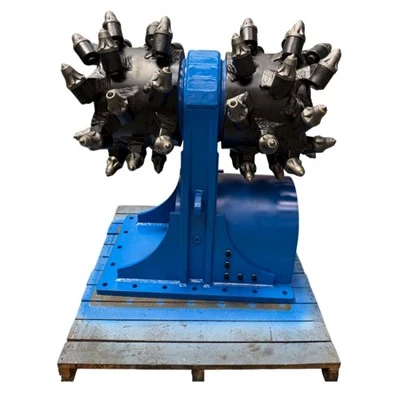
Let’s start with the basics, because understanding lifting capacity starts with what a hydraulic auger drive actually does. Unlike manual augers or electric drives, hydraulic systems rely on pressurized fluid to transfer power, so their performance isn’t tied to a single motor’s horsepower or a digger’s weight alone. The “lift” we’re talking about here is the maximum weight a drive can pull upward on the auger stem and flighting, which includes not just the soil or material you’re excavating, but the weight of the auger itself and any friction between the auger and the hole’s walls.
I’ve seen this play out firsthand on a job last spring, where a small landscaping contractor tried to use a 12-horsepower auger drive he’d had for 10 years to bore 4-foot holes for fence posts in glacial till. He complained his drive kept stalling mid-lift, and he thought he needed a more powerful motor. When we pulled the unit apart, we found his hydraulic lines were ½-inch instead of the ¾-inch size recommended for his drive’s operating pressure, which meant he lost nearly 30% of his available lifting power to line loss. That’s a mistake a lot of people make: they assume more horsepower equals more lift, but it’s the combination of flow rate (gallons per minute), operating pressure (pounds per square inch, PSI), and the drive’s mechanical efficiency that determines true lifting capacity.
Now, let’s get to the numbers, because that’s what everyone wants. For standard, mid-range hydraulic auger drives (the workhorses most common in construction, landscaping, and agricultural applications), the typical maximum lift falls between 1,200 and 3,500 pounds. But that’s a wide range, so let’s break it down by use case to make it concrete. Small, compact drives designed for residential landscaping—say, models pairing with skid-steers under 50 horsepower—usually top out around 1,200 to 1,800 pounds. Those are perfect for 12-inch to 18-inch diameter holes in soft topsoil, where you’re mostly lifting loose, light material. Push these same drives into hardpan or compacted gravel, and that number drops fast—friction from the auger digging into the walls can add 500 to 1,000 pounds of load on its own, even if the soil itself is only 500 pounds. That’s why that 1,800-pound drive can struggle if you’re pulling 2,300 pounds total, even if the soil weight seems low.
Moving up to mid-sized drives for general construction and agricultural use, which pair with 50-to-100-horsepower skid-steers or tractors, their lifting capacity jumps to 2,200 to 3,500 pounds. These are the units you see on job sites drilling 24-inch diameter holes for deck footings or tree plantings in moderately compacted soil. I recently worked with a utility crew using one of our mid-range drives to bore holes for street light poles in sandy loam, and they reported pulling consistent loads of 2,800 to 3,200 pounds per lift—no stalls, no overheating, even at depths of 6 feet. That’s exactly within the range these drives are engineered for.
What about heavy-duty industrial drives? For those working in mining, utility line drilling, or foundation work, drives paired with 150+ horsepower equipment can push lifting capacities up to 5,000 pounds and beyond. These are designed for 36-inch to 48-inch diameter holes in tough material like gravel, light bedrock, or mixed debris. I was on a pipeline job last year where a crew used a heavy-duty drive to clear rock and soil from 10-foot deep holes; they regularly lifted 4,200 pounds per auger load, and the drive ran smoothly with no signs of strain.
But here’s the catch: those numbers are theoretical maximums, and real-world conditions will almost always cut into them. Let’s talk about the factors that change how much your hydraulic auger drive can lift, because ignoring these is a surefire way to run into headaches on the job.
First, soil type is huge. Loose, sandy soil weighs about 100 pounds per cubic foot, while compacted clay can be 150 pounds per cubic foot, and wet, sticky clay can jump to 180 pounds per cubic foot. A 24-inch diameter, 4-foot deep hole holds about 42 cubic feet of material—so in loose sand, that’s 4,200 pounds of soil, but in wet clay, that’s a staggering 7,560 pounds. That’s way above the 3,500-pound maximum of a mid-range drive, so you’d have to either split the digging into two 2-foot lifts (bringing the load down to 2,000 pounds) or step up to a heavy-duty drive. That’s a common mistake operators make: they dig too deep in one lift, not accounting for the soil’s weight, and end up overloading their drive.
Second, auger size and design matter more than most people realize. A 24-inch diameter auger with wide, deep flighting will carry more soil than a narrow 18-inch auger, but the larger flighting also increases friction with the hole walls. A flighted auger is better for loose soil, while a root-cutter auger with hardened edges for rocky ground will have less side friction, but its flighting is shallower, so it carries less material per rotation. That balance is key: if your auger is designed for high capacity but creates too much friction, even a perfectly matched drive will struggle to lift the load.
Third, equipment compatibility is non-negotiable. Your auger drive has to work with the carrier machine’s hydraulic system to reach its maximum lifting capacity. If your skid-steer only puts out 10 GPM at 2,500 PSI, a drive rated for 15 GPM and 3,000 PSI will never hit its full lift. I’ve seen operators pair the wrong drive to a carrier a hundred times: a 10-horsepower drive on a 30-horsepower skid-steer that can’t supply enough flow, or a heavy-duty drive on a 20-horsepower tractor that can’t reach the necessary pressure. The result? Stalling, slow digging, and premature wear on the drive’s motor.
And finally, wear and tear on your drive. A 10-year-old drive with worn hydraulic hoses, a leaking seal, or a worn motor will lose 10 to 20% of its lifting capacity over time. I always tell customers to schedule a annual inspection of their hydraulic lines and motor, because even a small leak can drop your operating pressure enough to turn a 3,000-pound lift into a 2,400-pound one. That’s a difference that can mean the difference between finishing a job on time and calling for extra help.
Now, let’s talk about what this means for you as a operator or contractor. How do you calculate your exact needs, instead of relying on generic numbers? Start with these steps: measure the diameter of the holes you’ll dig, estimate the depth per lift (2 to 4 feet is standard for most drives, to avoid overloading), and calculate the volume of material you’ll be lifting. Multiply the cubic feet by the soil density for your area (you can find local soil density data from agricultural extension services or state environmental agencies) to get your material weight, then add 500 to 1,000 pounds for side friction and auger weight. That total is the minimum lifting capacity you need from your drive.
For example: if you’re digging 18-inch diameter holes, 3 feet deep, in loam soil (130 pounds per cubic foot). Hole volume is πr²h = 3.14 x (0.75 ft)² x 3 ft = ~5.3 cubic feet. Material weight = 5.3 x 130 = 689 pounds. Add 700 pounds for friction and auger weight: total load is ~1,389 pounds. That means a compact drive rated for 1,200 to 1,800 pounds is perfect for this job—no need to overspend on a mid-range drive, and you won’t risk overloading a smaller unit.
If you’re digging 30-inch holes, 4 feet deep, in compact clay (160 pounds per cubic foot): volume = 3.14 x (1.25 ft)² x 4 ft = ~19.6 cubic feet. Material weight = 19.6 x 160 = 3,136 pounds. Add 800 pounds for friction and auger weight: total load = ~3,936 pounds. That means a mid-range drive rated for 2,200 to 3,500 pounds will struggle here, and you’ll need a heavy-duty drive capable of at least 4,000 pounds of lift to work efficiently.
I also get asked all the time: is it better to go with a higher lift drive, just to have extra? The answer is usually yes, but with a caveat. Extra lift gives you flexibility to work in different soil types, dig deeper holes, and handle larger augers, but a drive that’s overengineered for your needs will be heavier, more expensive, and use more fuel. A 3,500-pound drive will cost 30% more than a 2,000-pound drive, and if you’re never going to need that extra lift, that’s money wasted. The sweet spot is to pick a drive with 15 to 20% extra lifting capacity than your calculated maximum load—enough to handle unexpected hard spots in the soil, but not so much that you’re paying for power you don’t need.
Let me wrap this up with a real-world example to put it all together. Last month, a customer came to me with a problem: he was a landscaping contractor in central Ohio, digging 20-inch diameter holes for new residential fence posts in glacial till, which is super compact. He’d been using a 1,500-pound rated compact drive, and it was stalling every time he tried to dig 3.5-foot deep holes. He thought he needed a 3,000-pound mid-range drive, but when we calculated his load, we found the issue wasn’t lift—it was his carrier machine. His skid-steer only put out 11 GPM, which was 2 GPM less than the drive required, so he was losing 25% of his lift to insufficient flow. We swapped out his hydraulic lines to match the drive’s required flow, and his lifting capacity jumped to 1,850 pounds, enough to handle his 3.5-foot holes in the compact till. He didn’t need a new drive at all—just a small adjustment to his hydraulic system. That’s the kind of thing that trips up so many people: they focus on the drive’s rating, not how it works with their existing equipment.
At the end of the day, how much a hydraulic auger drive can lift isn’t a one-size-fits-all number. It depends on your equipment, your job site conditions, and the materials you’re working with. Whether you’re a small contractor looking to upgrade your first drive, or a large utility company needing to spec out a fleet for pipeline work, taking the time to calculate your exact lifting needs will save you time, money, and headaches on every job.
If you’re not sure what lifting capacity is right for your application, or you want to learn more about our line of hydraulic auger drives, feel free to reach out to our team to discuss your project. We can help you match the right drive to your carrier machine, your hole specifications, and the soil conditions you’ll face, so you can work efficiently and safely every time you turn on your auger.
Longitudinal Drum Cutter References
- The Hydraulic Handbook: Hydraulic Systems Design and Applications (S. Majumdar, 2019)
- Construction Equipment Association: Hydraulic Auger Drive Performance Standards, 2021
- USDA Natural Resources Conservation Service: Soil Density Estimates for Construction and Landscaping, 2020
- Equipment World: Field Guide to Auger Lifting Capacity and Job Site Compatibility, 2022
Ningbo Oushijie Hydraulic Transmission Co., Ltd.
Ningbo Oushijie Hydraulic Transmission Co., Ltd. is one of the most professional hydraulic auger drive manufacturers and suppliers in China, also supports customized service. With abundant experience, we warmly welcome you to wholesale durable hydraulic auger drive at competitive price from our factory.
Address: Changshi Sanxing Industrial Zone, Jiulong Lake Town, Zhenhai District, Ningbo,Zhejiang, China
E-mail: yong@nbosj.com
WebSite: https://www.nbosj.com/
