When I first started working in the aluminum coil roll industry over a decade ago, I used to think that aluminum was just another generic metal—something basic, easy to source, and interchangeable with other non-ferrous materials. That was before I sat across from a manufacturer of architectural facades who asked me to explain exactly why their project needed aluminum coil rolls instead of steel, and why a 0.5mm thickness roll would behave differently than a 1.0mm one. That conversation changed how I think about every coil I stock, every client I meet, and every technical detail that makes aluminum coil rolls not just a product, but a solution. Today, I want to break down the physical properties of aluminum coil rolls—what they are, why they matter to manufacturers, and how understanding them can help you make better choices for your next project. Aluminum Coil Roll
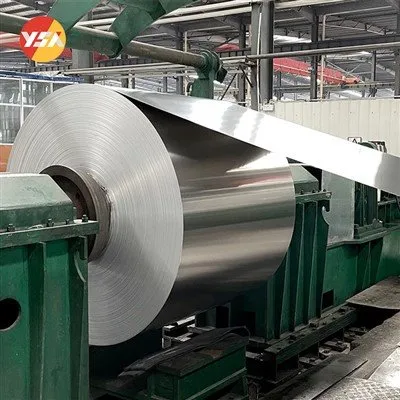
Let’s start with the basics: what even is an aluminum coil roll? If you’ve never worked with metal products, it’s a continuous strip of aluminum, rolled into a tight, cylindrical shape for easy storage, transport, and processing. Unlike flat sheets cut to specific sizes, these rolls are designed to feed directly into machines—think of them as a giant, flexible spool that gets unspooled, cut, shaped, or coated on demand. The physical properties that define these rolls aren’t random; each one is engineered for a specific use case, and getting the properties right is what separates a smooth, efficient production run from costly delays or product failures.
First up, density. Aluminum has a density of about 2.7 grams per cubic centimeter, which is roughly a third of steel’s density. That’s a huge deal for any manufacturer that deals with weight constraints—like the automotive industry, where every extra pound cuts fuel efficiency, or construction, where building materials need to be light enough for installers to handle without heavy machinery. As a supplier, I get questions all the time from aerospace clients who switch from steel to aluminum coil rolls and save 40% on component weight without sacrificing strength. It’s not just about being light, either; that lower density makes the rolls easier to load onto processing lines, reducing wear on conveyor systems and speeding up production times. I remember a client who made food packaging components told me switching to aluminum coil rolls cut their shipping costs for raw material by 28% because each pallet held twice as many rolls as it did steel ones.
Next, let’s talk about tensile strength. Tensile strength is the amount of force a material can withstand before breaking, and for aluminum coil rolls, it varies dramatically depending on the alloy and temper we use. For example, a 1xxx series aluminum (pure aluminum, 99%+ purity) has a tensile strength of around 7,000 to 11,000 pounds per square inch (psi) in its annealed, soft temper. That’s great for applications like foil, where you need the metal to stretch thin without tearing, but not enough for structural uses. On the other end of the spectrum, 7xxx series aluminum (often called “aircraft aluminum”) can hit tensile strengths of up to 80,000 psi when heat-treated—stronger than many low-grade steels, but still light. As a supplier, we have to match the tensile strength of the coil roll to what our client is doing. A window frame manufacturer needs a roll with enough strength to hold its shape without sagging, so we recommend a 6061 alloy coil in a mid-temper, which balances strength and formability. If someone is making air conditioners, though, they might need a softer annealed roll that can be bent into tight coils without cracking. I once had a client who tried to use a high-strength 7xxx roll for making flexible ductwork—they couldn’t bend it at all, and had to switch to a softer 3xxx series roll. That’s the kind of mistake that comes from not understanding tensile strength, and it’s why I always take time to walk through those details with every new contact.
Formability, or how easily a material can be shaped without cracking or breaking, is another critical physical property of aluminum coil rolls. Aluminum is inherently ductile—meaning it can be stretched into wires or bent into complex shapes without failing—but that ductility changes with alloy and temper. Annealed aluminum (soft, heated after rolling) has the highest formability, making it perfect for deep drawing, a process where you pull a flat coil into a three-dimensional shape like a soda can. Half-hard temper rolls, on the other hand, are stiffer and hold their shape better, so they’re used for things like roofing panels or gutter systems that need to maintain a sharp edge. I once worked with a custom sign maker who was struggling with their metal panels cracking during bending. It turned out they’d ordered a full-hard roll, which was too brittle for their bending machine. We swapped it for a half-hard temper, and they were able to produce every panel without a single defect. That’s why I make sure to ask clients about their forming process before recommending a coil—if you’re doing deep drawing, soft is better; if you’re doing brake forming, half-hard or full-hard works.
Corrosion resistance is a physical property that sets aluminum apart from almost all other common metals, and it’s one of the reasons aluminum coil rolls are so popular in outdoor and marine applications. When aluminum is exposed to oxygen, it forms a thin, tight layer of aluminum oxide on its surface—this layer is only a few atoms thick, but it’s impenetrable, so it prevents further corrosion. Unlike steel, which needs paint or zinc coating to stop rust, aluminum naturally protects itself. But that layer can be damaged, which is why some clients opt for anodized or pre-coated coil rolls, which add an extra layer of protection or color. I had a coastal construction client a few years ago who was using steel rolls for a boardwalk railing project. Within a year, the steel was rusting, and they had to replace it. We switched them to 5xxx series aluminum coil rolls, which have even higher corrosion resistance than pure aluminum, and 7 years later, that railing still looks brand new. That’s the real value of understanding aluminum’s corrosion resistance—it reduces long-term maintenance costs, which is a big selling point for anyone building for durability.
Thermal conductivity is another key physical property, especially for industries like HVAC, cooking equipment, and electronics. Aluminum conducts heat about three times better than stainless steel, which makes it ideal for things like heat exchangers in air conditioners or baking sheets. For coil rolls used in thermal applications, we often recommend 1050 or 1100 pure aluminum, which have the highest thermal conductivity of any common aluminum alloy. I remember a commercial bakery client who was using copper sheets for their baking trays, but they kept warping in their industrial ovens. We switched them to thin aluminum coil rolls that were rolled flat, and the heat distribution was more even, so their baked goods came out consistent every time, and the trays didn’t warp. It’s a small change, but understanding thermal conductivity made that project a huge success for them.
Let’s not forget about thickness and gauge, which are physical dimensions that directly impact how a coil performs. Aluminum coil rolls come in gauges from as thin as 0.006mm (used for food packaging foil) up to several millimeters thick for structural applications. The gauge affects everything from weight to formability to cost. For example, a 0.5mm gauge roll is flexible enough to be bent into a curved roofing panel, but rigid enough to support itself without extra framing. A 2mm gauge roll would be too heavy for that, but perfect for a truck bed liner that needs to resist dents. As a supplier, we stock a wide range of gauges, and I always advise clients to go slightly thicker than they think they need—thin rolls can be harder to handle during processing, which increases the chance of errors. I once had a customer who ordered a 0.2mm gauge roll for making bottle caps, and they ended up with a lot of tears because the roll was too thin to feed through their cap-making machine. We swapped it for 0.3mm, and their defect rate dropped by 80%.
Now, it’s important to note that these properties aren’t universal—they change based on the alloy. The Aluminum Association, which sets standards for aluminum products, categorizes alloys into series based on their main alloying element: 1xxx (pure aluminum, best for corrosion resistance and formability), 3xxx (manganese added, stronger and work-hardened, good for cooking equipment and siding), 5xxx (magnesium added, high strength and corrosion resistance, perfect for marine uses), and 6xxx (magnesium and silicon, heat-treatable, great for structural parts). As a supplier, we specialize in all of these series, and I can’t tell you how many times a client has come to me with a vague request like “I need aluminum coil rolls” and left with a specific alloy and temper that solves their exact problem.
There’s also the role of the rolling process itself in shaping the physical properties of the coil roll. When aluminum is rolled into a coil, it’s passed through heavy rollers that compress it to the desired thickness. This working process, called work hardening, makes the metal stronger and less ductile. If you want a softer, more formable roll, we anneal it—heat it to high temperatures to reverse the work hardening. That’s why two rolls of the same alloy can have completely different properties, depending on whether they’re in an annealed, soft temper, or a full-hard temper. This is a detail that a lot of first-time buyers don’t know, and it’s why I always walk them through the temper designation before they place an order.
I want to be clear here: I’m not just reciting technical specs—this is information that comes from talking to hundreds of manufacturers over the years. I’ve seen what happens when you mismatch a coil’s properties to a project, and I’ve seen how the right coil can make a production line run smoother, cut costs, and improve the final product. For example, a friend who runs a custom kitchen cabinet shop told me they switched from plywood to aluminum coil rolls for their cabinet doors a few years ago. The aluminum was more durable, didn’t warp in humid kitchens, and the formability let them create curved doors that plywood couldn’t do. They worked with our team to pick a 3003 alloy coil in a half-hard temper, which bent perfectly without cracking, and it’s become their most popular product. That’s the kind of impact understanding physical properties can have.
If you’re in the market for aluminum coil rolls, the last thing you want is to order a generic roll that doesn’t fit your needs. That’s why it’s helpful to have a supplier who not only has access to a wide range of products, but who understands the physical properties that matter for your specific application. Whether you’re a automotive manufacturer, a construction company, a packaging producer, or a custom fabricator, I can help you match the right alloy, temper, gauge, and finish to your project. We work with clients of all sizes, from small custom shops to large industrial operations, and we take the time to listen to your needs, answer your questions, and make sure you get a coil roll that performs as expected.
Don’t let technical jargon scare you. The physical properties of aluminum coil rolls are what make them one of the most versatile materials in modern manufacturing. They’re light, strong, corrosion-resistant, and formable—all things that steel or plastic can’t match in the same combination. The key is to know what properties you need for your project, and to partner with a supplier who can guide you to the right product.
If you’re ready to learn more about how aluminum coil rolls can work for your next project, I’d love to talk. We can walk through your requirements, answer any questions you have about physical properties, and help you find the perfect coil for your needs. Reach out to us today to start a conversation about your aluminum coil roll requirements.
Aluminum Plate References
Aluminum Association. (2023). Aluminum Standards and Data. The Aluminum Association.
ASM International. (2022). Properties of Aluminum Alloys. ASM Handbook, Volume 2: Properties and Selection: Nonferrous Alloys and Special-Purpose Materials.
Kutz, M. (2021). Applied Materials Selection and Design. John Wiley & Sons.
Henan Yongsheng Aluminum Industry Co., Ltd.
We are one of the most reliable aluminum coil roll manufacturers and suppliers in China. With abundant experience, we warmly welcome you to buy high-grade aluminum coil roll for sale here from our factory. All custom made products are with high quality and competitive price.
Address: Gongyi City Industrial Cluster District, Huiguo Town, Gongyi City, Henan Province
E-mail: eric@ysaluminum.cn
WebSite: https://www.ysaluminummill.com/
