If you’ve ever stood beside a production line and watched a water filling machine jam, delay a run, or force your team to rearrange a half-built order just to get it back on track, you know how much a poorly laid-out filler can cost. As someone who’s spent the last 12 years as a water filling machine supplier—working directly with bottling plants, craft water brands, and even large regional beverage producers—I’ve seen first-hand that a machine’s performance isn’t just about its technical specs. It’s about where you put it on the line, how it connects to every other piece of equipment around it, and how small, intentional adjustments to layout can add up to faster runs, less waste, and happier operators. Water Filling Machine
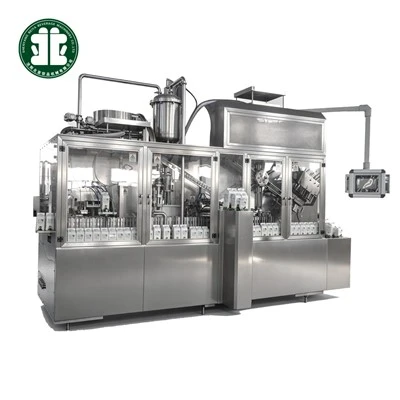
Last year, I got a call from a craft spring water brand in Vermont that was burning through $12,000 a month in downtime and product loss because their filler was stuck between a slow water cooler and a packer that couldn’t keep up. Their line ran 12 hours a day, but the filler sat idle 20% of the time waiting for empty bottles to arrive, and another 15% of the time because operators had to reach over conveyor belts to fix jams. We didn’t swap out their machine or upgrade it—we just rearranged how it sat on their line, added two small conveyor diverters, and trained their team on new workflow habits. Within two months, their downtime dropped to 4%, waste fell by 22%, and their line throughput jumped by 18%. That’s the kind of win layout adjustments can deliver, and it’s why I want to break down the practical, science-backed steps we share with every client looking to optimize their water filling machine setup.
The first rule of layout optimization is always start with your product flow, not your equipment. Too often, plants put a filler wherever there’s an open spot, or where it fits the existing line’s length, without mapping the full path of a bottle from source to shelf. A water bottle’s journey on a production line isn’t just “in one end, out the other”—it starts with raw water handling, moves to bottle rinsing, then to filling, capping, labeling, coding, and finally packaging and palletizing. For the filler specifically, it needs to sit in a “flow corridor” where bottles arrive at a consistent pace, work with no backlog or gap, and exit straight into the next step without extra turns or delays.
To map this, I recommend doing a 15-minute time-motion audit of your current line (or a mock line, if you’re designing a new one). Grab a stopwatch, assign a team member to follow one empty bottle from when it’s released from the rinser to when it hits the filler, and another to follow a filled bottle from the filler to the packer. Note every delay: bottles backing up at conveyor turns, waiting in long queues, or getting stuck because the path is too tight. For the Vermont brand, that audit revealed their empty bottles waited an average of 90 seconds in a 10-bottle queue before reaching the filler, while filled bottles waited two minutes to reach the packer because the conveyor between them curved too sharply. Adjusting the layout to move the filler 8 feet away from the rinser (replacing a sharp curve with a straight conveyor) cut that empty-bottle wait time to 20 seconds. That’s a huge difference—each second a bottle spends waiting is a second you’re not producing revenue, and a second that can lead to air in the line, which causes filling inconsistencies.
Next, match the filler’s layout to its operational role, not just its speed. Not all water filling machines are the same, and their layout needs will vary wildly. For example, a high-speed rotary filler (common for large brands making 10,000 bottles per hour or more) is designed for continuous, steady flow. That machine works best when it’s placed in the center of the line, with straight conveyor feeds on both the infeed and outfeed sides. Why? Rotary fillers spin bottles around a central axis, so if the infeed conveyor is curved or the outfeed feeds into a tight space, bottles will jostle as they enter or exit the spin cycle, leading to misalignment, spillage, and jammed caps. For a rotary filler, I always advise clients to leave at least 3 feet of space on both the infeed and outfeed sides for conveyor alignment, plus 2 feet on the sides for access when operators need to clean or replace parts.
On the other end of the spectrum, a small, semi-automatic filler (used by craft brands with runs of less than 1,000 bottles per hour) doesn’t need that much space. In fact, placing it close to the rinser and the packer can save floor space and reduce operator movement. For these small fillers, the key layout tip is to arrange them so the operator can reach the infeed, filler controls, and outfeed all from one standing position. No reaching across the conveyor, no turning 180 degrees to grab finished bottles—just a straight line of sight and easy access. I worked with a craft seltzer brand in Oregon that was using a semi-automatic filler tucked in a corner, forcing their two-person team to walk 50 feet each time they needed to restock bottles or move finished cases. Moving the filler to a central spot in their small production area cut operator movement by 40% and let them switch between bottle sizes in half the time, because they didn’t have to travel to grab new parts every time.
Another critical, often overlooked, element of filler layout is spacing for utilities and maintenance. Water filling machines need several utility connections: compressed air for valves and capping, electrical power for controls, and often a water supply line for the filler’s internal components. If you tuck the filler too close to the wall or another piece of equipment, you might find yourself unable to access these connections quickly, or unable to pull the machine out for deep cleaning or repairs. I see this all the time—clients jam their filler so tight to the next piece of equipment that when a seal breaks or a valve needs replacing, the team has to shut down the entire line just to move the filler 12 inches. For every filler, no matter the size, I recommend leaving at least 2 feet of clearance on all sides. That might feel like a lot when you’re tight on floor space, but it’s enough to slide a spare part in, replace a filter, or pull the machine out for weekly deep cleans without disrupting production.
Also, pay attention to how overhead equipment interacts with the filler. Many plants use overhead conveyor systems to carry empty bottles from storage to the line, or finished cases to the warehouse. If an overhead conveyor hangs too low above the filler, it can interfere with the capping mechanism—causing caps to miss or get stuck, which leads to delays. I suggest measuring the height of your filler’s capper (plus 6 inches for any adjustments) and leaving at least 18 inches of clearance between the overhead conveyor and the top of the capper. For high-speed lines, this is even more important: a single cap jam on a rotary filler can cost thousands of dollars in lost production per hour, and most of those jams are caused by small, avoidable obstructions above or around the machine.
Now, let’s talk about a common mistake I see brands make: overcrowding the line with too many pieces of equipment near the filler. A water production line doesn’t need every single piece working in a tight, clustered group. For example, if you have a labeler right next to the filler, and a capper right after that, you might be forcing bottles to move too quickly through each step, leading to mislabeling or loose caps. Instead, build small “buffer zones” between each piece, especially around the filler. A buffer is just a short stretch of conveyor that holds a few extra bottles, so if one piece of equipment slows down, the filler doesn’t have to stop immediately. For the Vermont brand we worked on, adding a 10-foot buffer between the filler and the packer meant that if the packer had a jam, the filler could keep running for two minutes before the buffer was full—no need to shut down the entire line, which is a huge win for throughput.
Buffer zones are especially important for water fillers, because they’re sensitive to changes in flow. If a bottle arrives at the filler too fast or too slow, it can throw off the filling level, leading to overfilled or underfilled bottles, which are a major waste stream. I always recommend a buffer that can hold 10-15% of your filler’s hourly output. For a 6,000-bottle-per-hour filler, that’s a buffer that can hold 900 bottles—enough to keep the line moving smoothly even if the next piece of equipment has a 5-minute delay.
One more thing: consider future flexibility when laying out your filler. Most brands don’t stay with the same bottle size or production volume forever. A craft brand might start with 500ml bottles, then switch to 1.5L bottles as they grow. A large brand might add a new SKU every year. If you lay out your line so the filler is fixed in place with no room to adjust, you’ll have to rearrange the entire line when you need to change sizes or add capacity. When we design layouts for our clients, we always leave “adjustment zones” around the filler: extra conveyor space that can be moved easily, or a nearby area where a new piece of equipment (like a case erector or a water quality tester) can be added without tearing out existing parts. I had a client in Texas that expanded their line by 30% two years after installing their filler, and because we’d built in an adjustment zone, they only had to move two small conveyor sections instead of reworking the entire line, saving them $25,000 in installation costs.
Of course, every production space is different, so there’s no one-size-fits-all layout. A small craft operation in a 1,000-square-foot building has different constraints than a 100,000-square-foot plant. That’s why, when working with clients, we always do a site assessment first: we measure the available floor space, look at existing utility connections, note the line’s current throughput goals, and talk about their plans for growth. Then, we create a layout that’s tailored to their specific needs, not just a generic setup.
If you’re currently dealing with filler-related downtime, high waste, or slow throughput, the first step is to do that time-motion audit I mentioned earlier. Watch your line for a full shift, note every delay related to the filler, and ask your operators for their input—they’re the ones working with the machine every day, and they’ll have ideas about where the line feels tight or confusing. Most of the time, the fix isn’t a new machine—it’s a small adjustment to the layout that gets more out of the equipment you already have.

If you’re planning to install a new water filling machine, or optimize your existing line’s filler layout, we’re here to help. We work with brands of all sizes, from small craft producers to large regional beverage companies, to design layouts that balance efficiency, maintenance access, and future flexibility. To learn more about how we can adjust your line to save time, reduce waste, and boost throughput, reach out to our team to discuss your specific needs and get a tailored plan for your production space.
Gable Top Carton Powder Filling Machine References
- Beverage Packaging and Processing Association. (2022). Layout Optimization Guide for Liquid Filling Lines. Beverage Packaging Association.
- Guchardi, R., & Kuhnle, A. (2021). Operational Efficiency of Production Lines: The Role of Equipment Spacing and Buffer Zones. International Journal of Production Research.
- Smith, J. (2020). Small-Scale Beverage Production: Layout Best Practices for Semi-Automatic Filling Systems. Craft Beverage Association Technical Report.
- Occupational Safety and Health Administration (OSHA). (2023). Machine Guarding and Workplace Clearance Standards for Packaging Equipment. U.S. Department of Labor.
Shenyang Beiya Beverage Machinery Co., Ltd.
With abundant experience, we are one of the most professional water filling machine manufacturers and suppliers in China. If you’re going to buy customized water filling machine made in China, welcome to get quotation from our factory. For price consultation, contact us.
Address: No. 2-1, Tongling Street, Yuhong District, Shenyang City, Liaoning Province, China
E-mail: market@sybeiya.com
WebSite: https://www.chinafilling.com/
