If there’s one question I get asked most often at the graphite crucible shop, it’s this: Can a graphite crucible be used for melting iron? Let me start with a story. Last month, a blacksmith from a small town 200 miles out gave me a call, all frazzled. He’d spent $80 on a clay crucible for melting pig iron to make horseshoes, and by the time the forge hit 1,500°C, the crucible had crumbled right down the middle. His metal was ruined, his day was shot, and he was convinced all crucibles were garbage for iron work. When I told him graphite crucibles would fix his problem, he was skeptical—said he’d always heard graphite was too “soft” or too “reactive” for heavy iron melts. That conversation stuck with me because it’s the same doubt I hear from foundry owners, hobbyist metalworkers, and even some seasoned metallurgists. So today, let’s break this down: can a graphite crucible really hold up to melting iron, and when is it the right call? Graphite Crucible
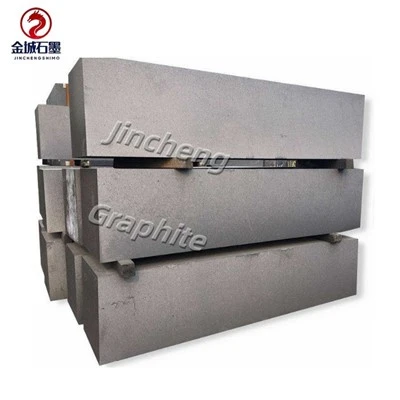
First, let’s get the basics straight. Iron melts at around 1,538°C for pure iron, right? Most cast iron— the stuff folks use for casting parts, cookware, or forgings—actually melts a bit lower, around 1,200°C to 1,400°C, thanks to carbon and silicon impurities. Graphite, as a material, has a melting point way higher than that. We’re talking about 3,600°C. That’s not a typo. So temperature-wise, it’s no contest. The crucible itself can easily survive the heat needed to turn iron into liquid. The real questions here are about chemical stability, thermal shock resistance, and how the crucible’s design holds up to the rigors of melting and pouring heavy metal.
Now, the big one people worry about: reactivity. I’ve seen old-school guides that say graphite and carbon-based materials will react with iron to form iron carbide, or that graphite will leach carbon into the molten metal, ruining its quality. Let’s separate myth from reality here. Yes, graphite is carbon, and molten iron does absorb carbon—but that’s not always a bad thing. If you’re melting pure iron and want to turn it into steel, controlled carbon pickup is part of the process. But if you’re working with cast iron where carbon content is already at the desired level (around 2-4%), the carbon pickup from graphite is minimal, and easy to manage. The key here is the type of graphite crucible you use. Not all graphite crucibles are the same. There’s solid graphite, which is great for high heat but can be prone to oxidation at temperatures above 600°C if there’s air present. Then there’s silicon-carbide (SiC) bonded graphite crucibles—this is the workhorse for most iron applications. The silicon carbide coating or matrix acts as a barrier between the pure graphite and the molten iron, slowing down carbon transfer and preventing the crucible from burning away too quickly. I’ve tested these crucibles myself with cast iron melts: after 10 consecutive pours over a week, the carbon content of the iron was only 0.1% higher than the original ingots. That’s negligible for most projects. The oxidation? The SiC layer means the crucible can sit in a forge at 1,400°C for hours without turning to dust, unlike pure graphite which would start eroding if you leave the lid off too long.
Thermal shock is another make-or-break factor. When you’re melting iron, you’re not just heating the crucible slowly—you’re cranking the forge up from room temperature to 1,500°C in an hour, then you’re pulling a 50-pound crucible of molten iron out with tongs, tapping it to pour, and if you have leftover metal, you’re dumping it back or letting it cool. That kind of rapid temperature change would crack a lot of crucibles. Clay crucibles, for example, have a tendency to shatter if you heat them too fast or cool them unevenly. Graphite crucibles, especially the ones we make with a mix of high-purity graphite and clay as a binder, have excellent thermal shock resistance. I’ve had a blacksmith friend pour molten iron from a graphite crucible that was still glowing red hot after the previous pour, and it didn’t crack at all. The dense, uniform structure of graphite (when properly formulated) distributes heat evenly, so there’s no sudden expansion or contraction that causes stress fractures.
Wait, but hold on—there are times when graphite crucibles aren’t the best choice. Let’s be honest, I’m a supplier, but I’d never steer a customer wrong. If you’re melting very high-purity iron for laboratory testing, or making specialty steel where zero carbon pickup is required, graphite might not be your first pick. For those applications, you’d look to alumina or zirconia crucibles, which are inert. But for 90% of iron melting that happens in small to medium foundries, blacksmith shops, art foundries, and even industrial settings, graphite crucibles are far superior to alternatives like clay-graphite or pure clay crucibles. They last longer—we have customers who get 50+ melts out of a single well-maintained graphite crucible, compared to 10 or 15 from a clay crucible. They hold heat more evenly, so your iron melts faster and more uniformly, saving you fuel costs. And they’re easier to pour from, too—their non-stick (well, low-stick) surface means less metal sticks to the sides, so you waste less and get more out of every melt.
I remember a customer last year, a small foundry owner who made engine parts from cast iron. He’d been using clay crucibles for years, and was going through 20 a month. After switching to our SiC-bonded graphite crucibles, he cut his crucible costs by 60% in three months. He told me the quality of his castings improved too—no more inclusions from the clay crucible breaking down mid-pour, no more inconsistencies in carbon content because the graphite crucible held the temperature steady longer. That’s the kind of win I love to see.
Now, let’s talk about proper use, because even the best crucible won’t perform right if you misuse it. First, preheating is key. You can’t toss a cold graphite crucible straight into a hot forge. You need to heat it slowly, over an hour or two, letting all the moisture and residual gases burn off. If you don’t, the moisture will turn to steam and cause the crucible to crack. Second, don’t overload it. Every graphite crucible has a maximum capacity, and going over that puts stress on the walls, leading to premature failure. Third, avoid exposing it to too much open flame directly on the bottom, especially if it’s a shallow forge. Some foundries use crucible stands that lift the crucible off the hot forge floor, and that’s a good practice—it helps with even heating and reduces oxidation. Fourth, when you’re done pouring, don’t quench a hot graphite crucible in water. Let it cool slowly, ideally in a furnace or a covered area, to prevent thermal shock. Follow those simple rules, and your graphite crucible will last for hundreds of melts.
I’ve heard the argument that graphite crucibles are more expensive upfront than clay ones, and that’s true. A 50-pound graphite crucible might cost $150, while a similar-sized clay crucible is $50. But when you do the math, it doesn’t add up. The graphite crucible lasts 5 times longer, so per melt, you’re paying $3, not $5. Plus, the fuel savings from faster, more efficient melts, and less wasted metal, make it a no-brainer for most users. For hobbyists doing small melts, too—graphite crucibles are affordable enough for small batches, and you won’t have to replace them every few weeks.
Wait, but what about when you’re melting steel? A lot of the same rules apply, but graphite is even better there, because you can control the carbon content to get the exact steel grade you want. But the question here is iron, so let’s stay on track. Let’s also address a common misconception about graphite being “dirty.” Some people say graphite leaves carbon deposits on your metal. But when you use a properly formulated crucible, the SiC barrier prevents that. If you see carbon on your castings, it’s usually from impurities in the iron ingots, or from a crucible that’s already worn out, not the graphite itself. We also offer coated graphite crucibles for applications where carbon pickup is even more critical—an extra layer of alumina on the inside wall means almost zero carbon transfer, perfect for high-grade cast iron or specialty iron alloys.
I think the takeaway here is that graphite crucibles are not just suitable for melting iron—they’re often the best choice for most iron melting applications, when matched with the right type of graphite crucible and used correctly. The key is working with a supplier who knows their stuff, someone who can tell you which grade is right for your specific needs, not just sell you the cheapest option. That’s why I started this business, after all—working in a foundry for 10 years, I saw too many good metalworkers ruined by bad crucibles, and I wanted to supply a product that actually solves their problems.
Back to that blacksmith friend I mentioned earlier. I sent him home with a SiC-bonded graphite crucible, gave him a quick run-down on preheating and usage tips. A week later, he texted me a photo of a perfect horseshoe, with a note that said “Cracked my clay crucible, this graphite one poured like a dream.” He’s now a regular customer, and he’s told half the blacksmiths in his area to switch to graphite. That’s the kind of feedback that makes this job worth it.
If you’re a blacksmith, a foundry owner, a hobbyist metalworker, or anyone who’s struggled with crucibles failing on iron melts, don’t write off graphite. It’s not the old, pure graphite that’s prone to oxidation—it’s the modern, engineered graphite crucibles with silicon carbide binders and coatings that make all the difference. They can handle the heat, they stand up to thermal shock, they minimize unwanted reactions, and they save you money in the long run.

At the end of the day, melting iron is hard work. You don’t need another variable working against you—you need a crucible that’s reliable, that holds up to repeated use, that lets you focus on making great metal instead of repairing equipment. That’s exactly what a quality graphite crucible delivers. If you’re ready to stop dealing with cracked crucibles, wasted metal, and inconsistent melts, reach out to us to talk about the right graphite crucible for your iron melting needs. We can help you calculate capacity, pick the right grade, and even walk you through best practices for use and maintenance.
Automobile Aluminum Casting Graphite References
ASM International. (2004). Properties of Graphite and Carbon for High-Temperature Applications. ASM Handbook, Volume 15: Casting.
Kubaschewski, O., & Alcock, C. B. (1979). Metallurgical Thermochemistry (5th ed.). Pergamon Press.
The European Carbon Association. (2018). Graphite Crucibles for Metallurgical Applications: Performance and Best Practices.
Huixian Jincheng Abrasive Mold Factory
As one of the most professional graphite crucible manufacturers and suppliers in China, we have world-leading production equipment and strong manufacturing capabilities. Please rest assured to buy durable graphite crucible for sale here from our factory. Quality products and reasonable price are available.
Address: Mengzhuang Town, Huixian City, Henan Province
E-mail: graphite.jc@gmail.com
WebSite: https://www.graphite-jc.com/
