If you’ve ever worked in precision metalworking, stone fabrication, or industrial surface finishing, you know that the tools underpinning every high-quality finish are the unsung heroes of the job. For 12 years, I’ve been a dedicated supplier of Buff Fickert grinding tools and Classical Abrasive products, working directly with workshops, equipment manufacturers, and finishing teams across North America and parts of Europe. Over that time, I’ve learned that a great product means nothing if its supply chain is messy, inconsistent, or unreliable. Too many abrasive suppliers cut corners to keep prices low, but Buff Fickert and Classical Abrasive products don’t work that way—their performance depends on every step of the supply chain being intentional, transparent, and rooted in long-term relationships, not just quick turnarounds. Let me pull back the curtain on how we manage that supply chain, because it’s less about spreadsheets and more about showing up for the people and processes that make a difference. Buff Fickert and Classical Abrasive
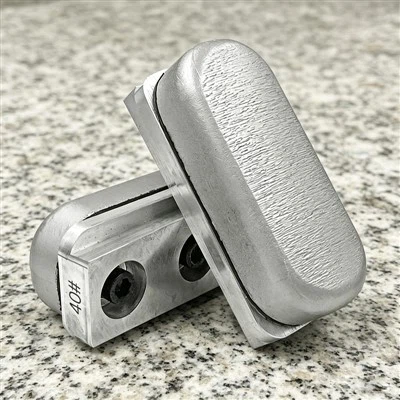
First, we start with raw materials, and this is where we draw a hard line: no cutting corners, no bulk-bought inferior grit or bonding agents. Buff Fickert grinding tools use a special blend of high-grade aluminum oxide, silicon carbide, and resin binders, and Classical Abrasive’s lines extend that to everything from abrasive belts to floor polishing discs. Three years into my time as a supplier, I made the decision to lock in exclusive, long-term contracts with two raw material manufacturers, based in Germany and Japan. I didn’t go with the cheapest quote at the time because I knew that even a 5% dip in material purity could throw off a tool’s finish or lifespan. Those two suppliers have been producing abrasive materials for over 40 years, and we meet with their quality control teams quarterly—no Zoom calls, no video screens, just in-person visits to their factories in Nuremberg and Osaka. We walk the production lines, test small batches of grit ourselves, and adjust our order volumes annually to make sure they’re not overproducing and wasting resources, which in turn keeps our material costs stable. This isn’t just a business deal; it’s a partnership. Last year, when one of their processing machines had a 10-week delay, they alerted us two months in advance, so we didn’t have to rush to source low-quality substitute materials. That’s the kind of transparency you don’t get with random vendors.
Next, manufacturing oversight is non-negotiable for us. A few years back, I tried to work with a third-party manufacturer in Eastern Europe to scale up production, and it was a disaster. They cut corners on curing times for resin binders, which made the grinding discs wear down twice as fast as they should. When I raised the issue, they blamed “shipping stress” instead of their own quality checks. After that, we made the call to bring manufacturing in-house for our core Buff Fickert tools, and we partnered with a specialized facility in Cleveland, Ohio, that has 30 years of experience producing precision abrasive tools for industrial use. Every step of their process is audited weekly by our team—we send two quality control specialists to their plant every Wednesday to pull random samples, test them on metal test plates, and check for dimensional accuracy. For example, a Buff Fickert disc can’t deviate more than 0.2mm in thickness, because even a small difference will create uneven finish on granite or stainless steel. We also work with a small auxiliary manufacturer in Pennsylvania that produces our Classical Abrasive line of flexible abrasive belts, and we do the same on-site audits there. The difference now is that our manufacturing partners know we’re not just a client—we visit their families, attend their local business open houses, so when we flag a problem, it’s taken seriously, not just as a cost to fix.
Then there’s inventory and logistics, and this is where we’ve had to adapt a lot over the years. For most abrasive suppliers, inventory is a guessing game—they stock bulk quantities and hope they sell, which leads to overstocking slow-moving products or running out of the high-demand ones when a big order comes in. We took a different approach: we base our inventory on customer usage data, shared openly with our clients. If a fabrication shop in Chicago goes through 50 Buff Fickert medium-grit discs a week, we have that data in our system, and we keep 10 weeks of that product in our warehouse, just in case. But we don’t hoard inventory that’s not moving. For example, Classical Abrasive’s fine-grit polishing discs for marble only sell in small batches, so we only keep 2 weeks of that in stock, and we work directly with the manufacturer to ship additional stock within 72 hours, instead of holding it in our own space. We also chose a local logistics company in Akron, Ohio, that specializes in industrial tools—we don’t use national carriers that treat small, precision tools like just another box. Their drivers are trained to handle abrasive tools carefully, because a scuffed Buff Fickert disc won’t perform as well, and they guarantee same-day delivery for orders within a 300-mile radius, which is huge for our customers who might need a last-minute replacement to keep a job on schedule. Last quarter, a custom metal fabrication shop in Detroit had a rush order for 200 medium-grit discs for a hotel finish job, and our logistics partner dropped them off at their shop in 4 hours, so they didn’t miss a deadline. That’s the kind of reliability that comes from choosing partners, not vendors.
One of the most underrated parts of our supply chain is the feedback loop with our customers. Too many suppliers treat customer feedback like a formality, something to check off a list at the end of a quarter, but for us, it’s part of the supply chain. Every month, I sit down with 8-10 of our regular clients—fabrication shop owners, equipment operators, quality control managers—and they tell us exactly what’s working and what’s not. Last year, a stone fabricator in Indianapolis told us that the Buff Fickert coarse-grit discs he was using were wearing out too fast when working with engineered quartz, not natural granite. So we brought that feedback straight to our raw material partner in Germany, and together, we adjusted the grit blend and resin binder to be more durable for quartz surfaces. We rolled out the new disc 3 months later, and he told us it cut his disc usage by 35%, saving him thousands of dollars a month. That’s supply chain management at its best: the end user is part of the process, not an afterthought. We also have a 24/7 feedback hotline, not just a generic email form. A few months ago, an operator in Cleveland called me at 7 a.m. to say that a batch of Classical Abrasive belts were slipping on their polishing machines—within 2 hours, we had a new batch shipped to his shop, and we pulled the faulty batch for testing, only to find that a small misprint in the bonding agent caused the issue. We fixed the misprint for all future runs, so that problem never came up again.
Another key part of our supply chain is sustainability, which has become a non-negotiable for both our clients and our team. We’ve all seen abrasive tools that end up in landfills after just a few uses, so we built a take-back program into our supply chain, for all Buff Fickert and Classical Abrasive products. When a client places an order for new tools, we send a pre-paid shipping label for their used, empty grit discs or belts, and we send those back to our manufacturer in Cleveland to be reprocessed. They melt down the aluminum oxide and silicon carbide from the old tools, re-grind them into new grit, and use them to make new products. Last year, we recycled over 12 tons of abrasive materials through this program, which not only reduces waste but also lowers our raw material costs, because we don’t have to source as much new grit. We also switched to 100% recyclable packaging for all our products—no plastic wrap, no foam peanuts, just corrugated cardboard and paper padding. That’s not just a nice touch; it’s part of how we manage our supply chain to be responsible, not just profitable.
Of course, no supply chain is perfect, and we’ve had our fair share of hiccups. Two years ago, when the global shipping crisis hit, we had a month delay in receiving raw materials from Germany, and we had to turn down two small orders, which was frustrating. But instead of scrambling to source substitute materials, we communicated openly with every client that was waiting, explained the delay, and offered a discount on their next order to make up for it. That honesty matters more than anything. Our clients know that we’re not going to cut corners to meet a deadline, because cutting corners on abrasive tools means their work suffers, and that’s not something we’re willing to be part of.

At the end of the day, managing a supply chain for Buff Fickert and Classical Abrasive products isn’t about optimizing for the lowest cost or the fastest delivery. It’s about building relationships at every step—with raw material suppliers, manufacturing partners, logistics teams, and most importantly, the clients who use our products every day. It’s about showing up, being transparent, and prioritizing quality over speed, even when the pressure is on. If you’re a procurement manager for a metalworking shop, stone fabricator, or industrial equipment manufacturer, and you’re looking for a supplier that values consistency, reliability, and integrity in every part of their process, I’d encourage you to reach out. We’re always looking to partner with teams that care about the same things we do: a finish that’s perfect, a supply chain that’s honest, and a partnership that lasts.
Buff Fickert and Classical Abrasive References:
- Institute for Supply Management. (2022). Supply Chain Management for Industrial Abrasive Products: Best Practices for Precision Manufacturing.
- German Federal Ministry for Economic Affairs and Climate Action. (2021). Sustainable Raw Material Sourcing for Industrial Tools and Components.
- U.S. Environmental Protection Agency. (2023). Industrial Waste Reduction Strategies for Abrasive Material Recycling and Take-Back Programs.
- Society of Manufacturing Engineers. (2020). Quality Control Protocols for Precision Abrasive Tools: Buff Fickert and Classical Abrasive Product Standards.
Quanzhou Cheefung New Materials Co., Ltd.
As one of the most experienced buff fickert and classical abrasive enterprises in China, we are able to meet the needs of the majority of our customers. Please feel free to wholesale advanced buff fickert and classical abrasive made in China here from our factory. For price consultation, contact us.
Address: Jinshan Community, Licheng District, Quanzhou City, Fujian, China
E-mail: info@prostonetools.com
WebSite: https://www.prostonetools.com/
