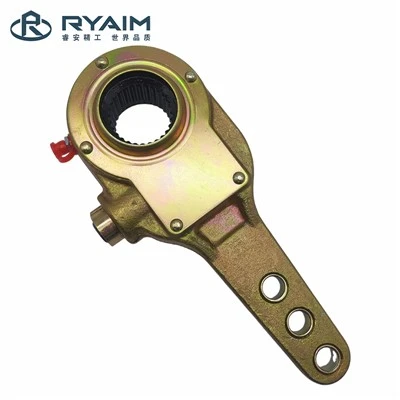
So, here’s the thing—last week, I got a random DM from a guy who runs a small fleet of Tata 1613s, one of which got into a fender bender. Nothing crazy, just a little rear-end with a parked pickup, but his truck’s been pulling weird on stops, and he’s low-key panicking because his usual mechanic’s out sick. The first question he hit me with? “Can I adjust the slack adjuster myself, or did the accident break it so bad I can’t touch it?” Tata Truck Series Manual Slack Adjuster
As someone who’s been selling Tata truck manual slack adjusters for 8 years—yeah, I know, that sounds like a super niche side hustle, but it’s my full-time gig, and I’ve gotten way too many of these exact DMs—his question isn’t random. It’s the one I field nonstop from fleet guys, part-timers, even new drivers who wreck their first truck and don’t know where to turn. Let’s break this down straight, no fancy jargon, no “contact a certified technician” fluff (though we’ll get to that).
First off, what even is a manual slack adjuster, and why do accidents mess with it? If you’re not a truck nerd, think of this little metal rod thing as the “middleman” between your brake camshaft and the air brake chamber. Its whole job is to take up the tiny bit of play (aka “slack”) that builds up in the brake system over time from wear on shoes, linings, or the adjuster itself. No slack means brakes grab immediately, too much slack means your brakes are slow, you have less stopping power, and yeah—accidents can mess that up.
Now, to his actual question: Can you adjust it after a minor accident? The short answer is: Probably—but only if the accident didn’t damage the adjuster’s physical parts. Let’s talk about what a “minor accident” usually does to these things. Most minor crashes don’t hit the adjuster directly—they hit the front end, the bumper, the back of the cab, or if it’s a rear-end like his, the trailer hitch area. The adjuster’s bolted right to the axle’s spider web (that round metal part where brake shoes mount) so it’s pretty protected. That said, even a tiny jolt can knock the adjuster’s internal gears out of whack, or bend the rod that connects it to the brake camshaft. That’s the key here—if it’s just slack, not damage, you can tweak it. If it’s bent, cracked, or the gear teeth are stripped? You can’t adjust your way out of that—you need a new adjuster, and lucky for you, that’s exactly what I sell.
Wait, let’s make sure we’re on the same page about “minor accident” vs. “actual damage.” A fender bender where your truck only has a scratch on the bumper? Chances are your adjuster’s fine, but it’s worth checking. If your brake lines got crimped, your axle housing shifted, or you heard a clank when you hit the brakes right after? That’s when you stop trying to adjust and call a pro. But before you grab a wrench, let’s walk through the do’s and massive don’ts of adjusting a Tata manual slack adjuster, specifically, because not all slack adjusters are the same. Tata’s adjusters have a specific gear ratio (10:1, for the most part on their medium-duty models) so don’t go messing with a heavy-duty Volvo adjuster on a Tata—won’t fit, and won’t work right.
Here’s the step-by-step for checking and adjusting, only if you’re sure there’s no physical damage first:
- Park your truck on a flat, level surface, set the emergency brake, chock the wheels so it doesn’t roll. This is non-negotiable—trucks are heavy, and if you don’t chock, you could get squished.
- Locate the adjuster. On most Tata trucks, it’s right above the rear axle, on the driver’s side (passenger side too if it’s a tandem axle). It’s a metal lever with a square hole on the end—this is where you stick your wrench (Tata uses a 19mm or 21mm wrench, depending on the model—keep that in mind).
- Check for play first. Grab the adjuster lever and wiggle it back and forth. If it moves more than 1 inch (2.5 cm), that’s too much slack. If it’s stuck, or you hear grinding when you wiggle it? That’s damage—stop here.
- Adjusting time. Turn the square adjuster clockwise (yes, clockwise) to take up slack. Do this slowly, in small turns—1/4 of a turn at a time, don’t crank it. Then, wiggle the lever again to check. Once it only moves about 1/8 inch (0.3 cm), you’re good. Do NOT over-adjust—if the brake shoes stay pressed against the drum, you’ll burn them out fast, and that’s a whole other headache.
- Double-check. Spin the rear wheel by hand. It should spin freely with no rubbing. If it’s scraping or you can’t spin it? You over-adjusted—loosen it a tiny bit.
Now, let’s circle back to the accident part, because that’s why you’re here. Why would a minor accident mess with the adjuster in the first place? Even if you don’t hit the axle directly, the sudden jolt of slamming on brakes (or getting hit) can shift the brake camshaft’s position, which changes the slack. I had a customer a few months back with a Tata 1512 that got clipped in a parking lot—no frame damage, no dented axles, but he came to me saying his brakes felt “soft” and the adjuster was wobbly. Turned out the jolt just moved the adjuster’s mounting bolt a hair, so when he adjusted it, it fixed the whole issue. No new parts needed, just a quick tweak.
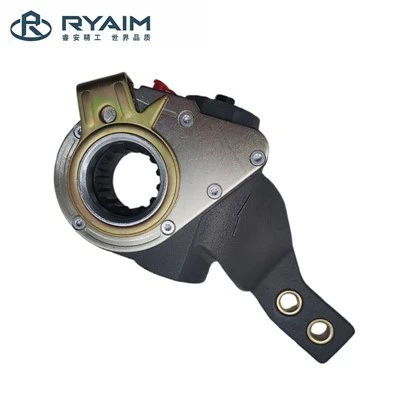
But here’s the big “BUT”—what if the accident did damage the adjuster? Let’s say you go to adjust it, and the square hole is stripped, or the adjustment gear is missing teeth, or the connecting rod is bent. You can’t adjust a damaged adjuster—cranking a stripped gear will just make the play worse, and you’ll end up with brakes that don’t work at all. That’s when you need a replacement, and not just any replacement—you need a Tata-specific manual slack adjuster, because the aftermarket ones don’t line up right, and the fit is off. I’ve seen guys buy a cheap no-name adjuster off Amazon and have it fall off the axle a week later, mid-haul. Waste of money, dangerous.
Wait, I should also address the myth that automatic slack adjusters (ASAs) are better after accidents. Yeah, ASAs adjust themselves, but they’re way more sensitive to jolts and accidents. A minor fender bender can knock an ASA’s sensor out, and if that goes wrong, you have to replace the whole unit, which is way pricier than a manual adjuster. The customer I mentioned earlier had a manual one, which is way more forgiving for small jolts.
Now, let’s talk about safety, because this is for your truck, your livelihood, maybe other drivers on the road. The FMCSA (that’s the US Federal Motor Carrier Safety Administration, for the guys reading this) requires that slack adjusters are adjusted correctly every 10,000 miles, or after any incident that could affect the brake system—including a minor accident. So even if you think you tweaked it, get it checked by a certified mechanic if you’re not 100% sure. I always tell my customers: if you’re uncomfortable under the axle, don’t do it. It’s not worth getting hurt over a $10 part (wait, no—my adjusters are $45 for Tata’s standard manual ones, way cheaper than a brake job or a ticket).
Oh, and one more thing: if you are replacing the adjuster after an accident, make sure you get the right part number. Tata’s adjusters have a part number etched on the side—usually something like 265612109901 for their medium-duty models. If you don’t know the part number, send me a pic of your old adjuster, or the truck’s VIN, and I can hook you up. No generic parts, no guessing.
Let’s wrap this up, real quick. Can you adjust a Tata truck’s manual slack adjuster after a minor accident? Only if there’s no physical damage to the adjuster, no bent connecting rod, no stripped gears, and no shifted axle or brake parts. If it’s just extra slack from the jolt, a small clockwise turn of the adjuster lever will fix it. If there’s any sign of damage, stop messing around and get a replacement adjuster. And for the love of all things truck-related, don’t over-adjust—brakes that drag are just as bad as brakes that don’t work.
If you’ve got a Tata that’s been in a minor crash and you’re not sure if your slack adjuster is toast, or you need a replacement manual adjuster that’s guaranteed to fit and work, hit me up. No pressure, no sketchy links, just a straight answer for a Tata owner who’s tired of dealing with headache parts.
Wait, before I go, let’s add the quick disclaimer everyone needs: I’m not a mechanic, just a guy who sells these adjusters, so always follow Tata’s official service manual, and if you’re unsure, get a pro to look at it. But based on 8 years of dealing with these exact scenarios, the rule is: adjust if it’s just slack, replace if it’s bent or broken.
References
China Truck Series Automatic Slack Adjuster National Highway Traffic Safety Administration. (2021). Truck Brake System Inspection and Maintenance Guidelines. U.S. Department of Transportation.
Tata Motors Limited. (2020). Tata Medium-Duty Truck Series Service Manual: Brake Components. Tata Motors.
Commercial Vehicle Safety Alliance. (2022). Slack Adjuster Adjustment Best Practices for Commercial Fleets. Commercial Vehicle Safety Alliance.
Zhejiang Ryaim Auto Parts
As one of the most professional tata truck series manual slack adjuster manufacturers and suppliers in China, we’re featured by quality products and good service. Please feel free to wholesale custom made tata truck series manual slack adjuster from our factory. Contact us for more details.
Address: No. 78, Yexiao Road, Yaojiang Town, Zhuji City, Zhejiang Province
E-mail: bd@zjryaim.com
WebSite: https://www.ryaimchina.com/
