Hey everyone, thanks for swinging by my corner of the conveyor belt blog – I’m Jake, and I’ve been running a fabric conveyor belt supply business for over a decade, so I’ve talked more people through edge strength questions than I can count. Let’s cut to the chase today, because this is one of those specs that makes or breaks how well a belt works for you: what exactly is the edge strength of a fabric conveyor belt, and why should you even care? Fabric Conveyor Belt
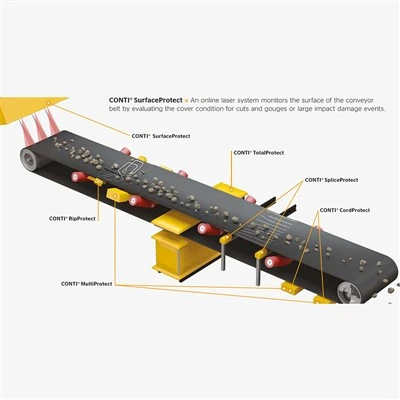
First off, let’s not overcomplicate this – at its core, edge strength is how much force a conveyor belt’s edges can handle before they start to tear, fray, or give out. Wait, no, not just any force – it’s specifically the tension that pulls on the sides, not the stuff pulling along the belt’s length (that’s tensile strength, and that’s a whole other chat). For fabric belts, which are made from layers of woven or molded fabric (usually polyester, nylon, or sometimes cotton, though synthetics are way more common these days) fused together with rubber or PVC covers, the edges are like the shoulder straps of a backpack – they have to hold up the bulk of the load without snapping, even when the belt’s twisting, tracking wrong, or getting snagged by side barriers.
Let me paint you a real-world scenario I saw just last month. A guy reached out to me panicking because his new belt only lasted 3 weeks. He was moving bulk grain in a warehouse, and every time he loaded it up, the belt’s edges would fray so bad that bits of fabric were falling into the grain, and he was losing half his shifts fixing it. Turned out, he’d only asked about tensile strength when he ordered, and the edge strength was way too low for how he was loading – he was shoveling grain right up to the edge of the belt, which meant the sides were bearing way more force than standard. That’s the thing about edge strength: it’s not a one-size-fits-all number. It depends on so many little details that most people don’t even think about until they’re replacing belts every month.
So how do we actually measure edge strength? I get that numbers can feel vague, but this isn’t just made-up to sell belts. We test samples in our warehouse all the time, using a basic (but accurate) test where we clamp a 1-inch strip of the belt’s edge in a machine that pulls it apart at a steady rate, until we hit that breaking point. The units we use? Usually pounds per inch, or sometimes kilonewtons per meter, depending on where you’re based. For example, a light-duty belt for carrying small parts might have an edge strength of like 150 lbs per inch, while a heavy-duty mining or construction belt? That’s 500+ lbs per inch, no joke. The fabric layers here are key – more layers (called ply count) don’t just boost tensile strength along the belt, they make the edges thicker and less likely to tear, so their edge strength goes up too.
Wait, but here’s a myth I hear all the time: “If my belt has good tensile strength, edge strength will be fine.” Nah, that’s not true at all. I’ve seen belts with insane tensile strength (like 10,000 lbs per inch along the length) that had garbage edge strength, because the manufacturer skipped reinforcing the edges when they built the belt. They just made it flat, so the sides are thinner and weaker. That’s a cheap trick some suppliers pull, and it bites their customers hard. When we make our belts, we always add extra fabric ply to the edges, or even a special rubber edge strip, to bump that edge strength up – that’s why our belts cost a little more upfront, but they last 2-3 times longer.
Let’s talk about what actually causes edge strength to fail, because that’s how you’ll run into issues. First, poor tracking. If your belt is riding lopsided on the rollers, one edge is constantly getting scraped against the side frame of the conveyor, or stretched tighter than the other side. Over time, that scraping frays the fabric, and the stretching pulls the edges apart. Then there’s overloading – like that grain warehouse guy I told you about. If you load material right to the edges, every time the belt curves around a pulley, that side has to work harder, and too much weight there will split the edge. Also, material type matters: sharp, abrasive stuff like gravel or metal parts will wear down edges way faster than soft stuff like grain or cardboard boxes. I had a customer moving recycled plastic bottles a while back, and the sharp plastic flakes would catch on the edges when the belt twisted to dump, so even a belt with “good” edge strength didn’t last – we had to add a reinforced rubber edge liner to fix that.
Another thing that affects edge strength is the cover material. If you have a rubber cover, it sticks to the fabric layers better, so when you pull on the edge, the cover doesn’t separate from the fabric, making the whole edge stronger. PVC covers, which are cheaper for light-duty use, don’t bond as well, so their edge strength is lower. We always match the cover to the edge strength requirement, not just the load – that’s a mistake a lot of new guys make when they first set up their conveyors.
Let me get specific with some real specs so you can wrap your head around it. Light-duty belts for things like package sorting or small parts: edge strength usually 100-200 lbs per inch, ply count 2-4, edges finished with a simple cut (no extra reinforcement). Medium-duty, like grain, aggregate, or general warehouse: 250-400 lbs per inch, ply count 4-6, edges either cut and treated with a rubber seal or lightly reinforced. Heavy-duty, mining, construction, steel mills, stuff with sharp, heavy loads: 500-800+ lbs per inch, ply count 8 or more, edges with extra heavy rubber strips or even a separate fabric core just for the sides. Yeah, those heavy ones are thick – like half an inch thick at the edges – because they need to handle the abuse.
I should also mention that there’s something called “edge retention” sometimes talked about, which is related but not exactly the same. Edge retention is how well the edge stays intact over time, even as it’s being pulled and scraped, while edge strength is that initial breaking point. But they go hand in hand – if your edge strength is high, your edge retention is way better. For example, if a belt has 400 lbs per inch edge strength, it’s not going to fray after a few months of use, whereas a belt with 200 lbs might start fraying in 2 weeks.
Now, why does this matter for you, the person buying belts? Let’s do the math real quick. If you buy a cheap belt with low edge strength that costs $500 and lasts 3 months, that’s $2,000 a year. But if you buy a belt with proper edge strength that costs $1,200 and lasts a year, that’s $1,200 a year – you save money, plus you don’t have downtime replacing belts, which is huge. I’ve seen businesses lose tens of thousands of dollars in a single day because their belt tore, shutting down production. Edge strength isn’t just a spec – it’s part of your bottom line.
Wait, but here’s a common mistake I see even experienced guys make: they pick the edge strength based on the maximum load, not on the application. Like, two conveyors with the same load: one is a straight conveyor in a warehouse, the other is a curved conveyor that dumps every 10 feet. The curved one needs higher edge strength, because the sides are pulling tighter every time it turns. Or if your belt has side guides (to keep material from spilling over), those guides rub against the edges all day, so you need a higher edge strength and a wear-resistant edge seal.
At our shop, we don’t just sell belts with a generic “edge strength” number. We ask you a bunch of questions before you order: what are you moving? How heavy is it? Are your conveyors straight or curved? Do you have side guards or rollers that rub the edges? How fast is the belt moving? All of that affects what edge strength you actually need. Last quarter, we had a customer moving 50lb bags of concrete mix in a factory – he initially ordered a medium-duty belt, but when we asked about his conveyor, which had sharp side rails, we told him he needed heavy-duty edge reinforcement. He ended up ordering that, and just called me last week to say it’s been 6 months, no fraying, no issues.
Let’s also clear up a confusion between edge strength for fabric belts vs. steel belts, because sometimes people mix them up. Steel conveyor belts have metal cords, so their edge strength is way higher – like thousands of lbs per inch – but that’s for totally different applications, like heavy mining with massive loads. Our fabric belts are for lighter to medium-heavy loads, up to like 100 tons an hour, so their edge strength is lower, but that’s exactly what they need. You don’t use a steel belt for a package sorting line, same way you don’t use a low edge strength fabric belt for moving gravel.
Another thing: testing isn’t just for manufacturers. When you get a new belt, you can test a small strip yourself to check if it’s up to spec. Grab a 1-inch wide, 6-inch long strip from the edge of the belt, clamp one end in a vice, and hang weights from the other end. If it breaks at less than the edge strength the supplier quoted, that’s a bad sign. Most suppliers won’t mind you asking for a sample strip to test, either – we give free 1-foot samples all the time so people can check specs before they order.
I should also mention that edge strength degrades over time, just like any part. UV exposure, extreme temperatures (like if you’re working outdoors in the desert or a cold warehouse), and chemical exposure (if you’re moving things like acids or oils) will wear down the edge strength, so you might need to bump up the original spec by 10-20% for those environments. I had a customer with an outdoor composting operation, and the humidity and UV were eating at the belt edges fast, so we went with a UV-stabilized rubber edge seal, and that boosted their edge strength enough that their belt lasted 8 months instead of 2.

So let’s recap, for anyone who skipped to the end: edge strength of a fabric conveyor belt is the force its sides can take before tearing, different from the tensile strength along the length. It depends on ply count, edge reinforcement, cover material, and your specific application. Don’t just go by tensile strength – ask for the edge strength spec, and make sure it matches what you’re actually moving, how your conveyor is set up, and your environment.
Self Cleaning Conveyor Belt If you’re tired of belts that fray, tear, or die way too early, we’re here to help. We don’t just push generic specs – we’ll work with you to figure out exactly what edge strength you need, send you free samples to test, and make a belt that fits your needs, not just our catalog. Drop us a line to chat through your requirements, no pressure, just real advice from someone who’s been in this game long enough to know what works.
References
- Conveyor Belt Manual, Industrial Materials Handling Association
- Fabric Conveyor Belt Engineering Specs, Rubber Manufacturers Association
- Load and Edge Stress Analysis for Belt Conveyors, Journal of Materials Handling Engineering
Alumina Technology (Qingdao) New Materials Co., Ltd.
As one of the most professional fabric conveyor belt manufacturers and suppliers in China, we also support customized service. With abundant experience, we warmly welcome you to buy fabric conveyor belt for sale here and get quotation from our factory. For price consultation, contact us.
Address: No.448, Jiangshan South Road, Huangdao District, Qingdao City, Shandong Province
E-mail: Gloria.zhang@contitech.cn
WebSite: https://www.altechconveyorbelt.com/
