Alright, let’s dive into how an Automated Storage and Retrieval System (AS/RS) works in a high-bay warehouse—straight from someone who’s spent the last decade selling, installing, and tweaking these bad boys for warehouses that stack 100+ feet high. No stuffy whitepapers here, just real stuff we see on site every week. Automated Storage and Retrieval System

First off, if you’ve ever walked into a traditional warehouse where pallets are stacked 20 feet high with forklifts zooming around, you know the chaos: narrow aisles, forklift traffic accidents, workers climbing ladders to grab goods, and half the time you’re hunting for a pallet for an hour. High-bay warehouses are the ones where ceilings are 40+ feet tall—way higher than standard—and they exist because real estate (and especially the floor space) is expensive these days. But high-bay doesn’t fix the chaos on its own. That’s where AS/RS comes in. It’s not just a fancy storage shelf; it’s a whole automated system that moves pallets or bins up, down, left, right, and in and out of storage without a single forklift or human on a lift.
Let’s break it down like I’d explain it to a new tech at our warehouse: the core of the system is the structure first. We build these huge, steel racks that go all the way up to the ceiling—like a metal skyscraper for your inventory. Each “slot” in the racks is numbered, both horizontally (for different rows) and vertically (for different levels), so every pallet has a unique address. That’s key—no more guessing where something is. But the racks are useless if you can’t reach those top slots, right? So we stick what’s called a unit load AS/RS machine (that’s the big robot we install) in a narrow aisle between two sets of racks. The aisle is so narrow, a forklift can’t fit there—way less than 6 feet wide. That’s where the space savings kick in: traditional warehouses need 12+ foot aisles for forklifts, so a 100-foot tall AS/RS setup can store 50% more inventory in the same floor space.
Now, how does that machine actually move? Think of it like a super-precise vending machine for pallets. The machine has two main parts: the crane (the vertical part that moves up and down) and the shuttle (the horizontal part that moves along the crane’s beam). Wait, some people call it a stacker crane, and yeah, that’s the technical term, but around here we just say “the crane.” The crane uses motors and linear guides to glide up and down the aisle at like 500 feet per minute—way faster than a human climbing a ladder. The shuttle, which sits on the crane’s beam, moves left and right between the racks at a similar speed. The whole thing is controlled by a computer that calculates exactly where to go: if we need to grab a pallet from level 8, row 12, the computer tells the crane to zoom up to level 8, then the shuttle shifts over to row 12, grabs the pallet, and brings it back to the “pickup station” at the end of the aisle. No traffic, no mistakes (most of the time—we do run maintenance checks every month, by the way).
But wait, how do pallets get from the warehouse’s loading docks to the AS/RS in the first place? That’s the conveyor system. We install a series of conveyors—some roller, some belt—that connect the loading docks, storage aisles, and the shipping docks. When a truck pulls up to the loading dock, a worker scans the pallet’s barcode (we use GS1 barcodes, standard for retail and manufacturing) and enters the inventory details into our Warehouse Management System (WMS). The WMS is the brain here—this isn’t just a spreadsheet; it’s software that tracks every single item, knows when inventory is low, schedules deliveries, and tells the AS/RS where to put each pallet. Once the WMS assigns a slot address, the conveyor moves the pallet from the dock to the aisle’s “input station,” and the AS/RS crane takes over from there.
Retrieving a pallet is the reverse. Let’s say a customer orders 10 cases of soda, and those cases are on a pallet in level 12. The worker at the shipping desk pulls up the order in the WMS, clicks “retrieve,” and the system sends a signal to the AS/RS crane. The crane zooms up to level 12, grabs the pallet, brings it back to the output station, and a conveyor moves the pallet over to the order picking area. No more waiting for a forklift driver to find the pallet, no more fighting for aisle space, no more workers risking falls from ladders. We’ve had customers cut their order picking time by 70% after installing our AS/RS—no joke, one of our clients in the Midwest went from 4 hours per order to 45 minutes.
Now, let’s talk about the stuff that makes this actually work, because a lot of people think it’s just a robot moving around, but there’s a lot of tech under the hood. First, safety sensors. The crane has laser sensors all along its sides that stop it if something (or someone) gets in the way—we can’t have a 2,000-pound pallet slamming into a worker. Also, the racks are designed to be earthquake-resistant (we’re in a few areas that get mild quakes, so that’s non-negotiable) and the AS/RS has fail-safes: if power goes out, there’s a backup battery that lets the crane move to a safe spot, and we install manual hand crank backups for small power blips.
Another big part is the WMS integration. A lot of warehouses already use their own software—like QuickBooks or SAP—and we make sure our AS/RS talks to that, not the other way around. So if a warehouse’s WMS says “we’re running low on widgets,” the AS/RS knows to prioritize bringing in new pallets when they arrive. We also add inventory tracking features: every time a pallet is moved, the WMS updates the slot address, so you never have to do a physical inventory count (well, not a full one—we do spot checks once a quarter). That saves warehouses thousands of dollars a year in labor for inventory.
Wait, let’s address a common question we get: is AS/RS only for big warehouses? No, not anymore. We’ve installed systems for warehouses that are 20,000 square feet (smaller than a football field) and others that are 200,000. It’s scalable—we can add more racks or even extra AS/RS cranes if a warehouse grows. The key is the high-bay part: if your ceiling is at least 35 feet, AS/RS starts making financial sense. For a warehouse with a 20-foot ceiling, a forklift is still cheaper, but once you’re over 30 feet, the space savings from AS/RS pay for themselves in 2-3 years. We had a small e-commerce client that went from stacking pallets on the floor to a 40-foot AS/RS, and they doubled their inventory without renting a new warehouse.
Now, let’s talk about what we do as an AS/RS supplier that makes us different. A lot of companies just sell you the crane and racks, but we handle everything: site assessments (we’ll come out to your warehouse, measure ceilings, check power, work with your WMS team to make sure integration is smooth), installation (our techs are certified to work on 100-foot tall cranes—no random guys off the street), training for your workers (we don’t just drop it off and leave; we teach your maintenance team how to do basic checks, and our support line is open 24/7), and maintenance packages (we do monthly inspections, quarterly software updates, and emergency service if something breaks). We’ve had clients call us at 2 a.m. because their AS/RS stopped after a power surge, and we have a tech there within 4 hours. That’s not something all suppliers offer.
Let’s also be honest about the downsides, because we don’t want to oversell it. AS/RS has higher upfront costs than a traditional forklift setup—like, 2-3 times more, depending on the size. But when you factor in floor space savings, lower labor costs (fewer workers needed, no more overtime for order picking), and fewer damages (forklifts drop pallets sometimes; AS/RS is precise, so we’ve seen 90% fewer pallet damages), it’s worth it long-term. Also, you need to have consistent inventory—AS/RS works best if you’re not moving pallets in and out every few hours in a chaotic way; it’s optimized for steady, scheduled flows. If you’re a business that does same-day shipping with random orders, we have custom modular AS/RS setups for that too—we just adjust the WMS to handle the variable orders.
One recent example: a client that sells auto parts, they had a warehouse with 30-foot ceilings, and they were using 15 forklifts, 3 of which were in accidents every year. They installed one of our unit load AS/RS systems, and now they only need 2 forklifts (for loading/unloading trucks) and 3 workers to monitor the AS/RS. Their order accuracy went from 92% to 99.8%, and their annual labor costs dropped by $250,000. That’s the kind of win we love to see.
So to wrap this up, AS/RS in a high-bay warehouse isn’t just a robot—it’s a whole system that uses steel racks, a precision crane, conveyors, and smart software to store and retrieve inventory way more efficiently than traditional methods. It’s all about using vertical space (which is cheap to use compared to floor space) and eliminating the human errors and inefficiencies that come with forklifts and ladder access.
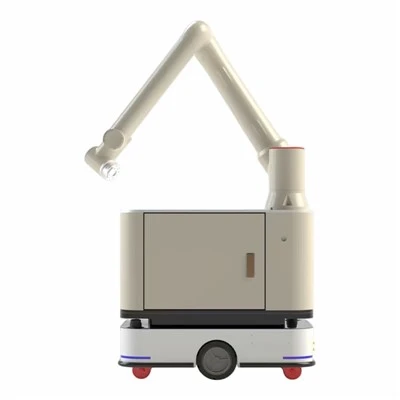
If you’re running a high-bay warehouse and you’re tired of wasted space, high labor costs, or constant inventory mix-ups, we can help. We’ll do a free on-site assessment to see if an AS/RS setup makes sense for your operations, no pressure, no sales pitch that’s too pushy. Just give us a shout to get started.
Automated Storage and Retrieval System References
- Modern Material Handling. (2022). "AS/RS Fundamentals: Unit Load Systems for High-Bay Warehousing."
- Material Handling Industry of America (MHIA). (2021). "High-Bay Warehouse Automation Trends and Cost-Benefit Analysis."
- Warehouse Education and Research Council (WERC). (2023). "Labor Efficiency Impacts of Automated Storage and Retrieval Systems."
- International Organization for Standardization (ISO). (2020). "Safety Standards for Automated Storage and Retrieval Systems (AS/RS)."
Shenzhen Ginnee Intelligent Warehousing Robotics Co., Ltd.
As one of the most professional automated storage and retrieval system suppliers in China, we’re featured by quality products and low price. Please rest assured to wholesale durable automated storage and retrieval system in stock here and get quotation from our factory. We also accept customized orders.
Address: Room101, No.162 JunXin Road, Niuhu Community, Guanlan Strect, Longhua District, Shenzhen, Guangdong Province, China.
E-mail: huangyongmei@szginnee.com
WebSite: https://www.ginneerobotics.com/
