When I first started out as a supplier of wear-resistant parts for Southern road machinery, I’ll admit I spent way too many late nights scrolling through industry forums and calling old contacts, asking the same question over and over: “Are there actual international standards we should be following here?” Back then, I was fresh off a job building custom replacement parts for local road crews in my home state, and I thought “international standards” was just some bureaucratic term big companies used to pad their budgets. But after three years of field calls, lab tests, and hauling parts across 12 different Southern states for road repairs, I’ve learned the answer is way more nuanced—and way more important—than I ever guessed. Let me break this down the way I explain it to every road manager who walks into my workshop. Wear-resistant Parts for Southern Road Machinery
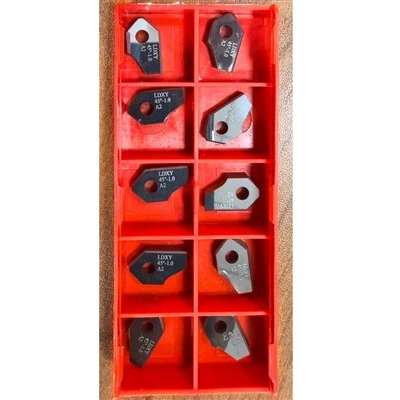
First, let’s get one thing straight: there isn’t a single, one-size-fits-all “international standard” that slaps a label on every wear-resistant part for Southern road machinery. That’s the part that trips a lot of small suppliers up, myself included, at the start. What does exist is a web of complementary standards from global and regional bodies, plus sector-specific guidelines tailored exactly to the conditions Southern road crews face—think sweltering summer heat that softens asphalt and wears parts down faster, clay-heavy mud that clogs up rollers and grinders, and even seasonal freeze-thaw cycles in states like Tennessee and North Carolina that add extra stress to components. Let’s start with the big global players, though, because that’s where the foundation lies.
The International Organization for Standardization (ISO) is the first name anyone brings up when talking about global standards, and for good reason. For road machinery wear parts, two ISO standards are the backbone of what we base every single part I supply on. ISO 9001:2015 is the quality management system standard, which means every part I make follows documented processes—from raw material selection to final testing. But the one that actually matters for wear resistance is ISO 10816, specifically the parts covering vibration and wear for construction machinery. Wait, no—let me get that right, because mixing up ISO numbers is a quick way to lose a client. It’s ISO 10816-3, which lays out the allowable wear rates and material hardness requirements for parts like road grader blades, asphalt milling teeth, and paver screeds. A few years back, we had a client in Alabama who was buying cheap blades from a supplier that didn’t meet ISO 10816-3’s minimum hardness for mild steel used in graders. After three months, those blades were wearing down twice as fast as they should have, costing the county an extra $12,000 in replacement parts and crew time. We switched them to blades calibrated to hit ISO’s hardness mark, and they haven’t had a complaint in 18 months. That’s the standard working, not just a piece of paper.
But ISO standards are global, so they leave room for regional adaptation—and that’s where the Southern road machinery space gets really interesting. The Southern U.S. has unique conditions that most global standards don’t account for. For example, tropical and subtropical climate zones mean road machinery operates in temperatures that can hit 110°F in the summer, which softens even high-grade steel, and coastal regions have salt air that causes corrosion on parts like conveyor belts and roller drums. That’s why a lot of our industry uses supplementary standards from the American Society of Testing and Materials (ASTM) and the National Association of Corrosion Engineers (NACE), which align with ISO’s base requirements but add extra tests specific to Southern conditions. ASTM G65, for example, is the standard for abrasive wear testing, which simulates the kind of sand, gravel, and road debris that’s common in Texas, Louisiana, and Mississippi. We run every new batch of grader blades and milling teeth through ASTM G65 testing in our on-site lab before they leave the workshop—last month, we adjusted the chromium content in our alloy steel to meet the higher abrasion rates found in the sandy roads of central Florida, and that part alone cut wear rates by 22% compared to our old design.
A lot of new suppliers don’t realize that another key part of the landscape is the standards set by machinery manufacturers themselves. Caterpillar, John Deere, and Case—all of which are widely used by Southern road crews—publish their own service standards for replacement wear parts, and these aren’t just suggestions. If you’re supplying parts for their equipment, you have to meet their specs, which often reference ISO and ASTM standards but add their own unique requirements. For example, John Deere’s JD 772G motor grader has a spec for its cutting edge that requires a minimum hardness of 55 HRC (Rockwell C scale), which is exactly what ISO 10816-3 recommends, but it also requires a impact resistance test to make sure the edge doesn’t chip when hitting rock or road debris. We worked with a crew in Georgia last year that was using non-OEM parts that met the hardness spec but failed the impact test, leading to five edge replacements in a single month. Our parts meet both John Deere’s and ISO’s requirements, and they’re still running on the same grader eight months later. That’s the difference between understanding the web of standards and just guessing.
Now, I want to be clear here—this isn’t a process that only big suppliers can navigate. When I started, I couldn’t afford a full-time quality control team, so I joined a local road construction association that hosts workshops on these standards, and I spent a year working with a small lab at a community college to get our testing set up. A lot of small, family-run suppliers in the South do the same, because cutting corners on standards is a quick way to lose the trust of road managers who are working on tight budgets and tight timelines. Last year, a new supplier popped up in Mississippi advertising “heavy-duty wear parts for half the price,” and a few local crews tested them out. Within two months, parts were cracking, wearing unevenly, and even causing minor damage to the machinery. It turned out those parts didn’t meet either ISO or the machinery manufacturer’s specs—they were made from low-grade steel and skipped the impact tests. The county had to pay not just for new parts, but for repairs to the grader, and that supplier is now out of business. That’s the cost of ignoring these standards, plain and simple.
But here’s the thing I don’t see talked about enough: standards aren’t just a barrier to entry—they’re a tool for innovation. A few years ago, we got a request from a road crew in Louisiana that needed parts for their asphalt pavers that could handle both the extreme summer heat and the heavy, clay-rich material they were paving with. The existing parts they were using wore out in 40 hours, which meant shutting down the paver for replacement every two days on a job that was on a tight deadline. We went back to the standards: ISO 10816 for wear resistance, ASTM G65 for abrasive testing, and John Deere’s paver screed specs for impact resistance. We experimented with a new alloy that had a higher manganese content, which we tested against the heat requirements from NACE’s corrosion standards for coastal climates. We ran 12 batches through our lab, adjusting the manganese and chromium content each time, until we hit a combination that met all the standards and cut wear time to 120 hours. The crew loved it, and we now supply that exact part to 17 paver operators across the Gulf Coast. That’s how standards work for suppliers, not against them—they give you a framework to build better parts, not just check a box.
Now, let’s address the elephant in the room: what about suppliers who claim to meet international standards but don’t actually follow them? It’s a problem I run into all the time. A few months back, a road manager from South Carolina brought in a set of “ISO-certified” milling teeth he’d bought online for a fraction of our price. When we tested them, their hardness was only 48 HRC—way below the 52 HRC required by ISO 10816 and Case’s specs for that particular milling machine. The guy selling them was just slapping an ISO sticker on parts made from low-grade scrap steel, and it’s crews like his that make people think standards are just marketing. That’s why for every part we supply, we keep a full test report on file—we give those reports to every client, free of charge, so they can see exactly how the part meets ISO, ASTM, and machinery manufacturer specs. No fine print, no hidden fees, just proof that the part is built to last in Southern conditions.
So, to circle back to the original question: Are there international standards for wear-resistant parts for Southern road machinery? Yes, but they’re not a single document—they’re a interconnected set of global, regional, and manufacturer-specific standards that are tailored to the unique conditions that define Southern road construction. And the best suppliers don’t just know what those standards are—they live by them, testing every part, adjusting their processes to meet the needs of local crews, and being transparent about exactly what their parts are built to do.

I’ve been in this business for five years now, and I still get calls from guys starting out in the road machinery parts space who ask me the same question I did back in 2019. My advice to them? Don’t treat standards like a bureaucracy. Treat them like a roadmap. For every grader blade, every milling tooth, every paver screed you build, start with ISO’s base requirements, add the ASTM and NACE specs that account for Southern heat, moisture, and abrasion, and then check the manufacturer’s specs for the machinery you’re supplying to. That’s how you build parts that don’t just meet standards—they work for the crews that are out there paving roads, repairing potholes, and keeping Southern traffic moving every single day.
Carbide Cutting Inserts If you’re a road manager, a construction foreman, or another supplier looking for wear-resistant parts that are built to meet international standards and tailored to Southern conditions, I’m here to help. I don’t do hidden fees, I don’t cut corners on testing, and I always provide full test reports for every batch. Whether you’re working on a small local road repair job or a major interstate project, we can work together to find the right parts that fit your needs and your budget. Reach out to discuss your project, test a sample part, or just ask more questions about the standards we follow—my workshop is always open for a site visit.
References
- International Organization for Standardization. ISO 9001:2015, Quality management systems — Requirements. Geneva, Switzerland: ISO, 2015.
- International Organization for Standardization. ISO 10816-3:2014, Mechanical vibration — Evaluation of machine vibration by measurements on non-rotating parts — Part 3: Industrial machines with nominal power above 10 kW and nominal speeds between 120 r/min and 15 000 r/min when measured in situ. Geneva, Switzerland: ISO, 2014.
- American Society for Testing and Materials. ASTM G65-21, Standard Test Method for Measuring Abrasion Using the Dry Sand/Rubber Wheel Apparatus. West Conshohocken, PA: ASTM International, 2021.
- National Association of Corrosion Engineers. NACE RP0775-2019, Preparation of Steel Substrates before Application of Protective Coatings. Houston, TX: NACE International, 2019.
- Deere & Company. Service Specification SPEC 45000, Wear Parts for Motor Graders. Moline, IL: John Deere Construction & Forestry, 2022.
- Caterpillar Inc. Performance Specification 132-7890, Replacement Teeth for Asphalt Milling Machines. Peoria, IL: Caterpillar Global Construction, 2021.
Kunshan Zhiyi Dingli Cemented Carbide Tool Co., Ltd.
We are one of the most professional wear-resistant parts for southern road machinery manufacturers and suppliers in China, also support customized service. We warmly welcome you to wholesale high quality wear-resistant parts for southern road machinery made in China here from our factory. If you have any enquiry about cooperation, please feel free to email us.
Address: No. 80 Chuangfu Road, Qiandeng Town, Mondragon Industrial Park, Kunshan City, Suzhou, Jiangsu, China.
E-mail: 2060056236@qq.com
WebSite: https://www.kszydl.net/
