What’s up everyone, if you’re deep into die casting or just starting to poke around how parts get made that fit your bike, car, or even that fancy kitchen mixer you love, you’ve probably wondered—what actually are die casting materials, anyway? As someone who’s spent the last 8 years sourcing, testing, and hooking up manufacturers with the right stuff (full transparency, I run a die casting material supply shop, so I’m in this every single day), I’ve talked to dozens of guys who thought it’s just “metal” and called it a day. Spoiler: missing the mark on the material means parts crack, break, or cost way more than they should. Let’s break down the common, go-to die casting materials we see day in and day out, no jargon overload, promise. Die-casting Material

First up, aluminum alloys—this is the workhorse, the bread and butter, the one I probably recommend 70% of the time. Why? It’s lightweight, cheap compared to a lot of other options, and plays nice with die casting machines (no weird sticking or too much heat stuff). Wait, not all aluminum is the same, though. The ones we deal with most are A380, A383, and ADC12. Let’s keep it real: A380’s the dude for general parts—engine components, housings, even playground equipment that needs to be tough but light. It has good flow, so it fills even the tiny, intricate crevices in dies, which is why you see it in all those small consumer electronics parts too (phone frames, anyone?). A383 is like A380’s cooler cousin—better heat resistance, so it’s used for things that hang near hot engine parts, like intake manifolds. ADC12 is the Asian counterpart, basically the same as A380 just rebranded, super popular with shops in China and Southeast Asia, and it works just as well if you get genuine alloy (I always say steer clear of scrap aluminum here, it messes up the results). The downside? Aluminum is soft compared to some others, so if you need a part that takes a beating, you might have to step up.
Next, zinc alloys—this is the “fast, cheap, high-detail” pick, the one I reach out for when a customer needs a part that’s super intricate and doesn’t need to hold up to extreme force. Zinc has way lower melting points than aluminum (around 780°F vs aluminum’s 1200°F), so it uses less energy, runs faster on machines, and fills even the tiniest die details like jewelry molds or small hardware. The go-to here is Zamak 3, right? That’s the standard for 90% of zinc die casting parts—door handles, locks, small gears, even some remote control casings. Zamak 5 is a step harder, so it’s used for parts that need a bit more tensile strength, like small automotive brackets. Wait, but zinc has a catch—called “liquid metal embrittlement” if you heat it too much too fast, but honestly, if you’re not running it at way over its melting point, that’s not an issue. The big thing here is don’t mix zinc with other metals, that causes corrosion fast. I’ve seen shops mess that up and have a whole batch of parts rust before they even hit the shelf, oops.
Then we move to magnesium alloys—this is the lightweight champ, for when aluminum isn’t light enough. If you’re making aerospace parts, high-end bike components, or even parts for power tools that need to be light but tough, magnesium is your guy. It’s 30% lighter than aluminum, which is huge for industries where every gram counts. The common ones here are AZ91D and AM60B. AZ91D is the most used, great for general structural parts, has good castability. AM60B is softer, more for things that need good impact resistance, like car seat components. But magnesium isn’t without its downsides—it’s way more flammable when it’s in small molten droplets, so you have to be super careful with the melting process, and it’s more expensive than aluminum or zinc. Also, it corrodes easier if you don’t coat it right, so it’s not for outdoor stuff that’s exposed to salt water. I only push magnesium when a customer’s priority is weight above all else, because it’s pricier and needs extra care.
Wait, there’s also copper alloys—yeah, I know, copper is heavy, but it’s the go-to when you need conductivity or extreme strength. This is the underdog most people sleep on, but it’s non-negotiable for electrical parts like connectors, switches, or valves that need to handle high heat. The common copper die casting alloys are C83600 (also called red brass) and C95400 (leaded bronze). C83600 has great corrosion resistance and conductivity, so it’s perfect for plumbing parts. C95400 is stronger, for bushings and bearings that take constant friction. Copper melts at a high temp (around 1980°F), so it’s more energy-heavy, so parts made from it are pricier, but if you need that conductivity or toughness, nothing beats it. I had a customer last year making bus bars for solar panels, they tried aluminum first but it couldn’t handle the current, so we switched to C83600 and they haven’t looked back. Worth the extra cost when you need the performance.
Last, just to round this out, we’ve got specialty alloys—these are the niche ones, for when the standard stuff won’t cut it. There’s tin-lead alloys for things like solder preforms or delicate electronic components, they have super low melting points. There’s aluminum-silicon alloys for high-temperature parts like engine pistons, they hold up way better to heat than standard aluminum. Even some nickel-based alloys for extreme environments, like oil and gas parts that are exposed to chemicals and high pressure. These are less common, but they’re out there, and if you need one, you’re probably not messing around with generic stuff.
Now, let’s cut through the B.S.—I’ve seen customers make the same mistakes over and over, and it’s all about picking the wrong material for the job. A lot of guys try to use aluminum for a part that needs extreme strength and end up with a broken part on assembly line, wasting time and money. Others reach for magnesium just because it’s light, not realizing they need to coat it to prevent corrosion. The key is knowing your part’s needs: is it light? Strong? Conductive? Small intricate details? That’s what dictates the material, not just what’s cheap.
As your die casting material supplier, I don’t push the most expensive stuff just to make a buck. I ask you what your part’s purpose is, what environment it’ll be in, how much strength it needs, and then I point you to the material that fits, no fine print, no hidden fees. Whether you need a pallet of A380 for 10,000 engine housings, Zamak 3 for 5,000 door handles, or something more niche, I’ve got you.
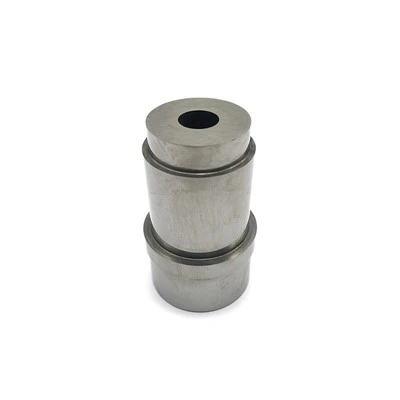
If you’re tired of wasting money on the wrong die casting materials, or you’re not sure which one works best for your next project, hit me up. We can chat specs, sample some alloy, work out a price that makes sense, no pressure. Let’s make your parts right the first time, not after you’ve messed up a whole batch.
Carbide Cutting Inserts References
ASM International. (2019). Die Casting Alloys. Materials Park, OH: ASM International.
NIST. (2021). Properties of Commercial Die Casting Alloys. Gaithersburg, MD: National Institute of Standards and Technology.
The Die Casting Development Council. (2020). Guide to Die Casting Material Selection. Troy, MI: Die Casting Development Council.
Kunshan Zhiyi Dingli Cemented Carbide Tool Co., Ltd.
We are one of the most professional die-casting material manufacturers and suppliers in China, also support customized service. We warmly welcome you to wholesale high quality die-casting material made in China here from our factory. If you have any enquiry about cooperation, please feel free to email us.
Address: No. 80 Chuangfu Road, Qiandeng Town, Mondragon Industrial Park, Kunshan City, Suzhou, Jiangsu, China.
E-mail: 2060056236@qq.com
WebSite: https://www.kszydl.net/
